A Woman in Soldier’s Dress: Then and Now

By Elizabeth Smith ’17

This post is the second in a three-part series on women soldiers in the Civil War and during modern reenactments. Also check out the introduction of this series.

I was thirteen years old when I joined the 5th Kentucky Orphan Brigade, a Confederate reenactment group based out of south-central Kentucky. At fourteen, I “saw the elephant”—a Civil War term for seeing battle—for the first time as a soldier. It was the most terrifying thing I’ve ever done, but seven years later I credit that decision to go through with it as bringing me to where I am now, writing for the Compiler here at Gettysburg College. In those seven years, however, I have faced my fair share of scrutiny for portraying a soldier rather than a civilian. I didn’t become aware of the scrutiny until more recently, however, as I became more conscious both of historical and modern views about women portraying soldiers at Civil War reenactments.

I’ve been lucky. Only once have I ever been in a situation where I thought I would not be able to participate in the event because I am a woman, but that one time when I was sixteen was quickly fixed by my first sergeant convincing the board of that particular reenactment to amend the rules that had said no women were allowed to portray soldiers. In seven years, never once has anyone directly questioned whether or not I should be allowed to take the field. I’ve been complimented on my authenticity, encouraged to continue to be as accurate as possible, and never had a negative comment directed at my portrayal of a woman soldier.

Although I haven’t had anything said to my face, I have received nasty glances that clearly say “She doesn’t belong.” Though the reenacting community has become far more open to women soldiers since 1989, there are some who do not believe it is a woman’s place to be on the battlefield. I’ll discuss this more in depth in the next post, but for now it is safe to say that there are some who believe no women should portray soldiers. Continue reading “A Woman in Soldier’s Dress: Then and Now”

A Woman in Soldier’s Dress: Taking the Field

By Elizabeth Smith ’17

The year was 1989. The place, a Civil War reenactment at Antietam National Battlefield. Lauren Cook (then Burgess) had been participating in reenactments for two years. Her portrayal of a fifer required her to wear a soldier’s uniform rather than in a civilian woman’s dress. She did her best to portray a soldier, disguising her sex so she could pass the “fifteen yard” rule, which meant that at fifteen yards she could not be identified as a woman. The call of nature proved to be her undoing, however, when an NPS official “caught” her coming out of the women’s restroom. Asked to wear a dress and portray a civilian, Cook refused and was told to leave the event. Cook perceived this as sex discrimination and filed a law suit against the federal government. Four years later, in 1993, she would win her court case.

Though dramatic in nature, Cook’s experience is echoed through the many stories of women who attempt to portray soldiers in Civil War reenactments. Times have changed since 1989, and women are now allowed to portray soldiers, but the stigma remains. Women who wish to portray soldiers are expected to not only have an accurate uniform, but to pass the “fifteen yard rule.” For some, this is what they strive to do and many go above and beyond in accomplishing this. Others, however, do not even attempt to disguise their sex. This is where the controversy begins and people start to question whether or not women should be allowed to portray soldiers at all.

The author in uniform. Photograph by the author.

Continue reading “A Woman in Soldier’s Dress: Taking the Field”

I Ain’t Afraid of No Ghosts

By Kevin Lavery ’16

I had no plans of writing a blog post this week. I said my piece on ghost tours last year. This Halloween, it was the next generation’s turn to share their opinions on the matter. Jules and Jen both did a spectacular job on the subject, and I commend them even though our perspectives differ. But when I learned that my stance had come under fire from another blog, I eagerly leapt from the comfort of my editing armchair and returned to the front lines to compose this piece.

Gettysburg skyline from the roof of the Appleford Inn on All Hallow's Eve Eve.
Gettysburg skyline from the roof of the Appleford Inn on All Hallow’s Eve Eve. Photograph by the author.

In a post earlier this week, The Sundance Kid of the History Bandits wrote a piece arguing that I “missed the point” of ghost tours. He argues that they are an expression of folklore that should be considered an equally important part of the town’s historical landscape. I didn’t miss the point. I rejected it.

Now, I should clarify that I’m not rejecting folklore as a valid form of making sense of suffering. I firmly believe that it is a core component of Gettysburg’s heritage. I am only rejecting ghost tours as an authentic expression of folklore. It is true that spiritualism has long predated the emergence of the ghost tours industry. But I believe it is problematic to confound folklore with the stories told by ghost tours. Continue reading “I Ain’t Afraid of No Ghosts”

GettysBOOrg, PA: Complicating the Ghost Tour Debate

By Jen Simone ’18

Whether you believe ghosts exist or not, I think most visitors would agree that if they did in fact exist, there would be a whole community of them living in Gettysburg.  Upon entering the stores downtown and looking at the merchandise, it becomes very clear that store owners feed this fascination.  Any visitor is bound to see the typical “got ghosts? Gettysburg does” t-shirt or similar merchandise elsewhere in town.  The Gettysburg Tour Center even features a selection of books ranging from The Big Book of Pennsylvania Ghost Stories to I Met a Ghost at Gettysburg.  Just a few aisles over, next to the “Heritage Not Hate” mugs, there are mouse pads, shot glasses, and even snow globes with “Gettysburg Ghosts” printed all over them.

Some of Gettysburg's public art, found near Steinwehr Avenue. Photograph by the author.
Some of Gettysburg’s public art, found near Steinwehr Avenue. Photograph by the author.

While many historians ardently oppose the ghost tour industry for its inaccurate portrayal of historical events and trivialization of atrocities, paranormal tourism remains ubiquitous in Gettysburg. What explains this industry’s success?  I decided to go out into town and ask employees and visitors why they believe it is so successful, for they, not the historians, are the ones fueling it. Continue reading “GettysBOOrg, PA: Complicating the Ghost Tour Debate”

Not All Spooks: In Defense of Gettysburg’s Ghost Tours

By Jules Sebock ’18

Many moons ago, I visited Gettysburg as part of the CWI Summer Conference High School Scholarship Program.  One night, though exhausted from our daily lectures and tours, a group of us decided to continue indulging in the history around us in a method only a band of curious teenagers would compile:  a self-led ghost hunt of the College campus.

The night served to unite us as we exchanged stories of the Blue Boy and the mysterious basement of Penn Hall.  We didn’t have fancy equipment for our hunt, but led one another through the dark, unfamiliar paths, intermingling fact and fiction.  We didn’t catch sight of any ghosts on Stine Lake, but we made lifelong friendships.

This anecdote leads to a question:  where does the concept of Gettysburg’s spookier past fall in a landscape dominated by history?  On that night, that group of kids found a way to incorporate it, innocently and with as much truth as we knew.  Why, then, is it so difficult for many to reconcile it with the tales of Lee and Meade that haunt this hallowed ground?

Gettysburg College's Pennsylvania Hall is just one of the sites where tour guides interweave the historic and the spiritual to intrigue and entertain their patrons.
Gettysburg College’s Pennsylvania Hall is just one of the sites where tour guides interweave the historic and the spiritual to intrigue and entertain their patrons. Photograph by Kevin Lavery ’16.

Continue reading “Not All Spooks: In Defense of Gettysburg’s Ghost Tours”

Seeing the Sorrow Anew: Recapturing the Reality of Suffering Through Srebrenica

By Matt LaRoche ’17

Those who know death know mourning. Those who know mourning know the meaning of empty spaces that we all wish had stayed filled. But do we, or even can we, as the few members of this society who habitually reflect upon the tragedies and triumphs of the past, fully understand the immensity of the suffering we dwell upon while wandering our battlefields? In the Civil War field, whether as professors or as history buffs, we deal with the heartbreak and the violation of violence on a daily basis. However, this summer, as I worked at Gettysburg National Military Park and gave my National Cemetery tour almost daily, I quickly realized just how much of a disconnect the ages have put between us and the Civil War generation. I realized how never having known the people in the graves at your feet warps your perception of the events that took their lives. And I realized how, especially for the majority of the park’s visitors who have never known war, it is imperative that we try to connect to the reality of suffering that the war generation bore in order to understand not just our fragility as humans, but the long reach and lasting consequences of our actions.

By chance, I also discovered a lens that allowed me to do to this—that lets me reevaluate what the dead of Gettysburg mean, and what their deaths have to teach. This July, as I sat in the break room reading CNN on my phone, I saw a run of articles detailing the twentieth anniversary of the Srebrenica Massacre in Bosnia. I watched videos of crowds of mourners gathering in the cemetery-memorial to the over 8,000 murdered Muslim men and boys of Srebrenica, and I realized that this is not what we see at the National Cemetery. We see a sense of completeness, of the weight of history. The cemetery is lovely and well visited. To us—to we who have known it no other way—all is well. But we are misled. We no longer see mothers waiting—perhaps forever—to simply bury their sons. From Srebrenica, I heard the voices of people who will be struggling forever to make sense of what happened in July of 1995, their search for answers made infinitely harder because it is torturously emotional, not just an intellectual query. That conversation ended in the National Cemetery with the last person who knew the Civil War dead. Continue reading “Seeing the Sorrow Anew: Recapturing the Reality of Suffering Through Srebrenica”

My Journey Through Civil War Fiction

By Meg Sutter ’16

In a recent class, one of my professors asked an intriguing question about the nature of Civil War Era art and literature. Why, to this day, do we not have any great art or literature derived from the Civil War? While I cannot fully answer this question, I would like to look at some of the Civil War novels of the past century that I have read and discuss how they have influenced my interpretation of the Civil War.

Would you consider these books classics or do they leave you wanting?
Would you consider these books classics or do they leave you wanting? Photograph by author.

Let’s look at Gone with the Wind, a best-selling novel that has, shall I say, swept the nation by force since its publication in 1936. I have a soft spot in my heart for Margaret Mitchell’s dramatic novel, after all, it’s what made me fall in love with the Civil War at a young age. My mother even condoned this obsession of mine with my own Scarlett O’Hara doll for whom she and I made Scarlett’s famous curtain dress. It’s a ‘problematic fave,’ or, if it was something I could eat, Gone with the Wind would be a “sin-namon” roll because as a student of the Civil War I’ve been taught to disregard the unhistorical “Lost Cause” sentiment of Mitchell’s book. While I understand the historical inaccuracies and subjective tone of the novel, the icon that this book has become – with the help of the movie starring the dramatic Vivien Leigh and that heartthrob Clark Gable – intrigues me. It says much about Civil War historical memory. Mitchell romanticizes the South and overlooks the racial issues of the war because of the era in which she wrote the novel. The popularity of the book today may suggest that this “Lost Cause” romantic mythology of the Civil War still runs rampant in our society today. I would argue that as long as it gets people hooked, we can correct them later as to the real history of the war. Continue reading “My Journey Through Civil War Fiction”

Carry Me Back to Virginia: Revisiting a Cherished Site

By Kaylyn Sawyer ’17

It was one of the heaviest and most uncomfortable things I had ever worn, but I did not care.  The scratchy gray wool pants hung by suspenders from my shoulders, the sleeves on the oversized jacket came down past my hands, and the smell of mothballs was overwhelming.  The shiny buttons gave the jacket a certain level of dignity despite the humorous appearance of a man’s coat on a small girl.  I was in fifth grade, and I was proudly dressed in my grandfather’s uniform from the Virginia Military Institute to give a speech in character as General George Pickett. With fellow students portraying Civil War figures such as Abraham Lincoln, Robert E. Lee, and Thomas Jackson, I was not the most prestigious general in the room. I was, however, in my mind, the most dashing. I had never felt so authoritative or connected to my grandfather.

The author in her grandfather's VMI uniform. Photograph courtesy of Cathy Satterfield.
The author in her grandfather’s VMI uniform. Photograph courtesy of Cathy Satterfield.

Continue reading “Carry Me Back to Virginia: Revisiting a Cherished Site”

Unfortunate Events and Special Circumstances: Why the Rupp Family Tells the Civilian Experience at Gettysburg

By Savannah Rose ’17

Is the Jennie Wade story important to remember? Is she the ideal image of the civilian experience during the Battle of Gettysburg? When it comes to the civilian experience at Gettysburg, tourists flock to the Jennie Wade House Museum to hear the tale of a young girl caught in the crossfire of a major battle. Wade’s circumstances were unusual for the battle, but her story is better known due to its excitement and tragedy than because of its representativeness. The lesser-known story of the Rupp family gives us a better idea of what civilians experienced when the two armies entered their town. Like most families during the battle, the Rupps escaped danger by avoiding the conflict, emerging unharmed. So what was the civilian story of the Battle of Gettysburg? Whose struggle better conveys the civilian experience? Is it the tragic story of a single civilian casualty, or the experience of a family that hid in their basement to escape harm?

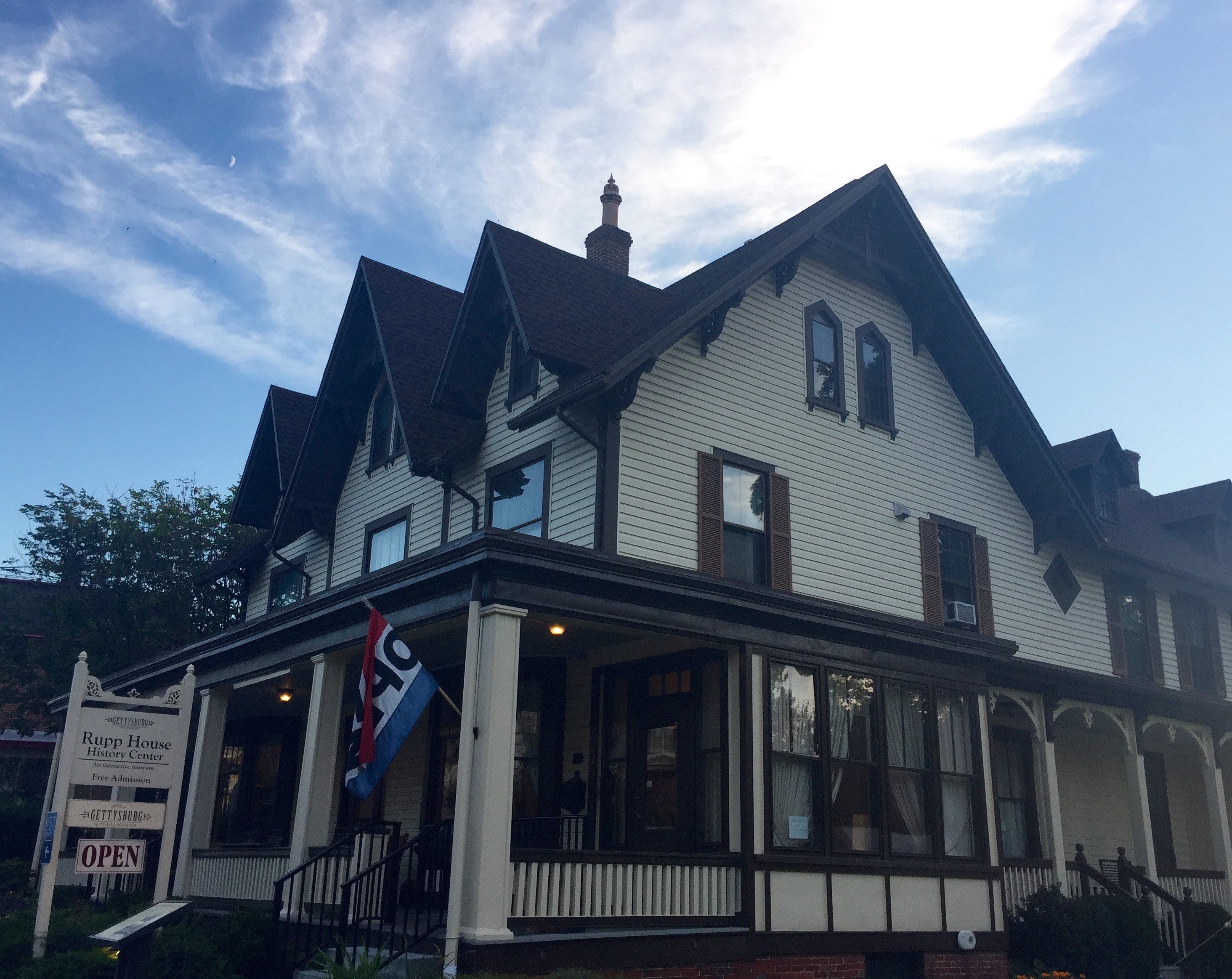
The Rupp Tavern, currently owned by the Gettysburg Foundation, stands at the intersection of Baltimore and Steinwehr Avenue. Photo by the author.

Continue reading “Unfortunate Events and Special Circumstances: Why the Rupp Family Tells the Civilian Experience at Gettysburg”

“What About Thad Stevens?”: A Call to Action to Commemorate a Great Gettysburgian and an even Greater American

By Jeff Lauck ’18

I love Lincoln. He adorns my iPhone case. A poster of him hangs in my room. I occasionally wear his signature stovepipe hat around the house. Earlier this week, I wrote about the newly dedicated Abraham Lincoln statue outside of Stevens Hall at Gettysburg College. I now make an effort to walk by it every day on my way to class.

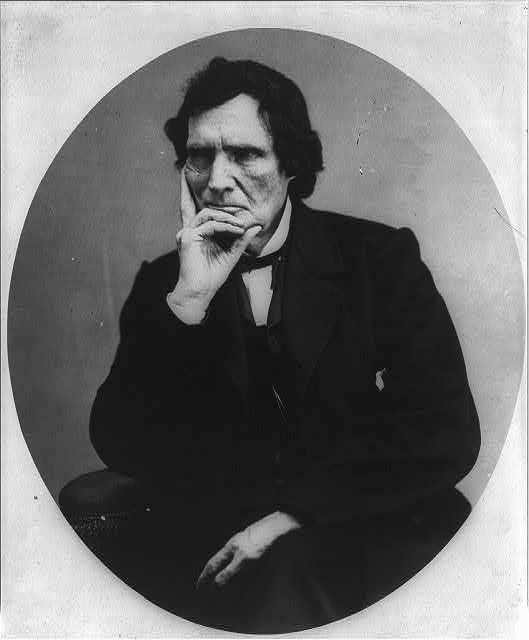
Regardless of my more-than-slight obsession with our 16th President, I couldn’t help but feel a bit disappointed when I heard the space in front of Stevens Hall was to be the spot for another Lincoln statue. When I walked on campus for the first time this semester, I saw the new walkway and the granite pedestal, which very clearly would soon be the base for a new statue. Not having heard who the statue would depict, my mind flurried with possibilities. I quickly settled on the perfect candidate: Thaddeus Stevens. Thaddeus Stevens had, after all, provided the land for the college when it was first founded in 1832. He was an avid abolitionist and supporter of freedmen during Reconstruction. A statue seemed like a perfect way to recognize his efforts during the sesquicentennial years of Reconstruction. Most importantly, the statue was going to be right outside Stevens Hall, a building that was named for him. But Thaddeus Stevens was not the subject of this new statue. Rather, “The Great Emancipator” has taken a permanent seat on our campus.

Where is the love for Thaddeus Stevens? M. P. Price. Portrait of Thaddeus Stevens, 1792-1868. Published in 1898. Library of Congress.

Continue reading ““What About Thad Stevens?”: A Call to Action to Commemorate a Great Gettysburgian and an even Greater American”

css.php