
The Yankee Plague: Lorien Foote Discusses Escaped Prisoners and the Collapse of the Confederacy

By Ashley Whitehead Luskey

foote1
Image courtesy of Texas A&M University.

Over the course of this year, we’ll be interviewing some of the speakers from the upcoming 2017 CWI conference about their talks. Today we are speaking with Dr. Lorien Foote.  Dr. Foote is a Professor of History at Texas A&M University, where she teaches classes in the Civil War and Reconstruction, war and society, and 19th-century American reform movements.  She is the author of The Gentlemen and the Roughs: Manhood, Honor, and Violence in the Union Army (NYU Press, 2010), which received honorable mention as finalist for the 2011 Lincoln Prize.  She is also the author of Seeking the One Great Remedy: Francis George Shaw and Nineteenth-Century Reform (Ohio University Press, 2003).  Dr. Foote is the creator and principal investigator of a project with the Center for Virtual History at the University of Georgia that is currently mapping the movement of 3000 Federal prisoners of war who escaped from the Confederacy during the American Civil War. Her most recent book, The Yankee Plague: Escaped Prisoners and the Collapse of the Confederacy is forthcoming this October from UNC Press.

CWI:  Which instances of Union prisoner-of-war escapes will you be discussing in your talk?  Who was involved in these escape efforts, and what roles did they play?  What impact did these escapes have on southerners and the Confederate war effort?  What does a study of these escapes tell us about the soldier experience and/or the broader military, political, and cultural history of the war?

FOOTE: My talk will describe the mass escape of 2800 POWs from Confederate prisons in South Carolina between September 1864 and February 1865.  When Confederate officials tried to move prisoners to keep them out of the path of Sherman’s army, bureaucratic problems and chaos created conditions that allowed hundreds of prisoners to escape from trains and from the open fields where they were being held.  Once prisoners escaped, they sought the safety of Union lines on the South Carolina coast or in Knoxville, TN.  Some tried to find Sherman’s army.  These fugitives were aided by slaves and deserters, who provided them with food, guides, information, and shelter.  Slaves created organizations and military companies to help the escaped Yankees which accelerated the collapse of slavery in the state.  Confederate deserters often traveled to Knoxville with the escaped prisoners, and thousands of men traveled through the mountains in the winter. Loyal Confederates faced the threat of these vagrants on their own and refused to help defend their state against Sherman’s forces because they were trying to secure order in their farms and neighborhoods.  Before Sherman’s army invaded, South Carolina’s war effort had collapsed. Continue reading “The Yankee Plague: Lorien Foote Discusses Escaped Prisoners and the Collapse of the Confederacy”

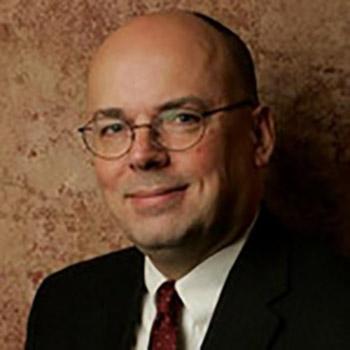
Brooks Simpson on Ulysses S. Grant and the Politics of Reconstruction

Brooks Simpson
Brooks Simpson. Image courtesy of ASU.

By Ashley Whitehead Luskey

Over the course of this year, we’ll be interviewing some of the historians scheduled to speak at the 2016 CWI conference about their upcoming talks and their thoughts about Reconstruction and its legacies.  Today, we’re speaking with Brooks Simpson, ASU Foundation Professor of History at Arizona State University. His numerous publications include: The Reconstruction Presidents (University Press of Kansas, 2009), Union and Emancipation: Essays on Politics and Race in the Civil War Era (Kent State University Press, 2009, a volume co-edited with David Blight), The Civil War in the East, 1861-1865 (Potomac Books, 2013), and The Civil War: The Third Year Told by Those Who Lived It, an edited volume published in 2013 by the Library of America. He also maintains the blog Crossroads.

CWI: What were Ulysses S. Grant’s goals for the newly reunited nation during the Reconstruction period? How did his vision for postwar America evolve over time?

SIMPSON: Grant sought to balance sectional reconciliation and reunion among whites with protecting the freedpeople in the aftermath of the destruction of slavery. Over time, he came to realize that African Americans needed protection and assistance as they defined what freedom meant, adding political rights (including suffrage) to the need to secure equality before the law regardless of race. Grant contended that reconciliation did not require the acceptance of continued rebellious behavior. Furthermore, he believed that the continued resistance to Reconstruction by those people in the North who had not wholeheartedly supported the war effort should not be tolerated. Grant never doubted the cause for which he fought and saw no reason to apologize for or tolerate criticisms of the Union war effort. Continue reading “Brooks Simpson on Ulysses S. Grant and the Politics of Reconstruction”

When Confederates Came Marching Home: Jason Phillips on Southern Veterans and Reconstruction

By Ashley Whitehead Luskey

Jason Phillips. Image courtesy of West Virginia University.

Over the course of this year, we’ll be interviewing some of the historians scheduled to speak at the 2016 CWI conference about their upcoming talks and their thoughts about Reconstruction and its legacies. Today, we’re speaking with Jason Phillips, the Eberly Professor of Civil War Studies at West Virginia University. He is the author of Diehard Rebels: The Confederate Culture of Invincibility (University of North Carolina Press, 2007) and the editor of Storytelling, History, and the Postmodern South (University of North Carolina Press, 2013). He is currently at work on a second book, Civil War Looming: A History of the Future, which examines how Americans anticipated the Civil War and how those prophecies ultimately shaped their experiences and memories of the war.

CWI:  What obstacles—physical, emotional, political, social, financial, cultural—did the Confederate veteran face upon returning home, and how did he seek to deal with them? In what ways did Confederate veterans’ expectations of returning home match with the reality of the homecoming experience, and in what ways were they unprepared for or confounded by the realities of their homecoming?

PHILLIPS: As your question suggests, defeat stared Confederate veterans in the face in every facet of their lives. Failure was a physical, emotional, political, social, financial, and cultural fact that confronted and confounded returning rebels. Patrick Gilmore’s song, “When Johnny Comes Marching Home,” encapsulated how Confederates anticipated their homecoming. Communities would welcome returning heroes with fanfare. Church bells would peal with joy. Reality mocked such dreams. But if Confederates were unprepared for defeat, they were also unprepared for federal leniency. Many rebels expected the government to punish treason. The Confederate rank and file didn’t fear personal imprisonment or execution, as their generals and political leaders did, but they dreaded disfranchisement, confiscation of property, and a prolonged military occupation of the South. What happened was far less severe, and that federal leniency in 1865 emboldened Confederate veterans to resist Radical Reconstruction years later.

Confederate veterans reunion, Little Rock, AR, 1911. Image courtesy of the Encyclopedia of Arkansas.

Continue reading “When Confederates Came Marching Home: Jason Phillips on Southern Veterans and Reconstruction”

The Invention of the New South? An Interview with William A. Link

By Ashley Whitehead Luskey

William Link
Bill Link. Image courtesy of the University of Florida.

Over the course of this year, we’ll be interviewing some of the historians scheduled to speak at the 2016 CWI conference about their upcoming talks and their thoughts about Reconstruction and its legacies. Today, we’re speaking with William A. Link, the Richard J. Milbauer Professor of History at the University of Florida. Link’s publications include: A Hard Country and a Lonely Place: Schooling, Society, and Reform in Rural Virginia, 1870-1920 (UNC Press, 1986), The Paradox of Southern Progressivism 1880-1920 (UNC Press, 1992), Roots of Secession: Slavery and Politics in Antebellum Virginia (UNC Press, 2002), and most recently, Righteous Warrior: Jesse Helms and the Rise of Modern Conservatism (St. Martin’s Press, 2008).

CWI:  What were the defining elements of the New South?  What were some of the major forces and players who helped to create the New South?

LINK: Henry W. Grady, newspaper editor and publicist, perhaps became best known for popularizing the concept of the New South. In 1886, speaking before a distinguished group of northerners in New York City—which included Gen. William T. Sherman—Grady explained how a New South arose following the end of the Civil War. “We have let economy take root and spread among us as rank as the crabgrass which sprang from Sherman’s cavalry camps,” he declared, “until we are ready to lay odds on the Georgia Yankee, as he manufactures relics of the battlefield in a one-story shanty and squeezes pure olive oil out of his cotton-seed, against any downeaster that ever swapped wooden nutmegs for flannel sausages in the valleys of Vermont.” The New South, a term in common usage during the period after Reconstruction up until the early 20th century, became both an ideological construct and a social movement. It was a device, above all, serving to describe how the region was open for business to northern investors. According to Grady’s New South, adopted in what amounted to a social movement by promoters and boosters to define the South differently, the region was no longer dependent on slavery, fully reconciled to the Union, but also fully invested in the principle of white supremacy. Continue reading “The Invention of the New South? An Interview with William A. Link”

Southern Reconstruction and Constructed Memory: Anne Marshall Talks Veterans, Heritage Groups, and Reconcilation

By Ashley Whitehead Luskey

Anne Marshall History professor environmental portrait
Anne Marshall. Image courtesy of Mississippi State University

Over the course of this year, we’ll be interviewing some of the historians scheduled to speak at the 2016 CWI conference about their upcoming talks and their thoughts about Reconstruction and its legacies. Today, we’re speaking with Anne Marshall, Associate Professor of History at Mississippi State University. Marshall’s most recent publications include Creating a Confederate Kentucky: The Lost Cause and Civil War Memory in a Border State (University of North Carolina Press, 2010), and “The Jack Burden of Southern History: Robert Penn Warren, C. Vann Woodward, and Historical Practice,” in Storytelling, History, and the Postmodern South, ed. by Jason Phillips (Louisiana State University Press, 2013).

CWI: What role did memory, memorial associations, and the prolific creation of Civil War monuments play during the Reconstruction era?

MARSHALL: The efforts of both former white Confederates and white Unionists to commemorate the memory of the dead and surviving soldiers played a significant role in helping the American public deal with the trauma of war. Monuments and veterans associations became about much more about honoring the past, however. They also served as an effective way to shape the present during Reconstruction. Union veterans associations like the Grand Army of the Republic served as an advocacy group within the Republican Party, while black Union veterans often drew upon their service in the U.S. Army as grounds for obtaining and retaining the rights of citizenship in the post-war era. Most notably, white southerners created an entire worldview surrounding the concept of the Lost Cause, which they wielded to turn back the tide of federal Reconstruction and maintain white supremacy. In many ways, the very different aims of memorial groups who channeled the memory of the Civil War toward different ends became a way of continuing to fight the war in culture and in policy well after the fighting on the battlefield was over. Continue reading “Southern Reconstruction and Constructed Memory: Anne Marshall Talks Veterans, Heritage Groups, and Reconcilation”

A New Angle on the Freedmen’s Bureau: A Conversation with James Downs

Jim Downs
Jim Downs. Image courtesy of Connecticut College.

By Ashley Whitehead Luskey

Over the course of this year, we’ll be interviewing some of the historians scheduled to speak at the 2016 CWI conference about their upcoming talks and their thoughts about Reconstruction and its legacies. Today, we’re speaking with James Downs. Downs is an Associate Professor of History and American Studies at Connecticut College. He recently published Sick from Freedom: African-American Illness and Suffering During the Civil War and Reconstruction (Oxford University Press, 2012), which tells the largely unknown story of the many former slaves who died at the moment of freedom. Dr. Downs has also published on the representations of slavery in museums and historic landmarks in the United States, England, and the Bahamas. He is currently working on two book projects—the first on the international outbreak of the 19th-century cholera epidemics, and the second on the history of sexuality. The recent recipient of a prestigious New Directions Fellowship, Dr. Downs is spending the 2015-2016 academic year on sabbatical as an Andrew W. Mellon fellow at Harvard University.

CWI: What was the Freedmen’s Bureau? Who operated it, and what purposes did it serve?

DOWNS: The Freedmen’s Bureau was a federal government agency that helped to ease former bondspeople’s transition from slavery to freedom. Established by Congress in 1865 as the Bureau of Refugees, Freedmen, and Abandoned Land, the Freedmen’s Bureau negotiated labor contracts; established provisional schools; constructed schools and began the first-ever system of federal medical care—building over forty hospitals, employing over 120 physicians, and treating an estimated one million formerly enslaved people. Continue reading “A New Angle on the Freedmen’s Bureau: A Conversation with James Downs”

A Complex Homecoming for Union Veterans: An Interview with Lesley Gordon

Lesley Gordon
Lesley Gordon. Image courtesy of the University of Akron.

By Ashley Whitehead Luskey

Over the course of this year, we’ll be interviewing some of the historians scheduled to speak at the 2016 CWI conference about their upcoming talks and their thoughts about Reconstruction and its legacies.  Today, we’re speaking with Lesley Gordon, Professor of History at The University of Akron. Gordon’s publications include: General George E. Pickett in Life and Legend (University of North Carolina Press, 1998), Intimate Strategies of the Civil War: Military Commanders and their Wives (Oxford University Press, 2001), and This Terrible War: The Civil War and its Aftermath (Longman, 2003). Her latest book, A Broken Regiment: The 16th Connecticut’s Civil War, was published in 2014 by the Louisiana State University Press.

CWI: What challenges and opportunities did US veterans encounter upon returning home from the war?  What was the process of re-assimilation back into civilian life like?  How did that process vary across different regions, classes, races, and ethnicities?

Gordon: Union veterans came home after the war hoping to return to normalcy. Demobilization happened quickly, especially considering how many soldiers had served and how long this “terrible” war had lasted. However, many found resuming their prewar lives difficult. Some of course did successfully return to their families, jobs and lives and blended smoothly and quietly into postwar society. We know more about those who struggled and failed—they simply left more records or drew more public attention. Some veterans were recovering from lingering wounds, physical, emotional and psychological ones. Yet, increasingly all veterans realized that they faced a changed postwar society, and a civilian population largely ready to move on. By the turn of the century, a growing perception of the Union veteran was that of the dependent pensioner, reliant on the state for care and financial support.

Continue reading “A Complex Homecoming for Union Veterans: An Interview with Lesley Gordon”

The Occupation of the South: An Interview with Andrew Lang

By Ashley Whitehead Luskey

Andrew Lang
Dr. Andrew Lang. Image courtesy of Mississippi State University.

Over the course of this year, we’ll be interviewing some of the historians scheduled to speak at the 2016 CWI conference about their upcoming talks and their thoughts about Reconstruction and its legacies.  Today, we’re speaking with Andrew Lang, Assistant Professor of History at Mississippi State University. Lang is the author of Waging Peace in the Wake of War: United States Soldiers, Military Occupation, and the American Civil War Era (currently under contract with Louisiana State University Press), as well as several scholarly essays.

CWI: What roles—political, economic, social—did the U.S. military play in the reconstruction of the South during the postwar occupation of the region?  What was the nature of its interactions with Confederate veterans? With women? With free blacks?  What regional variations did members of the U.S. military encounter during its occupation of the South in the Reconstruction era?

LANG: The U.S. military played a substantial role in the Reconstruction South. Following Confederate surrender, the Army was demobilized at a stunning, rapid pace, yet the institution retained important war powers which had guided Union arms to victory during the Civil War. In many ways, the Army assumed peacetime responsibilities with which it had rarely before been tasked, especially in politics and civil-military relations. The American tradition had long viewed a powerful military establishment, wielding strong political, economic, and societal influence, with suspicion. And yet it seemed that Union victory would not be assured without a substantial military force to maintain peace in the wake of wartime destruction while also ensuring the safety of freedpeople, southern Unionists, and Republicans who inhabited the South in the months and years after Appomattox. Serving as a formal peacekeeping force, overseeing elections and constitutional conventions, regulating local courts, policing the countryside, and engaging in a degree of counterinsurgency, the Army was perhaps the most important institution in the South during the Reconstruction era. This was true especially in managing the post-emancipation order. After playing a key part in the processes of wartime emancipation, the Army performed a crucial role in running the Freedmen’s Bureau, safeguarding African American rights, negotiating labor contracts and challenging the re-authorization of old planter regimes, acting as a buffer between freedpeople and former slave owners, and serving as a refuge to which freedpeople, notably women, could turn to report white transgressions and violence. As with most military occupations, the Army found that its presence in the South was welcomed warmly in some places and with much more hostility in others. Southern Unionists—white southerners who had opposed the Confederacy—as well as those pockets of the South that had long been under wartime military supervision, welcomed Union soldiers as forces of stability and protection. Some white southerners got along amicably with Union occupiers, while others expressed abject hatred and defiance, usually in areas hardly touched by Union patrols or in regions of formerly concentrated slave holding. Ironically, some evidence suggests that former Confederate soldiers—but certainly not all—were inclined to give Union soldiers the least amount of trouble. However, the occupiers eventually learned that some of those who had once filled the ranks of rebel armies were also those who joined the clandestine terror organizations that spread political and racial violence across the region. Continue reading “The Occupation of the South: An Interview with Andrew Lang”

Reconstruction in the North and South: An Interview with Andrew Slap

By Ashley Whitehead Luskey

Dr. Andrew Slap
Dr. Andrew Slap

Over the course of this year, we’ll be interviewing some of the prominent speakers scheduled to speak at the 2016 CWI conference about their upcoming talks and their thoughts about Reconstruction and its legacies. Today, we’re speaking with Andrew Slap, Associate Professor of History at East Tennessee State University. He is the author of several books, including The Doom of Reconstruction: The Liberal Republican in the Civil War Era (Fordham University Press, 2006).  He is also the editor of This Distracted and Anarchical People: New Answers for Old Questions About the Civil War-Era North (Fordham University Press, 2013) and Reconstructing Appalachia: The Civil War’s Aftermath (The University Press of Kentucky, 2010). Slap serves as the series editor for “Reconstructing America” and “The North’s Civil War,” both published through Fordham University Press.

CWI: How was Reconstruction in the North similar to, and different from, Reconstruction in the South?  What challenges or opportunities existed in the North, and for whom, during the era of Reconstruction?

SLAP: Reconstruction in the North was strikingly different than Reconstruction in the South. For the South, Reconstruction meant massive upheaval (including almost four million African American slaves becoming free citizens), an occupying army, and having to rebuild an economy devastated by armies fighting across the South for years. By contrast, Reconstruction in the North was more about opportunities created by the war, and these extended throughout northern society. Economic legislation passed during the Civil War, such as the Homestead Act and the Transcontinental Railroad, helped open the West to new waves of settlers. Many veterans left the army ready to improve their lives with bonus money, new networks of friends, and a sense of optimism. Debates about African American voting rights helped spur the Women’s suffrage movement, including the Wyoming Territory’s women’s suffrage provision in 1870 and Victoria Woodhull becoming the first female candidate for president of the United States in 1872. Continue reading “Reconstruction in the North and South: An Interview with Andrew Slap”

Historic Sites and the Interpretation of Reconstruction: An Interview with Emmanuel Dabney

By Ashley Whitehead Luskey

Emmanuel Dabney. Image courtesy Gettysburg College.

Over the course of this year, we’ll be interviewing some of the prominent speakers scheduled to speak at the 2016 CWI conference about their upcoming talks and their thoughts about Reconstruction and its legacies.  Today, we’re speaking with Emmanuel Dabney, park curator at Petersburg National Battlefield in Petersburg, Virginia. Dabney holds a B.A. in Historic Preservation from the University of Mary Washington and an M.A. in Public History from the University of North Carolina at Greensboro.  He maintains the blog Interpretive Challenges.

CWI: At what types of sites might we locate the history of Reconstruction?  What sites, specifically, lend themselves especially well to an interpretation of Reconstruction?

DABNEY: We should encounter the history of Reconstruction at a variety of sites including, but not limited to, local and state historical societies; historic house museums; and local, state, and National Park Service-operated sites and battlefields.

There are a host of sites that lend themselves to interpreting Reconstruction: State Capitol buildings with visitor centers (especially those located in the South), every Civil War battlefield and Civil War-era National Cemetery, historic plantations, and National Park Service units that relate to the Reconstruction presidents, such as President’s Park (aka The White House), Andrew Johnson National Historic Site, and Ulysses S. Grant National Historic Site. Continue reading “Historic Sites and the Interpretation of Reconstruction: An Interview with Emmanuel Dabney”

css.php