Pohanka Reflection: Jordan Cinderich on Gettysburg National Military Park

By Jordan Cinderich ’15

This post is part of a series on the experiences of our Pohanka Interns at various historic sites working on the front lines of history as interpreters and curators. Dr. Jill Titus explains the questions our students are engaging with here. 

As a summer employee at Gettysburg National Military Park, my responsibilities include everything from leading interpretive programs on the battlefield to answering questions at the ranger information desk. No matter the situation, I am usually communicating with visitors who are trying to exploit the maximum benefit possible from their time at this bountiful historical resource. The average visitor at the park is one that has never visited the site before, has very little knowledge of the options for interacting with the historical landscape, and has limited time to spend on the battlefield. In this regard, sometimes even explaining to a visitor his or her options becomes an interpretive experience, but that is to be expected.

Jordan Cinderich GETT

Continue reading “Pohanka Reflection: Jordan Cinderich on Gettysburg National Military Park”

Pohanka Reflection: Megan McNish at FredSpot

By Megan McNish ‘16

This post is part of a series on the experiences of our Pohanka Interns at various historic sites working on the front lines of history as interpreters and curators. Dr. Jill Titus explains the questions our students are engaging with here. 

For many people, the past can be a murky thing. As historians and interpreters, it is our challenge to connect people with a past that they may or may not understand. Some visitors to historic sites come in with their own connections, but for those who don’t, we’re responsible to make that connection for them. In my second summer as an interpreter for the National Park Service, I’ve discovered that most people connect best when we tell stories. Visitors often don’t care about troop movements on a map, unless they are tracing the story of an ancestor. What people crave, what we as humans crave, is a story. As interpreters, it’s easy to reel people in with individual stories, but more difficult to connect them to a broader historical narrative.

McNish

Continue reading “Pohanka Reflection: Megan McNish at FredSpot”

Complicating History: An Interview with Emmanuel Dabney in Three Parts, Part One

By Val Merlina ’14

Emmanuel Dabney, one of the Civil War Institute Summer Conference speakers, is a park ranger at Petersburg National Battlefield. At the Summer Conference, “The War in 1864,” he will give a lecture titled, “Catching Us Like Sheep in a Slaughter Pen”: The United States Colored Troops at the Battle of the Crater. In anticipation of the Institute, Emmanuel Dabney answered questions on intepretation, Petersburg, and the future of the Civil War. His responses will be posted in a three-part series.

Dabney

Continue reading “Complicating History: An Interview with Emmanuel Dabney in Three Parts, Part One”

Apprehension and Excitement: My Summer at Harpers Ferry

By Blair Mitchell ’16

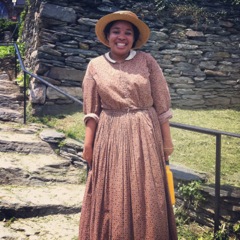
Before the start of my internship at Harpers Ferry National Historical Park, I only had vague ideas of what it was like to be a teacher. My thoughts were mostly along the lines of, “yeah, I could teach”. However, abstract thoughts rarely prepare you for the real thing. My vision of flawlessly teaching 30 middle-schoolers about history inevitably did not line up with reality, leaving room for doubt to creep in. At first it seemed daunting to be in charge of so many students and lead them through the history of Harpers Ferry. But as I observed and taught more I realized how much fun it was, in addition to being challenging.

Blair at HF
Blair at Harpers Ferry NHP

The best thing about my Mondays and Tuesdays working with middle school students from around the country is having the opportunity to teach them new things and possibly leave an everlasting mark on them. But this potential for success and failure is what made me so apprehensive about teaching in the first place.  For most of the children that I teach, this is the first time they have ever learned about John Brown, and this both excites and scares me. On one hand, it is exciting because I have the chance to inspire a child to become a historian, but on the other hand they could lose interest and label all history as “boring”. I have always been aware of the power teachers hold in regard to the interests and futures of their students, and this summer that responsibility has fallen to me. Even though I only have my students for a day, I still believe that just one day can make a huge impact. Continue reading “Apprehension and Excitement: My Summer at Harpers Ferry”

Painting the Stories of Our Grandfathers

By Rebecca Duffy ‘16

At Fredericksburg and Spotsylvania National Military Park I, as an intern, began my summer with nearly two weeks of training. Of course, we interns wear many hats. We are the frontline historians: friendly faces behind the desk at the visitor’s center, voices over the PA system reminding visitors that the “twenty-two minute film on the Battle of Fredericksburg will be beginning momentarily.” We are the authors and guides of most of the daily tours. Thus, with all of that information- from park operations to living in quarters to the site specific facts our visitors came to learn-we need every second of that training. Yet the most difficult job we have, interpretation, using the tangible objects around us to bring the stories of the war to life, cannot really be taught. It’s learned best on-the-job.

Image
The Innis House along Sunken Road at Fredericksburg

Continue reading “Painting the Stories of Our Grandfathers”

Living History at George Washington’s Mount Vernon

By Peter D’Arpa ’14

At the time of writing this piece I have just completed my third week interning at George Washington’s Mount Vernon. Up until my first day of work I had no idea how amazing this internship would truly be. I assumed that it would be very similar to my internship from last summer with the Richmond National Battlefield Park Service. My assumption has been proven very wrong.
GWMtVernonInterns
Continue reading “Living History at George Washington’s Mount Vernon”

Interpretation and Revelation: A Training Odyssey

By Bryan Caswell ’15

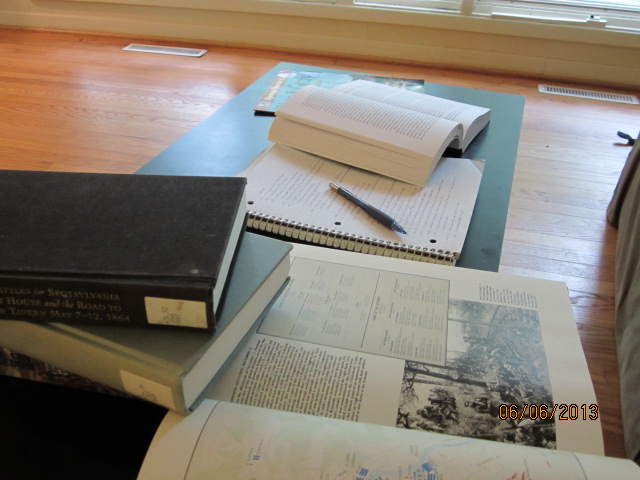
Three weeks of training. Just the thought of what awaited me in my first days as an intern at Fredericksburg and Spotsylvania National Military Park made me want to groan. Yes, yes, I realized that we all needed to be introduced to the National Park Service and walked through the policies of the park, working the information desk, assisting visitors, and other administrative trivialities. But could that not be accomplished in a few days? When would we get to what I was really interested in, what I couldn’t wait to do and what (I thought) I didn’t need any preparation for? When would I start giving walking tours?
021
Continue reading “Interpretation and Revelation: A Training Odyssey”

css.php