Reluctant Rebels? Historian Kenneth Noe Talks Late-Enlistees in the Confederate Army

By Ashley Whitehead Luskey

noe
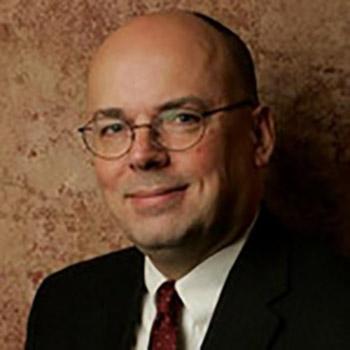
Image courtesy of Auburn University.

Over the course of this year, we’ll be interviewing some of the speakers from the upcoming 2017 CWI conference about their talks. Today we are speaking with Dr. Kenneth Noe.  Dr. Noe is the Draughon Professor of Southern History at Auburn University, where he teaches classes on the American Civil War and Appalachian history.  He is the author or editor of seven books, including Southwest Virginia’s Railroad: Modernization and the Sectional Crisis (University of Illinois Press, 1994); A Southern Boy in Blue: The Memoir of Marcus Woodcock, 9th Kentucky Infantry (U.S.A.) (University of Tennessee Press, 1996); The Civil War in Appalachia: Collected Essays, (co-edited with Shannon H. Wilson, University of Tennessee Press, 1997); Perryville: This Grand Havoc of Battle (University Press of Kentucky, 2002); Politics and Culture of the Civil War Era: Essays in Honor of Robert W. Johannsen, (co-edited with Daniel J. McDonough, Susquehanna University Press, 2006); Reluctant Rebels: The Confederates Who Joined the Army After 1861 (UNC Press, 2010); and, most recently, The Yellowhammer War: Alabama in the Civil War and Reconstruction (University of Alabama Press, 2014). He also has written many articles and essays for publications in scholarly journals such as Civil War History and The Journal of Military History.  Dr. Noe was a Pulitzer Prize entrant and the winner of the 2003 Kentucky Governor’s Award, the 2002 Peter Seaborg Book Award for Civil War Non-fiction, and the 1997 Tennessee History Book Award.  He currently is writing a book on Civil War weather.  Dr. Noe is a frequent speaker on the Civil War Round Table circuit, a participant in the Organization of American Historians Distinguished Lectureship Program, and served as the 2008-2009 president of the Alabama Historical Association. He currently serves on the Board of Editors of Civil War History, and was a consultant for the NBC series Who Do You Think You Are?

CWI:  Who do you define as a “reluctant rebel,” and why were these individuals “reluctant?”

NOE:  In my study, “reluctant rebels” are men who enlisted in the Confederate Army no earlier than January 1862.  While I also look at a few draftees, my real interest is the men who could have enlisted at the beginning of the war but chose not to do so.  Their reluctance, I concluded, stemmed from many individual reasons, but generally speaking they were less politicized than those who went before them.  Their decisions to not enlist after Fort Sumter and also to sign up later usually reflected more practical concerns, notably the threat of Union troops wrecking their small local worlds. Continue reading “Reluctant Rebels? Historian Kenneth Noe Talks Late-Enlistees in the Confederate Army”

Clara Barton and the Missing Soldiers Office: A Chat with Amelia Grabowski

By Ashley Whitehead Luskey

grab1
Image courtesy of Amelia Grabowski

Over the course of this year, we’ll be interviewing some of the speakers from the upcoming 2017 CWI conference about their talks. Today we are speaking with Amelia Grabowski, the Education and Digital Outreach Specialist at the National Museum of Civil War Medicine and the Clara Barton Missing Soldiers Office Museum.  A graduate of Gettysburg College, she earned her Master’s degree in Public Humanities and Cultural Heritage from Brown University, where she received the Master’s Award for Engaged Citizenship and Community Service.  Ms. Grabowski has previously worked for the Lower East Side Tenement Museum, the Bullock Texas State History Museum, humanities councils, and various community organizations. 

CWI:  What was the Missing Soldiers Office?  When, why, and how was it created?

GRABOWSKI: Clara Barton opened up the Missing Soldiers Office in 1865. Her original intention was to connect prisoners of war with their families. However, this operation quickly grew. Clara Barton and her team received over 63,000 letters from people looking for missing Union soldiers. They ultimately found over 22,000 missing soldiers.

grab2
Original sign from the Missing Soldiers Office. Image courtesy of the National Museum of Civil War Medicine

CWI:  How did the Missing Soldiers Office operate, and what role did Clara Barton play in those operations?  What challenges did Barton encounter in her work with the Office?

GRABOWSKI: Barton rented many of the rooms in the boarding house where she lived. She transformed these rooms into the offices of the Missing Soldiers Office. She hung a sign outside and paid fifty cents to have a mail slot cut into the office door. Soon, thousands of people were sending letters and visiting the office in person, searching for their missing loved ones. Barton and her employees used their own experience on the battlefield, their network of acquaintances, and the power of the press to find over 22,000 missing soldiers . . . living and dead. Using only pen, paper, and the printing press, Barton conquered the chaos and confusion of both battle and reconstruction to find as many missing soldiers as possible. Continue reading “Clara Barton and the Missing Soldiers Office: A Chat with Amelia Grabowski”

Washington Brotherhood: A Talk with Rachel Shelden

shelden3
Image courtesy of the University of Oklahoma.

By Ashley Whitehead Luskey

Over the course of this year, we’ll be interviewing some of the speakers from the upcoming 2017 CWI conference about their talks. Today we are speaking with Dr. Rachel Shelden, Assistant Professor of American History at the University of Oklahoma.  Dr. Shelden specializes in the long nineteenth century. Her research and teaching interests include slavery and abolition, the Civil War, the U.S. South, and political and constitutional history. She is the author of Washington Brotherhood: Politics, Social Life, & the Coming of the Civil War (UNC Press, 2013), which received honorable mention for the Wiley-Silver Prize for the best first book on the American Civil War. Dr. Shelden is also co-editor, with Gary Gallagher, of A Political Nation: New Directions in Mid-Nineteenth-Century American Political History (University of Virginia Press, 2012). Her current project explores how judicial ethics influenced Supreme Court decisions and federal governance in the nineteenth century, particularly in cases of race, gender, and class.

CWI: What role did social politics play in antebellum political life in Washington, D.C.?

SHELDEN: The social life of congressmen and other members of the federal government was critically tied to politicking in antebellum Washington, D.C. Politicians who came to the capital city were expected to participate in the vibrant social life of Washington, attending parties, balls, and dinners, calling on (paying respects to) neighbors and other political actors, and generally engaging with the most prominent city residents. These politicians also typically lived with men from across the political and geographical spectrum, making bi-partisan and cross-sectional social life a critical part of the daily experience in Washington. Partially as a result of these social experiences and partially because of the difficult nature of hammering out policy in the public spaces of the Capitol, congressional business often happened in social settings rather than official political ones.

shelden1
Engraving depicting President Franklin Pierce departing the popular Willard Hotel during his inauguration in March, 1853. The Willard Hotel was the site of the unsuccessful Peace Conference in 1861. Image courtesy of the Library of Congress

Continue reading “Washington Brotherhood: A Talk with Rachel Shelden”

From Santa to the Civil War: Fiona Deans Halloran on the Political Cartoons of Thomas Nast

halloran3
Image courtesy of Rowland Hall—St. Mark’s School.

By Ashley Whitehead Luskey

Over the course of this year, we’ll be interviewing some of the speakers from the upcoming 2017 CWI conference about their talks. Today we are speaking with Dr. Fiona Deans Halloran.  Dr. Halloran teaches U.S. history at Rowland Hall-St. Mark’s School in Salt Lake City, Utah.  Prior to her arrival at Rowland Hall, she spent four years teaching 19th-century American history at Eastern Kentucky University, as well as several years in the history departments at Bates College and UCLA, where she earned her PhD in 2005.  Dr. Halloran is the author of Thomas Nast: The Father of Modern Political Cartoons (UNC Press, 2013).  She is the recipient of fellowships from the Huntington Library, the National Endowment for the Humanities, and the Gilder-Lehrman Institute of American History, and has served as an Associate Fellow of the Rothermere American Institute at the University of Oxford.

Minolta DSC
1864 political cartoon by Thomas Nast, “Compromise With the South.” Image courtesy of the Huntington Library.

CWI:  Who was Thomas Nast?  What are some of his most famous illustrations and political cartoons?  How did Nast’s personal background, motivations, and ideals influence his work?

halloran2
Thomas Nast. Image courtesy of the New York Public Library.

HALLORAN:  Thomas Nast was America’s first famous political cartoonist. Famous for his cartoons in support of the Republican Party and for his attacks on William M. “Boss” Tweed, Nast was celebrated for the force and wicked wit of his artistic commentary on American politics. The son of a politically-active father and a man who hated hypocrisy in public life, Nast’s fun-loving, idealistic personality infused his cartoons with a sense of fun that appealed to a deeply politically active generation of Americans. Continue reading “From Santa to the Civil War: Fiona Deans Halloran on the Political Cartoons of Thomas Nast”

Debating William Tecumseh Sherman with Dr. John Marszalek

marszalek
Image courtesy of Mississippi State University.

By Ashley Whitehead Luskey

Over the course of this year, we’ll be interviewing some of the speakers from the upcoming 2017 CWI conference about their talks. Today we are speaking with Dr. John Marszalek.  Dr. Marszalek is the Giles Distinguished Professor Emeritus at Mississippi State University, where he has taught courses in the Civil War, Jacksonian America, and race relations.  He also serves as the Director and Mentor of Distinguished Scholars at Mississippi State and as the Executive Director and Managing Editor of the Ulysses S. Grant Association.  He is the author or editor of 13 books and over 250 articles and book reviews. In addition to being named a distinguished alumnus by Canisius College, Dr. Marszalek received the Richard Wright Literary Award for lifetime achievement by a Mississippi author and the B.L.C. Wailes Award for national distinction in history from Mississippi Historical Society—the society’s highest award. He is presently researching a book on the development of the mythology surrounding Robert E. Lee and William T. Sherman.

CWI:  What aspects of William Tecumseh Sherman’s Civil War career do you plan on discussing as part of your four-person panel on “Debating Sherman”?  What, historically, have been the most popular topics of debate surrounding Sherman?  What aspects have been overlooked or under-debated?  In what direction is the current scholarship on Sherman headed?

MARSZALEK:  The major discussion concerning Sherman’s Civil War career deals with his development of “Destructive and Psychological Warfare.” He believed that the best way to win the war, without having to kill or maim southerners, many of whom were his long-time friends, was to destroy Confederate property rather than kill people.  Sherman’s reasoning and his implementation of war remains the most popular aspect of his military career.  Modern scholarship has moved away from seeing Sherman as a vandal to trying to understand his warfare.  Significantly, too, many historians are now writing books and articles about “gender” aspects of his destructive psychological warfare.

marszalek2
General William T. Sherman on horseback on the Union line near Atlanta, 1864. Image courtesy of the Library of Congress.

Continue reading “Debating William Tecumseh Sherman with Dr. John Marszalek”

Abraham Lincoln as Wartime President: 4 Questions for Lincoln Scholar Harold Holzer

By Ashley Whitehead Luskey

holzer1
Image courtesy of the Abraham Lincoln Bicentennial Foundation

Over the course of this year, we’ll be interviewing some of the speakers from the upcoming 2017 CWI conference about their talks. Today we are speaking with Mr. Harold Holzer, one of the nation’s leading authorities on Abraham Lincoln and the political culture of the Civil War era.  A prolific writer and lecturer, as well as a highly sought-after guest on television, Mr. Holzer served for six years as the Chairman of The Lincoln Bicentennial Foundation and for ten years as the co-chair of the U.S. Abraham Lincoln Bicentennial Commission.  In 2008, he was the recipient of the National Humanities Medal.  He currently serves as the Jonathan F. Fanton Director of Hunter College’s Roosevelt House Public Policy Institute.  Mr. Holzer has authored, co-authored, or edited 52 books and 560 articles and reviews for both popular magazines and scholarly journals.  His most recent major work, Lincoln and the Power of the Press: The War For Public Opinion (Simon & Schuster, 2014), won numerous prestigious awards, including the Lincoln Prize from the Gilder Lehrman Institute.

CWI:  How did Lincoln’s relationship with the Constitution, the American people, his political allies and adversaries change or evolve over the course of the war?  What were Lincoln’s priorities as a wartime president, and how did he strive to balance conflicting priorities?

HOLZER: Lincoln did a Blondin-like tightrope act as Civil War President—Blondin, by the way, was the most famous tightrope walker of his day—most adroitly when he tried to balance the interests, and maintain the support, of both abolitionists and conservatives.  Nowhere was this delicate touch more urgently required than in his effort to maintain the loyalty of the slaveholding Border States, many of whose residents were dubious about Union, and certainly opposed to emancipation.  That Lincoln actually gained support over the years in a once-hostile state like Maryland, where he had been driven in 1861 to wearing a disguise and sneaking through the state to reach Washington for his inaugural, represented one of his greatest political triumphs.  He thought so, too. Continue reading “Abraham Lincoln as Wartime President: 4 Questions for Lincoln Scholar Harold Holzer”

Sticking to His Plan: An Interview with Dedication Day Keynote Speaker LeVar Burton

By Annika Jensen ’18

The week before Dedication Day I had the privilege of interviewing keynote speaker and Emmy Award-winning actor LeVar Burton, who has starred in Roots, Star Trek: The Next Generation, and Reading Rainbow. I knew this was the perfect opportunity to engage in a serious dialogue about race, as the most dramatic and consequential presidential elections had been decided just a week previous, and I was thrilled when Mr. Burton answered all of my questions with poise and understanding, charging head-on into difficult but immensely relevant topics. The messages he conveyed are powerful and will stick with me as I navigate the political climate of the next four years (and beyond), and his call to action has encouraged me to seek meaningful and effective ways of promoting tolerance and pursuing change. I know his words will have the same effect on many of you.

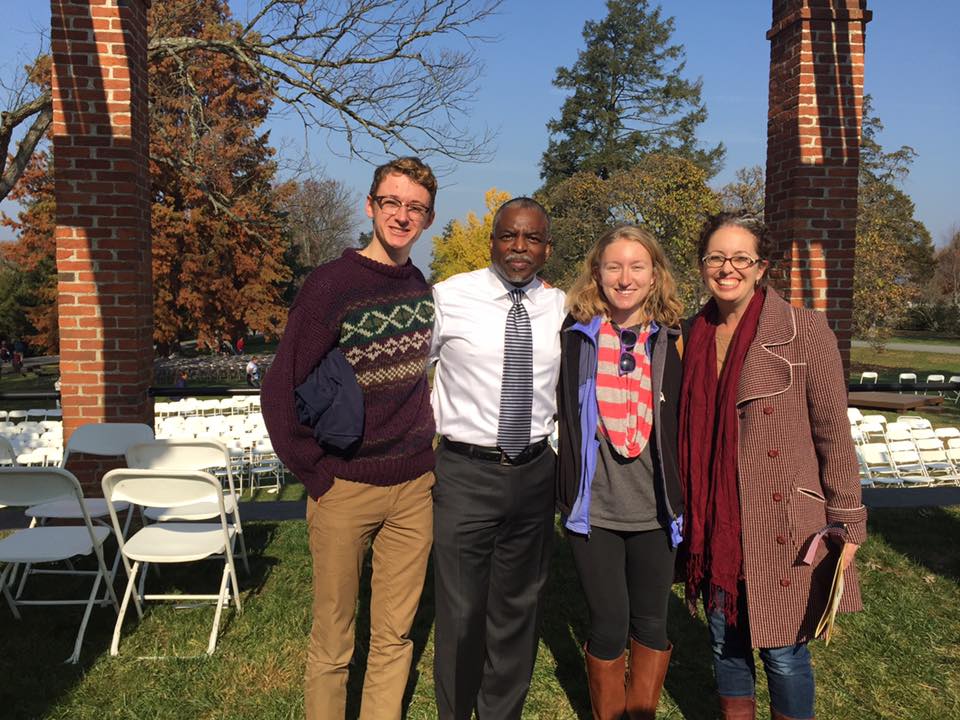
Mr. Burton graciously consented to a photograph and group hug with student Luke Frigon, the author, and Penny Isherwood's esteemed mother, Sam. Photo courtesy of the author.
Mr. Burton graciously consented to a photograph and group hug with student Luke Frigon, the author, and Penny Isherwood’s esteemed mother, Sam. Photo courtesy of the author.

I extend my sincerest thanks to Mr. Burton not only for agreeing to be interviewed, but for giving all of us something to think about. Here is what he said.

The Gettysburg Compiler: Considering the historical significance of Gettysburg and the role of race in the Civil War, how can we create and foster dialogue about race on campus after this month’s election results?

LeVar Burton: My decision since [the election] has been to rededicate myself to the work I consider my life’s mission. In the service of that, I’ve promised myself that today and tomorrow and Saturday and every day I am able, for the remainder of my life, to speak my truth. Having grown up a black person I have often times held my tongue when I wanted to say what was in my heart for fear of offending the majority population. However, the difference between where we are now and Lincoln’s time is the majority population is no longer the majority. This country has changed dramatically. The Civil War and the necessity for Lincoln’s address in Gettysburg was in response to a changing America, even then. Continue reading “Sticking to His Plan: An Interview with Dedication Day Keynote Speaker LeVar Burton”

The Yankee Plague: Lorien Foote Discusses Escaped Prisoners and the Collapse of the Confederacy

By Ashley Whitehead Luskey

foote1
Image courtesy of Texas A&M University.

Over the course of this year, we’ll be interviewing some of the speakers from the upcoming 2017 CWI conference about their talks. Today we are speaking with Dr. Lorien Foote.  Dr. Foote is a Professor of History at Texas A&M University, where she teaches classes in the Civil War and Reconstruction, war and society, and 19th-century American reform movements.  She is the author of The Gentlemen and the Roughs: Manhood, Honor, and Violence in the Union Army (NYU Press, 2010), which received honorable mention as finalist for the 2011 Lincoln Prize.  She is also the author of Seeking the One Great Remedy: Francis George Shaw and Nineteenth-Century Reform (Ohio University Press, 2003).  Dr. Foote is the creator and principal investigator of a project with the Center for Virtual History at the University of Georgia that is currently mapping the movement of 3000 Federal prisoners of war who escaped from the Confederacy during the American Civil War. Her most recent book, The Yankee Plague: Escaped Prisoners and the Collapse of the Confederacy is forthcoming this October from UNC Press.

CWI:  Which instances of Union prisoner-of-war escapes will you be discussing in your talk?  Who was involved in these escape efforts, and what roles did they play?  What impact did these escapes have on southerners and the Confederate war effort?  What does a study of these escapes tell us about the soldier experience and/or the broader military, political, and cultural history of the war?

FOOTE: My talk will describe the mass escape of 2800 POWs from Confederate prisons in South Carolina between September 1864 and February 1865.  When Confederate officials tried to move prisoners to keep them out of the path of Sherman’s army, bureaucratic problems and chaos created conditions that allowed hundreds of prisoners to escape from trains and from the open fields where they were being held.  Once prisoners escaped, they sought the safety of Union lines on the South Carolina coast or in Knoxville, TN.  Some tried to find Sherman’s army.  These fugitives were aided by slaves and deserters, who provided them with food, guides, information, and shelter.  Slaves created organizations and military companies to help the escaped Yankees which accelerated the collapse of slavery in the state.  Confederate deserters often traveled to Knoxville with the escaped prisoners, and thousands of men traveled through the mountains in the winter. Loyal Confederates faced the threat of these vagrants on their own and refused to help defend their state against Sherman’s forces because they were trying to secure order in their farms and neighborhoods.  Before Sherman’s army invaded, South Carolina’s war effort had collapsed. Continue reading “The Yankee Plague: Lorien Foote Discusses Escaped Prisoners and the Collapse of the Confederacy”

Brooks Simpson on Ulysses S. Grant and the Politics of Reconstruction

Brooks Simpson
Brooks Simpson. Image courtesy of ASU.

By Ashley Whitehead Luskey

Over the course of this year, we’ll be interviewing some of the historians scheduled to speak at the 2016 CWI conference about their upcoming talks and their thoughts about Reconstruction and its legacies.  Today, we’re speaking with Brooks Simpson, ASU Foundation Professor of History at Arizona State University. His numerous publications include: The Reconstruction Presidents (University Press of Kansas, 2009), Union and Emancipation: Essays on Politics and Race in the Civil War Era (Kent State University Press, 2009, a volume co-edited with David Blight), The Civil War in the East, 1861-1865 (Potomac Books, 2013), and The Civil War: The Third Year Told by Those Who Lived It, an edited volume published in 2013 by the Library of America. He also maintains the blog Crossroads.

CWI: What were Ulysses S. Grant’s goals for the newly reunited nation during the Reconstruction period? How did his vision for postwar America evolve over time?

SIMPSON: Grant sought to balance sectional reconciliation and reunion among whites with protecting the freedpeople in the aftermath of the destruction of slavery. Over time, he came to realize that African Americans needed protection and assistance as they defined what freedom meant, adding political rights (including suffrage) to the need to secure equality before the law regardless of race. Grant contended that reconciliation did not require the acceptance of continued rebellious behavior. Furthermore, he believed that the continued resistance to Reconstruction by those people in the North who had not wholeheartedly supported the war effort should not be tolerated. Grant never doubted the cause for which he fought and saw no reason to apologize for or tolerate criticisms of the Union war effort. Continue reading “Brooks Simpson on Ulysses S. Grant and the Politics of Reconstruction”

When Confederates Came Marching Home: Jason Phillips on Southern Veterans and Reconstruction

By Ashley Whitehead Luskey

Jason Phillips. Image courtesy of West Virginia University.

Over the course of this year, we’ll be interviewing some of the historians scheduled to speak at the 2016 CWI conference about their upcoming talks and their thoughts about Reconstruction and its legacies. Today, we’re speaking with Jason Phillips, the Eberly Professor of Civil War Studies at West Virginia University. He is the author of Diehard Rebels: The Confederate Culture of Invincibility (University of North Carolina Press, 2007) and the editor of Storytelling, History, and the Postmodern South (University of North Carolina Press, 2013). He is currently at work on a second book, Civil War Looming: A History of the Future, which examines how Americans anticipated the Civil War and how those prophecies ultimately shaped their experiences and memories of the war.

CWI:  What obstacles—physical, emotional, political, social, financial, cultural—did the Confederate veteran face upon returning home, and how did he seek to deal with them? In what ways did Confederate veterans’ expectations of returning home match with the reality of the homecoming experience, and in what ways were they unprepared for or confounded by the realities of their homecoming?

PHILLIPS: As your question suggests, defeat stared Confederate veterans in the face in every facet of their lives. Failure was a physical, emotional, political, social, financial, and cultural fact that confronted and confounded returning rebels. Patrick Gilmore’s song, “When Johnny Comes Marching Home,” encapsulated how Confederates anticipated their homecoming. Communities would welcome returning heroes with fanfare. Church bells would peal with joy. Reality mocked such dreams. But if Confederates were unprepared for defeat, they were also unprepared for federal leniency. Many rebels expected the government to punish treason. The Confederate rank and file didn’t fear personal imprisonment or execution, as their generals and political leaders did, but they dreaded disfranchisement, confiscation of property, and a prolonged military occupation of the South. What happened was far less severe, and that federal leniency in 1865 emboldened Confederate veterans to resist Radical Reconstruction years later.

Confederate veterans reunion, Little Rock, AR, 1911. Image courtesy of the Encyclopedia of Arkansas.

Continue reading “When Confederates Came Marching Home: Jason Phillips on Southern Veterans and Reconstruction”

css.php