Lessons from My European Travels: Love, Hate, and the Fate of Humanity

By Matt LaRoche ’17

I once met a man who was a dead-ringer for Joseph Goebbels. He had the same dour sort of face plastered to a gaunt skull that could only have been squeezed in a vice; the same thin hairline that had retreated in step with the Reich’s exhausted armies; the same curt manner that summed itself up in a curled finger–“come here.” Our introduction to each other began with a beep from an airport scanner in Frankfurt. With no words, he directed me to an isolation space behind the security station. I’d be a liar if I said that standing with my arms outstretched as he patted me all over with gloved hands and chemical swabs didn’t send my heart racing. I didn’t know what to expect.

But more than that, I was on my guard. This was my first time in Germany–a connecting flight to elsewhere. All I knew of Germany and its people was what my grandfather’s stories and the History Channel had accidentally made instinctual to me: they were the enemy. There was something of a reckoning in that moment. It seemed that history had left me with only one response to an nationality: suspicion.

My grandfather rode with the 2nd Armored Division from Normandy to the Rhine. At the age of thirteen, his future wife led her siblings to shelter under the stairs as the Luftwaffe bombed targets across Somerset, night after night. Her aunt lost a thirteen-month old daughter in the London Blitz. Her uncle served with the BEF in France, and, after his capture in Greece, he spent five years as a slave laborer in a Bavarian salt mine. A generation earlier, my family sent almost a dozen men to fight above and below the trenches of the First World War. While–miraculously–not one died in combat, my great-great-grandfather, a sapper at Ypres, wheezed with the effects of mustard gas for the rest of his life.

Sgt. Gerard LaRoche, 2nd Armored Division, in Holland, 1944. Photo courtesy of the author.

Continue reading “Lessons from My European Travels: Love, Hate, and the Fate of Humanity”

An End to Slavery in the Confederacy: One of the Civil War’s Greatest "What-Ifs"

By Jeff Lauck ’18

A few weeks ago one of our readers posted a comment on one of our blog posts asking for a “best guess” as to when slavery would have ended in the South had the Confederacy been successful in winning its independence. There is, of course, no easy answer to this question, as counter-factual history is just that: not factual. However, the question is an important one that deserves attention and at the very least can be used to explore some ways in which slavery can be contextualized in the Civil War era.

The Confederacy was founded on the idea of preserving the institution of slavery. The short-lived nation’s need for slavery was economic as well as social. Economically, the South depended on an agrarian economy driven chiefly by cotton production. Cotton, a very labor-intensive crop, required large labor forces to produce. Consequently, profit margins depended on decreasing the cost of labor. Therefore, cotton’s profitability–and thus the economy of the South–benefited immensely from slavery. A change in the workforce would have severely disrupted the status quo. Poor Southerners, who may not have owned slaves, also saw the economic trickle-down effects of slavery: wealthy planters required food, tools, and other goods to keep the system of slavery running, and of these supplies would be supplied by yeomen farmers and craftsmen. As a result, many white Southerners who were neither wealthy nor owned slaves were also economically invested in the institution of slavery.

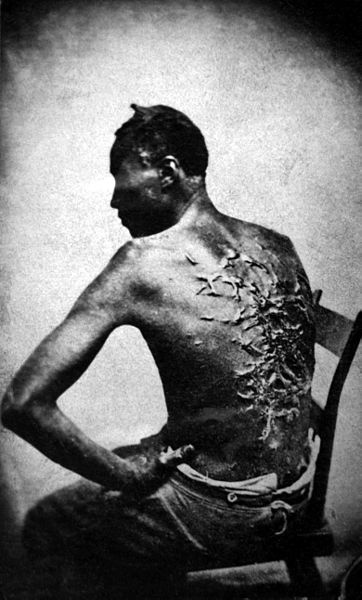
 When discussing the institution of slavery from a wide angle lens, it is easy to forget it's human toll. Images like these remind us of the inhumanity of the practice of human bondage. Photo via Wikimedia Commons.
When discussing the institution of slavery from a wide angle lens, it is easy to forget its human toll. Images like these remind us of the inhumanity of the practice of human bondage. Photo via Wikimedia Commons.

Continue reading “An End to Slavery in the Confederacy: One of the Civil War’s Greatest "What-Ifs"”

Understanding the Civil War and Its Place in the American Mind

By Kevin Lavery ‘16

Perhaps it is because I have spent so much time with people for whom the Civil War is a life choice, but I confess, there are times when I wonder if we—myself included—sometimes get carried away by our fierce and noble passion for the past. The Civil War is, of course, incredibly important both in its own right and in the long context of American history. But I do wonder if an overly-zealous fascination with the Civil War, especially if it becomes too single-minded, can distract us from other important moments in history, as well as from other types of worthy understandings from other fields of study.

Many people have probably seen that video where college students are unable to say who won the Civil War. A frequent joke among Gettysburg College students is that a surprising number of people in other parts of the country can’t even identify the state where the Battle of Gettysburg was fought. Adequate money cannot be found to preserve historical artifacts, or even to fund social studies education programs. As seriously concerning of those examples are, I’m not willing to criticize those who lack the rich conception of history that I am fortunate to have developed during my time at Gettysburg. I can’t hold anything against someone who doesn’t know as much as I think they should know about the Civil War, not when there are so many things in this world worth knowing.

IMG_0405
Photograph by the author.

Continue reading “Understanding the Civil War and Its Place in the American Mind”

Beyond the Battlefield: The Park That Once Was Stevens’s Furnace

By Kevin Lavery ’16

If you’re a frequent reader of the Compiler, it comes as no news to you that the Gettysburg area is historic for more than just its battlefield. From a pre-war African American community to the World War I tank camp commanded by a young Dwight Eisenhower, Gettysburg has a rich and vibrant history that the time-frozen battlefield, however majestic in its own right, all too often obscures. One of my favorite places in the region, however, is a state park located just fourteen miles west of town. Nestled amidst the ridges of South Mountain, Caledonia State Park stands on land once part of the Caledonia Furnace complex owned by the famed congressman Thaddeus Stevens.

IMG_0643
Evidence abounds of Caledonia’s industrial origins. Photograph by the author.

In the last two years, I have tried whenever possible to get out to the park, which serves as a gateway to some of my favorite hiking trails. The Appalachian Trail runs right through Caledonia, and just north of the park there is a vast network of trails that wind their way through the neighboring Michaux State Forest. Not only is it an excellent park for recreation, but it has a long and storied past that I’ve had the opportunity to explore for the Compiler, redoubling my appreciation for the scenic place. Continue reading “Beyond the Battlefield: The Park That Once Was Stevens’s Furnace”

From Post to Park: The Fort Monroe National Monument

By Kaylyn Sawyer ’17

The Civil War Institute will be celebrating the National Park Service Centennial this spring with its brand new “Find Your Park Friday” series. Inspired by the NPS #FindYourPark campaign, the series will challenge our fellows to share their experiences exploring America’s national historical, cultural, and natural resources through trips and internships with the NPS. In our sixth post,  Kaylyn Sawyer takes a look at the history of her park.

I was 11 years old when I made my first visit to Fort Monroe for a military ID card. This small Army post, I was told, would have a shorter line than the more familiar and populated Langley Air Force Base. Although already interested in Civil War history, I didn’t know much about the fort’s story, and I had no idea that I would return in seven years for my first history internship. Finally, I didn’t know that Fort Monroe had been targeted for closure by the Defense Base Closure and Realignment Commission (BRAC). Concerned about preserving the Fort’s historic integrity amidst calls for economic development, local citizens mobilized in collaboration with leaders across all levels of government to guide Fort Monroe’s transition from post to park.

An aerial view of Fort Monroe. Photo courtesy of wikimedia commons.
An aerial view of Fort Monroe. Photo courtesy of Wikimedia Commons.

Continue reading “From Post to Park: The Fort Monroe National Monument”

From Cape Hatteras to Harpers Ferry

By Alex Andrioli ’18

The Civil War Institute will be celebrating the National Park Service Centennial this spring with its brand new “Find Your Park Friday” series. Inspired by the NPS #FindYourPark campaign, the series will challenge our fellows to share their experiences exploring America’s national historical, cultural, and natural resources through trips and internships with the NPS. In our fifth post, Alex Andrioli goes back to the roots of her love for national parks and discusses how her childhood at Cape Hatteras led to an internship with the National Park Service years later.

Last summer, I was an intern at Harpers Ferry National Historical Park in the Education Department as a Brian C. Pohanka Intern. I would have never thought that I would get to live in such a beautiful place. To actually work and reside in a location that is soaked in history has forever changed me because it made me realize that history majors are actually allowed to pursue other careers outside of the high school or college classroom. Harpers Ferry has given me more than just career options and historical knowledge that I can dip into if I ever end up on Jeopardy!; it has given me great friends that live all across the United States (one even lives across the Pond in England) and mentors who are more like adopted parents. However, even though Harpers Ferry has started to help me pave the way to my future career, there is one park that will always hold a special place in my heart.

Cape Hatteras National Seashore and I go way back. Technically, the first time that I went was when my mom was pregnant with me in 1995, but the first pictures of me out and about of the womb are from 1996 when I was a few months old. My earliest memories in life are of Cape Hatteras. For most of my life, my family has gone to the Outer Banks in North Carolina for summer vacation. Towards the end of the school year when most kids were looking forward to typical summertime activities, I was anxiously awaiting the annual trip to that thin strip of islands clinging to the mainland of North Carolina. This is not to say that I wasn’t also looking forward to cliche summer pastimes, but there was nothing like the preparation for the long journey south. Usually, the excitement became surreal for me the week before our departure. The kitchen would be crowded with extra groceries, suitcases would be lying around just waiting to be stuffed with clothes, and the night before felt like an eternity.

The author and her aunt at Cape Hatteras National Seashore, October 1997. Courtesy of the Andrioli Archives, a.k.a. the author's mother, April Andrioli.
The author and her aunt at Cape Hatteras National Seashore, October 1997. Courtesy of the Andrioli Archives, a.k.a. the author’s mother, April Andrioli.

Continue reading “From Cape Hatteras to Harpers Ferry”

Flight 93 National Memorial: A Park Dedicated to Strength from Tragedy

By Savannah Rose ’17

The Civil War Institute will be celebrating the National Park Service Centennial this spring with its brand new “Find Your Park Friday” series. Inspired by the NPS #FindYourPark campaign, the series will challenge our fellows to share their experiences exploring America’s national historical, cultural, and natural resources through trips and internships with the NPS. In our fourth post, Savannah talks about the emotional experience of visiting Flight 93 National Memorial in Pennsylvania.

The story of 9/11 will be forever ingrained in the history of America. On September 11, 2001, al-Queda terrorists hijacked American planes, flying them into national symbols including the World Trade Center in New York City and the Pentagon near Washington, D.C. However, many people often forget that there was a fourth plane heading toward the nation’s capital that crashed in Shanksville, Pennsylvania when the thirty-three passengers and seven crew members tried to regain control of the flight. In the frenzied attack to stop the plane from hitting its intended target, the passengers sacrificed their lives to thwart terrorism and fear. Immediately following the crash, a temporary memorial was created as government officials scrambled to find and remove pieces of the disintegrated plane. In 2002, the land was designated as a National Memorial by the United States government; it was the beginning of the Flight 93 National Memorial Site, the only National Park Service site dedicated to the events of the 9/11 attacks. In the years following, the Flight 93 National Memorial was created, allowing the American public to visit the site of the thwarted attack and remember the brave passengers of United Airline Flight 93.

My best friend from high school attends college in Greensburg, Pennsylvania, so I take Route 30 from Gettysburg to visit her. Every time I visited, I saw the brown sign noting the Flight 93 National Memorial, just off the highway. Because I always wanted to reach my destination, I never stopped but always swore I would next time. I finally decided to make the stop, though I didn’t know what to expect, as I was not knowledgeable about Flight 93. A three mile long winding road took me from Route 30 to the Visitors Center, giving me a sense of uncertainty as I longed to find an end around each turn but only found more road surrounded by empty field. I arrived at the Visitor Center, taking a black walkway from the parking lot, but initially passed the doors to the exhibits to follow the walkway to an overlook. The walkway followed the flight path of Flight 93, leading me to a view of the crash site. Before seeing the exhibits or grabbing the pamphlets, I was face-to-face with the impact site and the mass grave of forty people; a landscape that was once an ordinary field in Pennsylvania was transformed into a field of honor.

The walkway leads to this overlook looking toward the crash site, declaring that this landscape, once an ordinary field, is now a field of honor. Photo courtesy of author.

Continue reading “Flight 93 National Memorial: A Park Dedicated to Strength from Tragedy”

A Summer by the Graveyard: Living and Working at Andersonville

By Elizabeth Smith ’17

The Civil War Institute will be celebrating the National Park Service Centennial this spring with its brand new “Find Your Park Friday” series. Inspired by the NPS #FindYourPark campaign, the series will challenge our fellows to share their experiences exploring America’s national historical, cultural, and natural resources through trips and internships with the NPS. In our third post, Elizabeth Smith reflects on her time as an intern at Andersonville National Historic Site and the personal element of history. 

As a first-year student back in 2013 I was given the opportunity to work as a Pohanka Intern at Andersonville National Historic Site. During the American Civil War, Andersonville—or Camp Sumter, as it was officially called—was perhaps the most infamous prison camp, and today it remains the best known. Though it was only open for fourteen months between 1864 and 1865, 45,000 Union soldiers were  imprisoned there, 12,920 of whom would be buried just a quarter of a mile away from the stockade that took their lives.

While working as a Pohanka intern I lived on-site in a small studio apartment a few hundred yards back from the old stockade and a quarter of a mile away from the cemetery. Today, the cemetery is the final resting place for nearly 20,000 veterans and their spouses. There is something unique and, to be quite honest, creepy when you are the only living person on the entire site. To walk the perimeter of the stockade as the sun goes down, knowing that only you are standing in the exact spot where 45,000 men suffered, and to be able to soak in the atmosphere is an incredibly moving experience.

The author as an intern at Andersonville National Historic Site in the summer of 2013. Photo courtesy of Pamela Smith.

Continue reading “A Summer by the Graveyard: Living and Working at Andersonville”

Find Your Park Friday: For the Love of Nature

By Jeff Lauck ’18

The Civil War Institute will be celebrating the National Park Service Centennial this spring with its brand new “Find Your Park Friday” series. Inspired by the NPS #FindYourPark campaign, the series will challenge our fellows to share their experiences exploring America’s national historical, cultural, and natural resources through trips and internships with the NPS. In our second post, Jeff Lauck discusses his passion for photography and the park that started it. 

Anyone who follows me on any social media will soon learn that I love to travel almost as much as I love taking pictures of the places I visit. From Chula Vista, California to Quoddy Head, Maine; Ramallah in the West Bank to the DMZ in Korea, I have been to many places in my less than 20 years of existence. Yet nothing has left more of an impression on me nor fueled my wanderlust as much as the natural beauty of America’s national parks. They are, indeed, “the best idea we ever had,” according to writer Wallace Stegner.

The author and his father at Glacier Point, overlooking Half Dome, during the author's first visit to Yosemite. Photo courtesy of Doreen Lauck.
The author and his father at Glacier Point, overlooking Half Dome, during the author’s first visit to Yosemite. Photo courtesy of Doreen Lauck.

My love of national parks began at a very young age. Lauck family vacations have always entailed some cross-country trek in the family minivan, stopping in small towns off the interstate to pitch up the tent while traveling thousands of miles from home. When I tell my friends tales of these legendary road trips, they marvel at how we kept our sanity while being cooped up in a car for 14 hours a day as we racked up miles on the odometer. While these trips were, admittedly, filled with temper tantrums and wrestling matches, the destinations–landscapes of mountains, valleys, beaches, canyons, and deserts– have made these trials all the more rewarding. Continue reading “Find Your Park Friday: For the Love of Nature”

Find Your Park Friday: Meg and Megan Take Fredericksburg and Spotsylvania NMP

By Meg Sutter ’16 and Megan McNish ’16

The Civil War Institute will be celebrating the National Park Service Centennial this spring with its brand new “Find Your Park Friday” series. Inspired by the NPS #FindYourPark campaign, the series will challenge our fellows to share their experiences exploring America’s national historical, cultural, and natural resources through trips and internships with the NPS. In our first post, CWI Social Media Coordinators Meg and Megan discuss their time interning at Fredericksburg and Spotsylvania National Military Park. 

IMG_0336_1024

How long did you spend at Fredericksburg and Spotsylvania National Military Park and what did you do while you were there?

Megan: I’ve spent two summers at Fredericksburg; the first summer I was a Pohanka Intern and the second summer I was able to return as a seasonal employee. I’ve worked at almost all the sites in the park in my two summers there. I’ve given tours at Chancellorsville, Fredericksburg, and the Wilderness. I’ve also spent time at the Stonewall Jackson Shrine and Chatham doing informal interpretation.

Meg: I was a Pohanka Intern at FredSpot from May 2014 to August 2014. I gave interpretive programs at the Fredericksburg Visitor Center and the Spotsylvania Exhibit Shelter and led tours daily. On the weekends I led the Children’s Program with a fellow intern. We led four different programs including a cemetery program, a soldier’s life program, a flags-and-signals program, and a regular Junior Ranger program which alternated each weekend. Continue reading “Find Your Park Friday: Meg and Megan Take Fredericksburg and Spotsylvania NMP”

css.php