This semester, CWI Fellow Lauren Letizia ’23 is analyzing the numerous roles, cultural significance, and lasting impacts of a cross-section of Civil War photographers upon American society. While some may be familiar to avid readers of Civil War history, others represent lesser-known, but equally as important photographers whose methods, mediums, and end-products helped shape the way Americans understood and made meaning out of the war’s swath of destruction and those who participated in it. We are delighted to share her second piece in this series with you!
The CWI would like to express enormous thanks to Ron Perisho for his generosity in sharing the majority of the images featured in this mini-series, as well as the invaluable sources and insights he has provided to make this blog series possible!
With the innovative rise of photography as a means through which to document war, many aspiring 19th-century photographers flocked to infamous Civil War battlefields to capture the perfect image. Whether depicting a decimated landscape or mutilated soldiers, Civil War photography proved to have an eager audience both during and after the conflict. The photographers’ desire to display the consequences of what sometimes felt like “total” war opened a new chapter in the portrayal of death, destruction, and human suffering. However, despite these photographers’ pursuit of provocative imagery in the aftermath of a cataclysmic battle such as that at Gettysburg, many Civil War photographers manufactured scenes to better evoke the theme they sought. One such photographer was Peter S. Weaver, from Hanover, Pennsylvania, a borough located thirteen miles east of Gettysburg.
“Photographs at Gettysburg” collection by Peter S. Weaver: 11 November, 1863. (Courtesy of Ron Perisho)
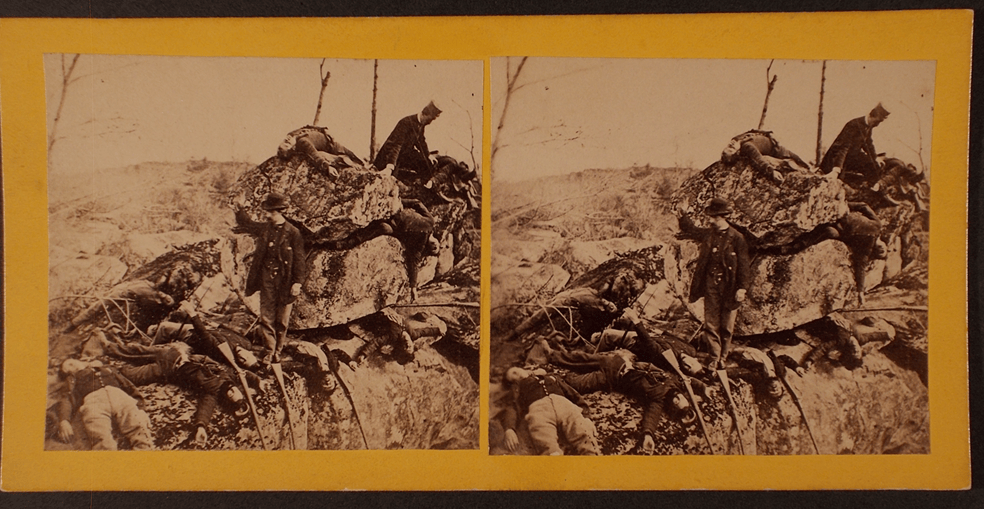
The above stereo view image was taken on the Gettysburg battlefield in November of 1863. It depicts nine dead Union soldiers lying among the boulders of Little Round Top, with two Union doctors named Chamberlain (right) and Lyford (center) surveying the carnage. These “dead” soldiers, however, were very much alive. One of the “bodies” is believed to be military musician, Jacob Shenkel (lying to right of Dr. Lyford), of the 62nd Pennsylvania Infantry. During the Battle of Gettysburg, Shenkel aided the wounded and, after the battle, was ordered to serve as a hospital attendant at the famed military hospital, Camp Letterman, located just outside the Gettysburg borough. Staging scenes after pivotal battles were not unusual during the Civil War. Often, photographers moved dead bodies to distinct positions or locations. Alexander Gardner’s famous image of a dead rebel sharpshooter at Gettysburg is a perfect example of this practice. Gardner moved the body to craft a dramatic story about the romantic death of an expert sharpshooter slain at his post, killing implement still by his side.
“‘Home of a Rebel Sharpshooter’: Gettysburg 1863,” by Alexander Gardner.
Peter Weaver also subscribed to this methodology. When representing war, nothing is more impactful to a civilian audience than seeing heaps of dead young men, lying amongst rocks and dirt. This portrayal lays bare (in this instance, with dramatic exaggeration) the shocking reality that many soldiers’ deaths were not glorious, romantic, or sentimental. Rather, soldiers regularly died in ghastly positions, atop nightmarish landscapes, for the gawking eye of the public to behold. Weaver’s photograph was originally produced on large plates, but the above image was reprinted as a stereo view print, making it more suitable for consumers and mass reproduction.
To a modern viewer, the idea of staging war photographs, repositioning soldiers’ bodies, and asking living soldiers to play dead might seem extremely unethical or immoral. However, Weaver and other Civil War photographers wanted their images to convey their own view of the war, its purpose, and its consequences. Weaver’s above-shown image from his “Photographs at Gettysburg” collection was taken on November 11, 1863, long after the Union dead were initially interred, then reinterred, and just eight days before President Lincoln delivered his now iconic “Gettysburg Address” at the dedication of the new Soldiers’ National Cemetery. Although Weaver couldn’t possibly have known what Lincoln would say in the cemetery, nor anticipate the enormous staying power of those words when he initially staged this image, the photograph visually came to demonstrate the powerful message of Lincoln’s speech: Brave and devoted Union soldiers here gave their lives by the thousands in sacred sacrifice to preserve freedom and the “last best hope” for democratic government; the American people could not possibly let such sacrifices be in vain. Whether it was executed with or without artistic integrity, and even though Weaver may have initially staged the photo for mere “shock and awe” value as a “collector’s item” from the great battlefield at Gettysburg, the image became widely popular in the wake of Lincoln’s address. Thus, Weaver’s photograph added not only to the general public’s understanding of the immense human carnage wrought by the Civil War, but also to the larger meaning of the human sacrifices made in the name of some of the most cherished political ideals over which any men, anywhere, ever fought.
Photographer William H. Tipton also played a crucial role in portraying the aftermath of the Battle of Gettysburg. Born in Gettysburg, Pennsylvania, he studied photography from the early age of 12 with Charles and Isaac Tyson, both of whom were some of the first photographers to capture images of the Gettysburg battlefield. After the epic three-day collision ended on July 3, 1863, Tipton allegedly helped renowned photographer, Mathew Brady with capturing some of the most iconic images of the battlefield. Tipton became known for his landscape images, but his photographs of the battlefields of Gettysburg, Antietam, Fredericksburg, and Spotsylvania remained his most famous.
“The Implements of Modern Warfare” (front), copyright 1876, by William Tipton. (Courtesy of Ron Perisho)Definitions of the “Implements of Modern Warfare” (back of photoprint). (Courtesy of Ron Perisho)
This Tipton stereo view photograph card, “Implements of Modern Warfare,” stands out among Tipton’s other photographs for its unique display of 50 diverse artillery and mortar shells collected from the Gettysburg battlefield, as well as a chair used by Union General George Meade during the battle, and a musket (right of cabinet) used by local hero, John L. Burns. Burns was a veteran of the War of 1812 who, at 69 years old, became a volunteer civilian combatant at Gettysburg when he grabbed his old 1812 musket and ran to the front lines to help stave off the Confederate advance on July 1. He was wounded but survived to become both a local and national icon. On the back of the card, Tipton identified each artifact and piece of ordnance, including where it was found and its weight. The Civil War saw many advances in weaponry and manufacturing, hence its reputation for exceptionally bloody and brutal combat for that time. Muskets, rifles, and artillery became more accurate and more deadly. By highlighting many of the types of ordnances and materiel employed to facilitate such death and destruction in the neatly aligned rows of a well-organized cabinet, Tipton has transformed his war narrative from one focused on graphic human suffering to a fascinating, almost trivia-esque inventory of the tools of modern warfare. The contrast between the organized display and the bedlam caused by these implements’ bombardments and barrages evokes a jarring, yet necessary distance between the actual victims of war and passive audiences on the home front—a distance reassuringly mediated by allusions to some of the surviving, grand heroes (national and local) of the battle whose related relics sit, stoically, in the forefront of the display.
Shells and ammunition like the fifty implements displayed in the above image manufactured war scenes and facilitated the crafting of photographers’ own personal or cultural narratives about the war just as Weaver’s image of the fake dead soldiers did. Both seek to appeal to a curious public which consumed news, imagery, artifacts, and even their own visual “memorabilia” of the war at a sometimes-insatiable rate from which photographers such as Weaver and Tipton sought to profit. And, though Weaver’s photograph does not truly depict the dead of Gettysburg, when paired with Tipton’s image, the two images powerfully showcase, for easy commercial collectability, both the implements of modern warfare and their consequences. Furthermore, such images provided these two native sons of greater Gettysburg with a means to craft unique, individual narratives about the national meaning and cultural legacies of the battle that left lasting scars on their local community.
Works Referenced
Frassanito, William A. Early Photography at Gettysburg. Gettysburg, Pa: Thomas Publications, 1995.
Tipton, William H., Timothy H. Smith, and William A. Frassanito. Gettysburg’s Battlefield Photographer: William H. Tipton: Selected Images from the Collections of the Adams County Historical Society. Gettysburg, PA: Thomas Pub., 2005.
This semester, CWI Fellow Lauren Letizia ’23 is analyzing the numerous roles, cultural significance, and lasting impacts of a cross-section of Civil War photographers upon American society. While some may be familiar to avid readers of Civil War history, others represent lesser-known, but equally as important photographers whose methods, mediums, and end-products helped shape the way Americans understood and made meaning out of the war’s swath of destruction and those who participated in it. We are delighted to share her first piece in this series with you!
The CWI would like to express enormous thanks to Ron Perisho for his generosity in sharing the majority of the images featured in this mini-series, as well as the invaluable sources and insights he has provided to make this blog series possible!
On June 16, 1864, during a speech in Philadelphia, Pennsylvania, President Abraham Lincoln stated to the gathered crowd, “War at the best, is terrible, and this war of ours, in its magnitude and in its duration, is one of the most terrible.” When the war drew to a bloody conclusion a little over a year later, the United States had to contend with not only 700,000 dead, but millions of wounded and maimed soldiers. As the development of weaponry progressed, soldiers had received wounds of even greater magnitude. Clinical Union photographer, Dr. Reed Brockway Bontecou captured the horrifying, grisly, and gruesome physical wounds of the war. Using a purely medical and realistic approach to his photography, Reed shared a horrid glimpse of war that was not always as directly presented by the gallery photographers of the period.
The Civil War was the first sustained conflict to be documented through photographs in American history. Famous photographers such as Matthew Brady, Alexander Gardner, and Timothy O’Sullivan dropped the destruction and casualties of the war on Northern civilians’ doorsteps by publishing their photographs in newspapers, galleries, and selling prints for profit. Often, Brady and others would stage their scenes for specific cultural or political purposes by moving bodies or asking surviving soldiers to play dead. The medical photographs of R.B. Bontecou include none of these tactics. Instead, they portray the atrocities of the Civil War as plain and unfiltered as if one is in the room with these wounded soldiers.
Dr. Bontecou was the Surgeon-in-Charge of the Harewood U.S. Army General Hospital in Washington, D.C. He is credited with taking the largest number of photographs of wounded soldiers during the war. Afterward, he donated many of his photographs to the Army Medical Museum and published some of them in medical journals. For Bontecou, his personal and intimate knowledge of these patients’ maimed bodies made their grievous wounds not subjects to appease the public’s morbid curiosity about war, but rather important case studies through which other medical professionals might learn to treat, and perhaps save the lives of, future wounded soldiers. However, in disseminating his images to medical museums and journals, he joined a cadre of other medical photographers who would also, perhaps unintentionally, disperse their records and accounts to the civilian public. Many doctors took photos of their wounded soldiers, and some even sent amputated limbs to other institutions for further study and display. Although such actions were largely undertaken to further the field of medicine, the ensuing commercialization and public showcasing of those soldiers’ most private and grievous wounds would unintentionally dehumanize the young men, turning them into mere case studies and/or helpless subjects, shockingly exposed to the gawking public, rather than medical patients entitled to their privacy and dignity. The original purpose of the photos was to document the pre-and post-operative progression of Bontecou’s patients. Often, each image was labeled with the soldier’s name, regiment, wound, where the wound occurred, and his current condition. He also treated many soldiers who suffered from gangrene or other viral diseases. Bontecou wanted to use the grim photographs to teach other physicians how to care for war wounds and other camp diseases. After the war, he organized his photo into albums, categorizing each by which body part was wounded (from head to foot), and then alphabetized the patients’ names, creating a novel “catalogue” of the medical consequences of warfare.
Though Bontecou’s images were not developed as art or as a cultural statement about the Civil War intended for the gawking eyes of public consumers, they are expertly posed and positioned for a public audience. The soldier is often seated in a chair in front of a blank background while holding a chalkboard with his name and regiment. He stares directly at the viewer with a blank, sober expression. The photographs were published as cartes de visite (CdV), making them easy to produce and display multiple images at a time. Bontecou’s collection of wounded soldiers’ photographs was not replicated in accuracy and artistry until the latter years of the First World War. Because of Bontecou’s work, he transformed clinical and medical photography into an unintended but invaluable art form, one that can truly bring the grotesque consequences of war to the home front.
David R. Templeton- Co. A, 46th NY Regiment “Age 16, was admitted to [Harewood Hospital] April 5th 1865, with gunshot wound of the head. Ball hit left temple, just back of outer angle of eye, grazing malar bone and eyeball, destroying sight; passed off producing flesh wound of the tip of the nose. Was wounded at Petersburg April 2nd 1865. He is now well, June 1st, 1865.” -Description by R.B. Bontecou Charles Harris- Co. A, 31st US Colored Troops (New York) Private Charles Harris was 24 years old when he was wounded at the Battle of the Crater in Petersburg on July 30, 1864. He was shot in the right leg and the left ankle. He was a soldier in one of the specially trained USCT units ordered to attack Confederate forces after the explosion that created the infamous crater. In Harris’ regiment, the 31st NY, 54 were wounded, 31 were killed, and 13 went missing in action. He was discharged from Harewood Hospital on 1 December 1865.
This semester, CWI Fellow Lauren Letizia ’23 is analyzing the numerous roles, cultural significance, and lasting impacts of a cross-section of Civil War photographers upon American society. While some may be familiar to avid readers of Civil War history, others represent lesser-known, but equally as important photographers whose methods, mediums, and end-products helped shape the way Americans understood and made meaning out of the war’s swath of destruction and those who participated in it. Stay tuned for her three comparative blog profiles highlighting the lives and works of some of these fascinating individuals!
The CWI would like to express enormous thanks to Ron Perisho for his generosity in sharing the majority of the images featured in this mini-series, as well as the invaluable sources and insights he has provided to make this blog series possible!
In his famous book, Specimen Days, Civil War field hospital assistant-turned-writer, Walt Whitman wrote that “the real war will never get into books.” After four years of bitter conflict, millions of dollars of destruction, 700,000 soldiers dead, and millions more wounded, the United States knew that theirs was an experience that was brutally new to the land of proclaimed freedom, liberty, and pursuits of happiness. Though many tried, words and written recollections or reports struggled to capture the scope of grief and horrific bloodshed stretching from south-central Pennsylvania to Texas. Partly considering this new reality, the American public turned to the newly blossoming and unique medium of war photography.
Though photography existed prior to the Civil War, the war was the first conflict in which photography was a main documentary tool to chronicle the devastating epoch. Photographers would brave the gory aftermath of grim battlefields and establish themselves within military encampments to capture the true face of the war. Many of these photographs were then translated into engravings or sketches and printed in newspapers, hung in original form in galleries, or sold for commercial benefit in small print form to a curious public. Never had images of war causalities, razed towns, or other forms of human suffering of the frontlines been distributed to the home front. Many of these photographs countered the Victorian idea of romanticized battlefield assaults or glorious charges and good deaths, stripping American society of the civilian naivete towards combat. Some of the most iconic pioneers of this new industry were Mathew Brady, Timothy O’Sullivan, and Alexander Gardner, who would ultimately gain a significant following and great acclaim for their images. Surprisingly, they were met by a largely receptive audience that desired to view the scourge of war in all its gloom and gore. (It should be noted, however, that many of the original images were often “sanitized” in their transposition into the engravings and sketches that made the major newspapers, while other images were carefully doctored to present a certain narrative of the war which, while clearly grim, still sought to fit within certain acceptable tropes of nineteenth-century sentimental culture in order to appease a paying viewership). Several photographers, most notably Alexander Gardner and Mathew Brady, also set out to capture–and succeeded with great fanfare–the official presidential portraits of Abraham Lincoln and the official military portraiture of iconic generals such as Robert E. Lee and others that still dominate that public consciousness.
Ironically, despite his own severe visual impairment, Mathew Brady’s collection of photographs from the fields of Gettysburg, Pennsylvania made him a household name. His images were extremely popular in metropolitan galleries in New York, and later, in Washington, D.C. His first series, “The Dead of Antietam” shocked the American public, as it was the first such visceral representation of the war dead to meet Northern civilians’ eyes. However, despite their relative popularity, his photos did not sell nearly enough for a sustainable income, and Brady was forced to eventually declare bankruptcy. In 1875, the federal government obtained Brady’s Civil War negatives for $25,000. Alexander Gardner, a Scottish-born former assistant to and protégé of Brady, likewise struggled with financial insecurities (as well as how to carve out an independent identity from his former boss), but managed to produce some of the most iconic shots of the war, including the last posed photograph of Lincoln in February of 1865, images from his funeral and the hanging of the conspirators, as well as his famed (though pricey) “Photographic Sketch Books of the War,” published in 1866. Adding to the financial troubles of Brady, Gardner, and their peers was that fact that, both during and after the war, local photographers such as Gettysburg’s own Isaac and Charles Tyson, William Henry Tipton, and others would often supplement their own collection of self-captured negatives by copying the prints of Brady or Timothy O’Sullivan’s images and selling them to tourists and other curious Americans eager to have a memento of America’s deadliest war. These relatively inexpensive “knock-off” prints padded the pockets of local photographers but did little to sustain the fortune of the original photographer himself. Brady’s and Gardner’s financial struggles were not unique to Civil War photographers. Many of them failed to create a stable income, while others often died relatively young from long-term exposure to the chemicals used to develop their photographs.
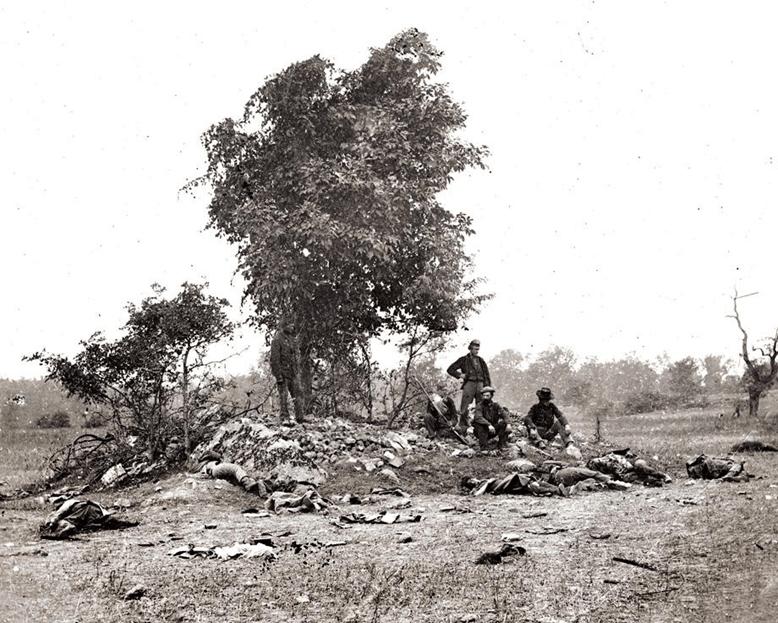
Interestingly, despite the seemingly genuine and realistic nature of these photographers’ wildly popular images, many Civil War battlefield photographers staged their famous images. Some even asked surviving soldiers to play dead in sunken roads or on rocks to manufacture riveting images. Other photographs, such as Gardner’s well-known image of the dead Confederate sharpshooter at Gettysburg, were shot by moving bodies to different locations or positions. However, regardless of these questionable maneuvers, these well-known images, as well as other not so famous photographs, allowed civilians to view the ramifications of war in vivid display and in copious amounts, shaping their conceptions not only of warfare but also of the evolving meanings of death, suffering, and sacrifice
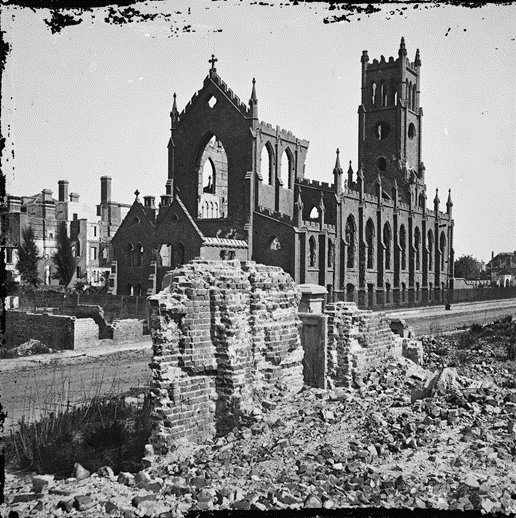
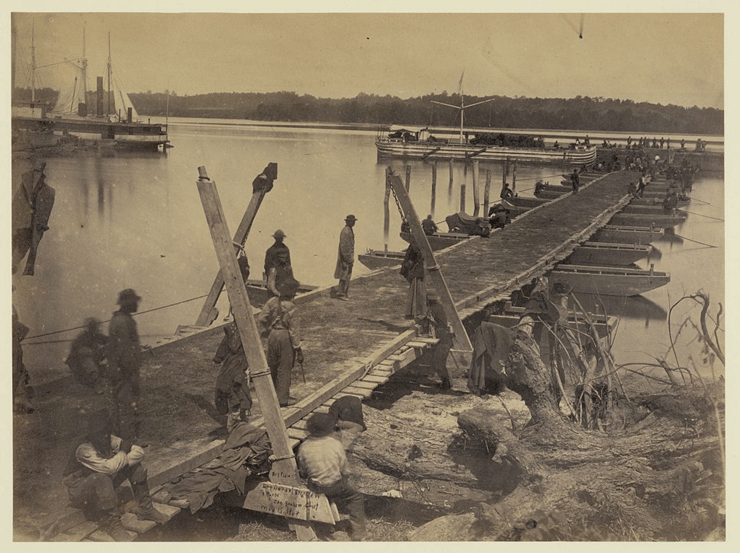
Civil War photography was also used for more practical military and medical purposes, such as the documentation of wounds and medical treatments, military engineering practices (made famous by Union engineer A.J. Russell), and the organization of topographical information. However, after the war, even some of these more “pragmatic” photographs would be released to the public and showcased in museums and galleries. Photographers with both Union and Confederacy loyalties were active in the field. For instance, George Barnard of Mississippi and Connecticut transplant George S. Cook photographed the war from the Southern perspective starting from the beginning of the war. Yet, the most well-known images and their photographers hailed from the North, with many early apprentices and protégés of Brady and Gardner, such as John Reekie and James Gibson, blossoming during the latter part of the war.
“Roman Catholic Cathedral of St. John and St. Finbar (Broad and Legare Streets) Destroyed in the Fire of December 1861.” Charleston, SC, George BarnardPontoon Bridge built by USMRR in Construction Corps in Belle Plain, VA. Published in May 1864, A.J. Russell
The actual task of capturing battlefield and war photographs was not an easy endeavor. Photographers had to carry their cumbersome equipment, including their darkroom, as well as their sensitive chemistry through tough terrain by horse-drawn wagons. These challenging conditions made the actual development process of photographs exceedingly difficult, as the prints were extremely light sensitive and the dirt, debris, and weather anomalies photographers faced on the road and out into the field complicated the process at every turn. At the beginning of the war in 1861, photographers used a method called wet-plate photography, which chemically coats an image onto glass with a chemical called collodion. It was time-consuming work, as the chemicals were mixed and applied by hand. The negatives of the images needed 5 to 20 seconds of stationary light exposure. Hence, there are no action photographs of the Civil War.
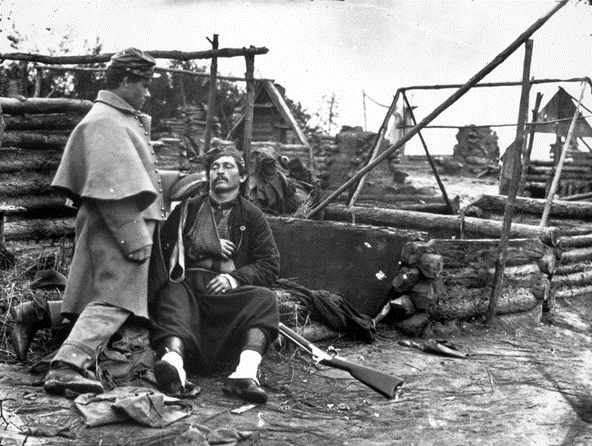
“The Sick Soldier” (1863), Mathew Brady Wounded Union Zouave soldier in Confederate hands.
However, as the years progressed, photographers began to develop new ways to view images. One of the most influential methods was the printing of photographs in stereo view. These were three-dimensional images that were captured by a twin-lens camera that shot a photograph with two separate lenses. This methodology mimicked the way in which the human eyes see the same image from different angles of the head. The images were then developed using the wet-plate process. Once this step was completed, the photographer would put the two stereo images on a viewing card, known as a stereograph or stereo view card that could be inserted into publicly available viewers to create a 3D image. Additionally, in the later years of the war, a process called albumen printing was the dominate form of photographic development. This included the soaking of paper in fermented chloride and egg white, letting it dry, then soaking the paper in a solution of silver nitrate. The paper would then be placed in a frame directly touching the negative of the image. It was then dried using sunlight.
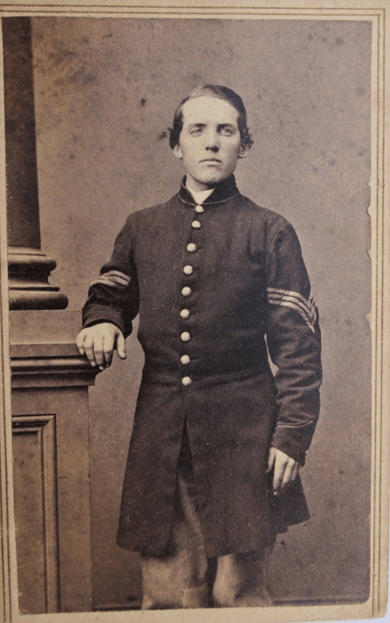
One of the most popular forms of photographic publication and printing was the Cartes de Visite (CdVs). A CdV is a photographic print pasted on paper to a larger card (2-1/2’’ by 4’’) They were mostly used in albumen prints since the 1850s. CdVs became incredibly popular during the Civil War, as they were cheap and easy for families and soldiers to carry in pockets or purses. CdVs were used to capture both portraits and battle scenes, which gave them a universal and accessible appeal. As the war progressed, it became possible to print larger CdVs, such as those iconic prints of Atlanta after General Sherman’s march, portraits of President Lincoln, Lee, and other known generals and their staff.
CdV print of a young Union sergeant, Johnston Brothers Studio NY
The photographic advances of the 1860s and the novel ways in which photographers captured the Civil War ignited a new age for both the art and science of photography. Civil War photography went on to inspire scores of war-time photographers during modern wars such as World War II and Vietnam. The horrific scale and scope of the Civil War was, combined with the public’s desire for a wide-scale, so-called “authentic” and “genuine” record of warfare popularized the photographic medium throughout the war years and well beyond. As photographers found their niche audiences, be it within the circles of wealthy purchasers of the so-called “sketchbooks,” or amongst upper class socialites who craved the stereo views of the latest battle images for their parlor guests, the middling-class visitors to urban galleries, or the readers of major newspapers or collectors of cartes-de-visites, they continued to adapt their mediums to the scope and scale of the war. In doing so, they helped, in vital ways, to set the tone for the ways in which the war was presented to the civilian public (both national and international), and thus shaped, in no small way, the cultural meanings and enduring legacies of the costliest war of the nineteenth century.
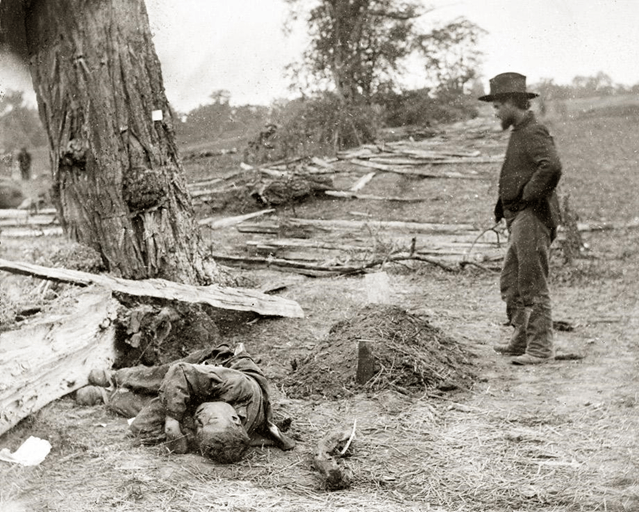
Alexander Gardner’s Photographs of the Battle of Antietam (September 1862) Top Image: “Burial Crew at Work” Bottom Image: Confederate Soldier remains unburied beside a buried Union Soldier
A special thanks to Ron Perisho, a perennial friend of the CWI, for sharing the two examples of mourning rings, part of his personal collection!
As the 19th century progressed, skull and hourglass motifs on tombstones gave way to symbols such as clasped hands and evergreen plants like ivy, indicating a cultural shift from the conception of death as a permanent parting to just a temporary separation until people met their loved ones in Heaven once more. Indeed, the clasped hand was a common motif on the tombstones of many married couples, which can be interpreted as an idea of devotion or love, even after death. While the idea of love beyond the grave was fairly common within mid-19th century culture, equally prevalent were the Victorian practices of mourning their dearly departed shortly after their passing, such as the use of mourning jewelry, typically rings or lockets with pictures of their loved ones, which often worn by widows during the Civil War period.
An example of the clasped hands of spouses on gravestones (courtesy of JSTOR)
Many modern Anglo-American mourning practices emerged with the 1861 death of Prince Albert. Until her own passing in 1901, Queen Victoria publicly mourned her husband, setting an example for both British and American citizens to follow. This, of course, coincided with the outbreak of the American Civil War, resulting in widespread utilization of these practices across the North and South as widows and mothers were faced with terrible losses.
One of the more unique features of mid-19th century mourning etiquette was the varying length of the mourning period. Etiquette books recommended that mothers mourn their children (and vice versa) for a year, siblings mourn for sixth months, male widowers for three months, and female widows for at least two and a half years. The brief mourning period for males compared to females is worth noting, as it likely came about from the Victorian standards of feminine domesticity, suggesting that loyalty to husbands extended well past their deaths. Indeed, these gendered expectations for mourning extended past the period of mourning into the customs and practices themselves. While the widower’s three months of mourning was displayed through a black armband, badge, or rosette, widows’ mourning periods were far more complicated. Immediately after the death of her husband, women traditionally wore only black clothing and kept their face covered by a black crepe veil when in public. After a period of time, she continued to wear the veil, but lighter shades of lace and cuffs were traditional parts of the outfits. After that period, the widows wore solid-covered dresses made of lavender, gray, and some other shades of purple.
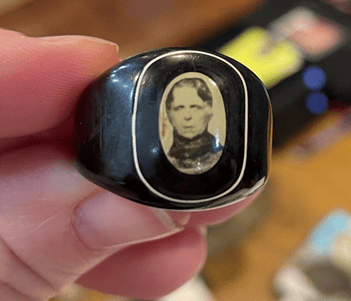
As photography became widespread and affordable, many mothers and widows also wore mourning rings or jewelry with their loved ones in the place of a stone, as seen pictured here:
Mourning Ring, courtesy of Ron PerishoMourning Ring, courtesy of Ron Perisho
These pieces of jewelry often featured tiny photos of the deceased or their hair and were intended to ensure that the deceased were not only remembered by their loved ones, but also mourned both publicly and privately, even long after their death. Indeed, with so many soldiers dying on battlefields or in hospitals hundreds of miles away from home, and with families never getting to bury their sons or husbands, this material link to the dead was likely very important in bringing a sense of closure to the families and making sure that, even if their physical remains were lost, they would be able to properly mourn them nonetheless. Combined with other mourning apparel and rituals, these rings also linked mourners to a broader “community of mourners” that helped bring both collective meaning to the omnipresent death around them, as well as necessary emotional support to individuals from diverse backgrounds.
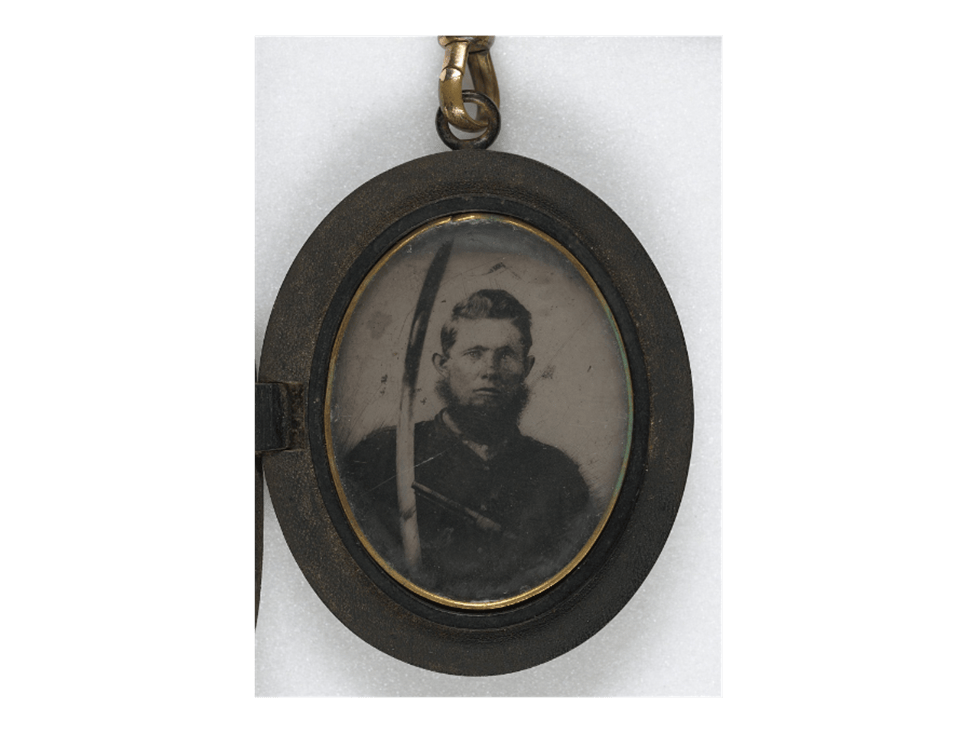
Locket with a picture of an unknown Union soldier with a saber and revolver (courtesy of the Library of Congress)
As the war progressed, many women had to adapt their mourning practices to accommodate the difficult circumstances on the home front. For example, when Varina Davis went into mourning for her young son, Joseph following his tragic April 1864 death resulting from an accidental fall from a second-story window of the presidential residence, she wore a black dress made of cheap cotton, reflecting the economic hardships of the Confederacy at the time. Indeed, another Confederate girl, Lizzie Alsop of Fredericksburg, wrote in March 1863 that “mourning is so high that I do not know whether it would be right for us to [wear black] or not,” suggesting that since Southern women were constantly facing the losses of loved ones, they would be unable to maintain the regimented rituals of mourning established in the late antebellum period and early in the war.
The Civil War challenged the Victorian ideal of the “good death,” the romanticized and expected passing of someone surrounded by their loved ones after a successful and fulfilling life. Instead of this idealized and romantic death, men suddenly and violently perished on battlefields, often not having seen their families in months or years. As such, women had to adapt their mourning rituals to these shocking new losses of their loved ones, coping with carnage on an enormous and continuous large scale, which necessitated re-conceptualization of death and its meaning within both the private and public spheres. Indeed, it is clear that the tragedy of the Civil War left a lasting impact on American society, permanently changing the way that Americans internalized and reacted to loss, and establishing a series of new cultural practices that endured well beyond the 1860s. While the practice of wearing mourning jewelry did not endure through the 20th century, it is clear that the idea of true and even eternal love remains a romantic cornerstone of our culture today.
While the 54th Massachusetts is the most famous African-American regiment, the story of Corporal James H. Gooding is lesser-known. Cpl. Gooding was born into slavery in North Carolina in 1838 before his freedom was purchased and he was sent to New York City. This past was something he did not like to speak of, preferring to tell people that he was born free in Troy, NY. Having attended the New York Colored Orphan’s Asylum, a Quaker school, Gooding was a well-educated man of letters, which would serve him well for the rest of his life.
At the age of 18, in 1856, Gooding took a job whaling out of New Bedford, MA, capitalizing on the fact that the whaling industry was one of the only ones at the time where, according to the NPS, black men could “find employment on equal footing with whites.” Gooding often wrote poetry about life at sea, showing his facility with the written word.
Shortly after he gave up whaling in 1862, and six days before Gooding’s marriage, President Lincoln announced the Emancipation Proclamation, which would, of course, be foundational in allowing black men to enlist with the Union army. Gooding enlisted on February 14, 1863, into the 54th Massachusetts, writing regular letters to the New Bedford Mercury, which published them weekly and allowed civilians on the home front to follow the regiment throughout the war.
While, initially, the 54th Massachusetts was on picket duty on the Georgia and South Carolina coast’s barrier islands, they soon saw action at Fort Wagner, famously depicted in the film Glory. After the assault on the fort, Gooding recounted that “…a regiment of white men gave us three cheers as we were passing them, it shows that we did our duty as men should.” A few months later, in September 1863, frustrated with the meager and unequal pay of black soldiers (they were paid only $10 per month, compared to the $13 per month white soldiers received), Gooding wrote a letter to President Lincoln, demanding equal pay, asking the President “are we Soldiers or are we Labourers?” Gooding also noted that “We have done a Soldier’s Duty. Why can’t we have a Soldier’s Pay? You caution the Rebel Chieftain, that the United States knows no distinction in her Soldiers. She insists on having all her Soldiers of whatever creed or Color, to be treated according to the usages of War [this statement was referring to the federal government’s insistence that all soldiers captured by the Confederacy be treated equally]. Now if the United States exacts uniformity of treatment of her Soldiers from the Insurgents, would it not be well and consistent to set the example herself by paying all her Soldiers alike?”
This was tragically ironic, as the breakdown of the prisoner exchange system due to Union demands of equal treatment for black soldiers ultimately resulted in the creation of large prison camps, something which Gooding would experience firsthand. Wrongfully believed dead by his comrades following the February 1864 Battle of Olustee in Florida (his commander actually notified the Mercury of his supposed death and his wife applied for a widow’s pension in April 1864), Gooding, who had been wounded in the thigh during the battle, was instead captured and sent to the notorious Camp Sumter in Andersonville, Georgia, arriving in early March 1864. He would die four months later on July 19, 1864 and was buried in grave 3,585 at the Andersonville National Cemetery. Possibly the most tragic part of Gooding’s story is that he never learned that, a month before his passing, Congress had passed the June, 1864 law giving black soldiers equal pay like he had wished.
Corporal James Gooding’s gravesite, Andersonville National Cemetery, Andersonville, GA (photo courtesy of the NPS)
Besides Gooding, there were about 105 other African-Americans imprisoned at Andersonville. Of these, 33 died, suggesting a death rate of 31% among black soldiers (compared to the total death rate of 29%). Our best sources of information are the testimonies given at the trial of Captain Henry Wirz, the commandant of Andersonville, where witnesses, including four USCT soldiers, testified about their experiences within the prison. Frank Maddox of the 35th USCT said that black soldiers were “were treated in no way differently from the white soldier,” something corroborated by Lewis Dyer, another black man. Despite this testimony, however, they said that they were still punished by Confederate guards. Maddox and Dyer both accounted the whipping of Isaac Hawkins, a soldier from the 54th Massachusetts, who got 250 lashes. Another witness, William Henry Jennings of the 8th USCT, said that he received 30 lashes for “not going to work one morning,” as well as being put in the stocks for a day and a night. As Jennings’ account suggests, African-American prisoners were put on work details, often outside of the stockade. Among other tasks, Maddox testified that he pulled stumps, cut wood, and helped expand the stockade walls, while Dyer was a house servant for Dr. Isaiah White, Andersonville’s surgeon, for two months. As well, Maddox reported that black prisoners were put on the burial detail starting in September 1864, which was likely one of the most undesirable jobs around the prison.
While he may not have lived to see the end of the Civil War or the abolition of slavery, Cpl. Gooding’s sacrifice for freedom and equality is not forgotten. Featured in the interpretive programming of Andersonville National Historic Site, a perennial partner site with CWI’s Pohanka Internship Program, the story of this man who so fervently fought for equal pay, but never got to see those efforts come to fruition will remain told, ensuring that his memory and the legacy of his struggle for equality will endure.
We would like to thank Robert Melphis for generously sharing the letter transcriptions, muster rolls, and several photographs of his ancestor, Erasmus D. Clark, with CWI and thus allowing for our students to study and learn from Clark’s life and wartime experiences.
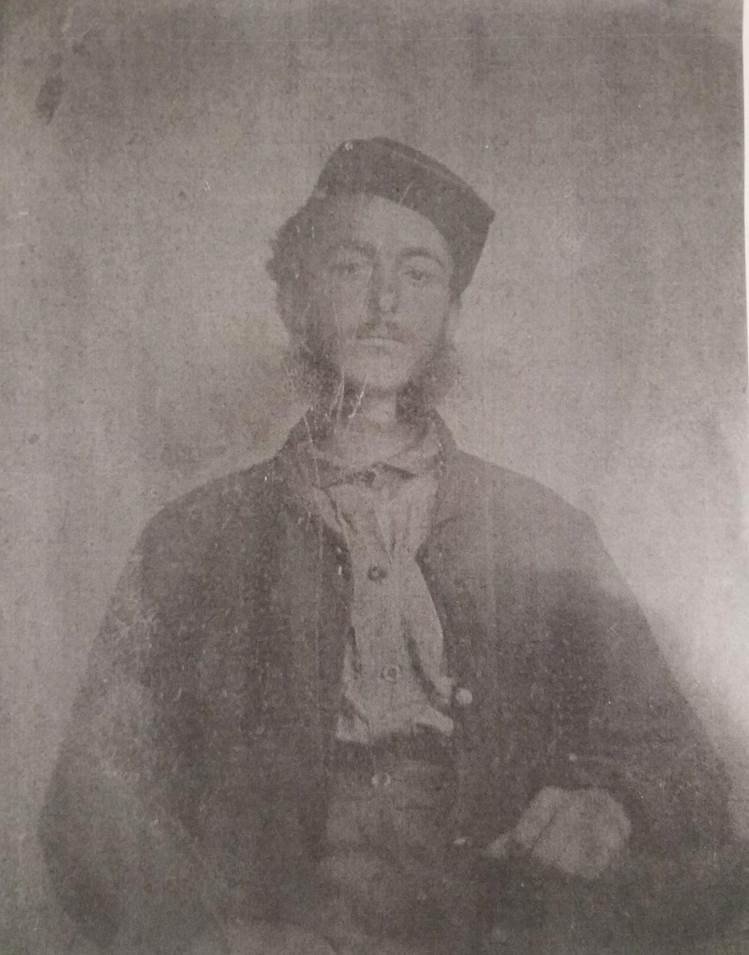
During the late summer of 1862, a twenty-year-old soldier from Newport, Rhode Island named Erasmus Darwin Clark had his picture taken at a portrait gallery wearing his newly issued Union uniform. In the image, a boyish, clean shaven, and smartly dressed Clark is standing in the position of parade rest while wearing a dark blue forage cap, frock coat and trousers with waist belt and holding an Enfield rifled musket with fixed bayonet. Near the end of his service as a private in Company I of the Seventh Rhode Island Infantry almost three years later, Clark had a second photograph taken which contrasts sharply with the earlier image. In this second image, a seasoned, bearded, and bedraggled Clark faces the photographer and leans back in a chair. The veteran is wearing a forage cap set back on his head, a plain, unbuttoned Army fatigue blouse and federal issue shirt, and sky blue trousers without a waist belt. These two portraits of a single Union soldier are exceptional among Civil War imagery for what they convey of the physical and emotional fatigue of war.
Erasmus D. Clark, 7th Rhode Island Infantry, following his enlistment in 1862, image courtesy Robert Melphis.
Erasmus Clark was born on July 18, 1842 in Newport, Rhode Island to Octavia Lodiska Willey and William Clarke. He had two younger sisters, Laura (born 1847) and Lydia (born 1849). When the American Civil War began he was living in Newport, and on August 11, 1862 during the second year of the war he enlisted in the Union army for three years’ service. In addition to his change in appearance between 1862 and 1864, Clark’s letters to his family at home shifted significantly after he experienced difficult campaigning with the Ninth Army Corps through Virginia, Kentucky and Mississippi. In the early months of his service, Clark wrote long letters to his family at home describing his experiences and the places he went. On November 4, 1862, he wrote to his mother from Virginia, “We have been on the march for a week and I can tell you it is pretty hard work with them knapsacks on our back. But then I suppose that is nothing to what will come.” Clark’s foreboding proved true, as the Seventh Rhode Island fought and suffered heavily in the disastrous Union assaults at Fredericksburg, Virginia, on December 13, 1862. The regiment then moved west, serving in Kentucky and participating in the Vicksburg Campaign in Mississippi during the summer of 1863. There, many of the New Englanders suffered from an unfamiliar climate and a disease they called “Yazoo Fever.” After returning to Virginia, the regiment fought in the bloody Overland Campaign from the Wilderness to Petersburg in the spring of 1864. Amidst the continuous fighting at Spotsylvania Court House and along the North Anna River, Clark intimated the awful slaughter he witnessed, writing home on May 27, 1864, “I pray to God we will not have to go in another battle.”
Erasmus D. Clark, 7th Rhode Island Infantry, near war’s end, image courtesy Robert Melphis.
Following the tragic bloodshed at Cold Harbor in early June, and suffering from a case of dysentery that was probably compounded by emotional and physical fatigue, Clark was admitted to an army hospital on June 15, 1864. In a letter to his mother four days later, he wrote, “I wish that this war was over so that I could come home for I have got about enough war for this time.” Clark’s last surviving letter to his family was written on the final day of June. The Seventh Rhode Island continued their service in the trenches outside Petersburg and participated in the Union’s breakthrough assault on April 2, 1865, which led to the Confederate Army of Northern Virginia’s surrender at Appomattox Court House seven days later. All this time, Clark endured a trying existence in a series of Union military hospitals suffering from chronic diarrhea. By war’s end, the Seventh Rhode Island had suffered a casualty rate of more than eighty percent, the highest of any Rhode Island unit during the conflict.
Civil War veteran Erasmus D. Clark at an elderly age, image courtesy Robert Melphis.
Although he was discharged from military service on May 4, 1865, in accordance with orders from the War Department, Clark was still recorded as absent at Mower General Hospital in Philadelphia when the surviving members of the original Seventh Rhode Island Regiment mustered out of service on June 9, 1865. The weary, invalided soldier finally reported for muster out from Lovell General Hospital in Portsmouth, Rhode Island on July 21, 1865, three days after his twenty-third birthday. After the war, Erasmus Clark returned home to Newport where he married and began a career as a cabinetmaker. Clark lived on until January 19, 1919, when he passed away at age seventy-six and was laid to rest at the Common Burial Ground in Newport, Rhode Island. The letters and images of Erasmus Clark offer poignant insights into the experiences of a common Union soldier during the American Civil War.
By late June of 1863, alarms warning of approaching Confederate forces were nothing new for the 2,400 residents of Gettysburg. Living just ten miles from the Mason-Dixon line, small-scale raids, kidnappings of freed-people, and rumors of an imminent clash between the two great armies had long plagued the borough and its surrounding community. Nevertheless, none of these events could prepare Gettysburgians for the ferocious 3-day fight between 165,000 soldiers in early July of that year that would transform the lives and lands of Gettysburg’s civilians forever. However, these civilians’ experiences were not monolithic; while some were defined by tragedy and blight, others included remarkable episodes of perseverance, successful pragmatism, and creative profiteering. This blog series profiles the lives of diverse Gettysburgians who were forced to confront the war at their very doorsteps, each on their own terms, whose stories speak to the kaleidoscope of experiences of civilians struggling to survive, and thrive, along the Pennsylvania-Maryland border during the Civil War.
Author’s note: I would like to give special thanks to the Adams County Historical Society for providing me with Anna’s primary source materials.
Pictured here are Anna and Frank Garlach, sister and baby brother. They survived alongside Catherine, their mother, and William, their brother, during the three days of battle at Gettysburg. Their father missing and their mother tied up with protecting the family in his stead, Anna took care of her brothers and provided them comfort while the Union and Confederate armies fought in the streets of town.
Anna Louisa Kitzmiller (1845-1919), born Anna Louisa Garlach, was a lifelong resident of Gettysburg. She, along with so many others born in the decades before the Civil War, had the unfortunate fate of being caught in the literal crossfire and chaos of the battle which swept through her hometown, leaving seas of dead and wounded across the once-picturesque countryside and the charming small town. A teenager at the time of the battle, she lived in a house which comprising 319, 321, and 323 Baltimore Street, where she hid with her family during the battle. Her town besieged, she saw soldiers in blue and grey fill the streets, the bloody warfare which plagued Virginia spilling North. From her home, she witnessed the ebb and flow of Union and Confederate lines, as well as the presence of a particular stranger dressed in blue, General Alexander Schimmelfennig, who hid behind her house for three days during the battle. Alone, confused, and wary of the violence around them, the Garlach family was trapped for three days of bloody battle during which they grew to have an intimate knowledge of war and its aftermath, despite knowing little about the picture and larger significance of the fighting that was unfolding around them. They are but one human piece of a larger puzzle—the story of Gettysburg. – their story is one of many which tell the tale of Gettysburg.
Anna’s father, John “Henry” Garlach (1817-1887) was a carpenter by trade. He had purchased the house on Baltimore Street in 1855, where he lived with his wife, Catherine. Catherine Garlach (1822-1893) would be the fateful observer and protector of Schimmelfennig during the general’s three days of concealment, bringing him food whenever she went to feed the hogs in the backyard. Anna had four siblings – George, William, Catharine, and Frank, of whom she was the eldest. One of around fourteen carpenters in Gettysburg, Henry must have made a decent living, despite his manual profession. The family had property downtown with a real estate value of $1,300 dollars; his personal estate was worth $500. The family also clearly cared about the education of their children, as Anna attended the Gettysburg Female Institute, located on the corner of Washington and High streets, with Tillie Pierce, one of the more well-known civilians of Gettysburg during the war.
Though Pierce’s account of the fighting is one of the more oft-quoted narratives of the battle, Anna also published her own account of the battle in the Gettysburg Compiler in 1905. Eighteen at the time of the battle, Kitzmiller finally told her story as she remembered it at age sixty. Starting on the evening of June 30th, Kitzmiller described the Federal army entering town, and how she and her family endeavored to feed them, then offered them dinner on the next day. Several of the neighbors fled outright, fearing the coming conflict; if the Federal army had arrived, the Confederate army likely was not be too far behind. Henry, enraptured by the approach of the army, went to see what was going on in town. He did not return until the battle was over. Soon, other neighbors joined the Garlachs in their home; Anna notes eleven in number besides her own family, making a crowded group of fifteen occupants on July 1st. The large home of the Garlach family made a good place to gather; they had plenty to give and a great deal of space. As was true for other civilians moving from house to house seeking shelter and comfort with friends and acquaintances, within the Garlach home, Gettysburgians who once had been used to socializing and doing business together now huddled in shelter for fear of the massed armies at their doorsteps; the labor of the day was mere survival. The first shots of battle rang out as Anna was shelling beans for the soldiers who were to come for dinner. They never came.
The battle raged for hours as the Garlachs anxiously marked time. Eventually, a wounded Union cavalryman made his way into town, right past the Garlach house; Catherine tried to dress his wounds, but before she could finish the job, the Union retreat into town was in full effect. The man went riding off to join them. Much to Anna’s shock, the brave men whom the young girl had fed the day before were now fleeing just as many civilians had during the army’s advance. Not long after, the streets were full of men packed so tightly they could have been cobblestones. Anna would later recall in her memoir, “In the retreat of the first day, there were more people in the street than I have seen since at any time. The street seemed blocked. In front of our house, the crowd was so great that I believe I could have walked across the street on the heads of the soldiers.” If the soldiers who were supposed to protect the civilians were retreating, what were the Gettysburgians to do?
The Garlachs were told to go to the cellar by retreating Federal troops, but Catherine took Anna and the others up the street to a house with a ‘ten pin alley,’ the George Shriver home, where they hid until nightfall until the streets were safe to return home. George Shriver not only ran the bowling game but also the Shriver saloon. The Shrivers were wealthy due to their thriving liquor business, and their saloon was a place to secure needed supplies for the refugeeing family. The constant rush of both soldiers and civilians was a common occurrence throughout this first day of battle;– though many had fled before the battle, many more had remained. Inside the saloon, the former place of liveliness and laughter became quiet except for hushed whispers and distant gunfire. Anna and Catherine found a place to secure the children with them, keeping them calm until night fell.
Soon, the Garlachs departed from the Shriver house, as did the neighbors who took refuge with them. Once back in their own home, which the Garlachs realized was now firmly within Confederate lines, Catherine made beds on the floor for the night to shield themselves from the ever-present risk of stray bullets. It was during the calm of night which Union General Alexander Schimmelfennig slipped into the alley beside the house, hiding in the pigsty. Located in the back of the house away from the street, the pig sty offered Schimmelfennig a degree of concealment from Rebel forces. Forced between the rock of isolation from protective Federal troops and the hard place of an invading Confederate army, both Schimmelfennig and the Garlach family faced a similar situation; they seemed to be mere pawns of battle who truly had no idea as to what was going on outside their home, the only hints being the booming bass of cannonades and staccato volleys of musketry in the distance.
Meanwhile, Henry eventually found himself on Cemetery Hill, having gone there to get a good look at the battle. This vantage point gave an unobstructed view of the town and the surrounding area, but it was also where the Union line formed to face the Confederate army. Suspecting him of being a possible spy, Union troops detained Henry, forbidding him from crossing the battle line and returning home. Longing to be back with his family and anxious for their safety, it is clear Henry would have realized his mistake. In going to get a clearer look at the chaos around him, he opened the Garlach home to a whole world of it. Catherine was forced to take on a new role within the besieged household. Though she held status within the household as the mother, with the man of the house missing, it was up to Catherine to fill both roles of caretaker and protector.
Catherine began to seek secondary places of shelter within the home, ordering her children to cling to the floor as to avoid stray bullets. Though the house had received little direct fire, the Garlachs had no idea if their house was a target – or an acceptable sacrifice. Furthermore, they knew that sharpshooters from both armies were using civilian homes all throughout town as sniper nests; would their house be seized for such a purpose and made into a direct target as a result? Crossfire was inevitable, and pockmarked bullet holes on the structure today show that the Garlachs’ fears were validated. Tasked with keeping the children quiet, Anna kept her brothers close and never out of her sight. Just a day ago she had been handing out food and water to soldiers, but now she was hiding from them; where had the army gone? Why had her sleepy little town become such a hotly contested target and into whose hands would it finally fall? All of these questions raced in her mind as she tried to comfort her brothers, one just a baby and the other just old enough to ask innocent questions such as, “Where’s Dad?”
It was during the morning of July 2nd that Catherine discovered Schimmelfennig among the pigs. He simply said, “Be quiet and do not say anything,” though of course her discovery would have startled her, nonetheless. The sudden intruder must have reminded her of the men whom she had fed not too long before, as well as those who had retreated so haphazardly through town. Despite the dangers of harboring an officer behind enemy lines, she took pity on him, feeding the stranded general while the battle raged. Though after the war some called him a coward for hiding so, especially forcing a woman to be his protector, Anna testified to the bravery of Schimmelfennig; to her, his hiding behind enemy lines was the only course of action he should, or could, have taken. It is possible she found him a little dashing, too. Her admiration for the general’s bravado was something she carried with her for the rest of her life.
Although Catherine did everything in her power to provide Schimmelfennig sustenance and shelter during the battle, she was careful not to take too many unnecessary risks. Catherine’s responsibility for her family was paramount. She set about making the cellar of their house into a livable space, assisted by the eldest of the boys, William. The cellar floor had flooded due to recent rains, so Catherine made platforms of salvaged wood on which she settled the terrified family, including Anna’s youngest brother Frank, who was only a baby at the time. They used their cellar as a safe-house of sorts – if firing commenced once again, they would seek cover there. While William and Catherine worked to make the basement habitable, Anna kept Frank close. Such a young, vulnerable soul, Frank’s world had turned upside down. With no other way to express his terror and confusion, he wept. Anna held him and comforted him as she knew a sister should.
For most of July 2nd the Garlachs stayed in the kitchen. Sharpshooters of both armies roamed the streets, skirmishing and raiding as they went on the hunt for a Rebel or Yankee soldier. Anna noted the craftiness of one Confederate who put his hat on a stick to draw the fire of Union men, then proceeded to down the enemy combatants once they had taken their shots. Later, William went to peek out of the attic window and narrowly avoided being hit by a stray ball; someone must have mistaken the boy for a sharpshooter. Catherine ultimately forced him to remain downstairs for the rest of the battle; she desperately did not want to lose a son, and she already feared that her missing husband might be dead or a Confederate prisoner. Once again keeping William at her side, Anna sought to keep both boys in check. Though the fighting would move further southward, away from their house as the day wore on, the Garlachs were not out of danger. The brutality of the enemy and the sinister sharpshooting certainly shook the family, but it would not harden their hearts. The family huddled around their hearth and stayed awake late into the night, anxious over intense firing on nearby Culp’s Hill which erupted at various times throughout the evening. They remained on the kitchen floor, cooking their meals while huddling together for safety. the anxious family did not know when the horrors of battle would leave their town, if ever.
The next day, while the Garlachs sheltered in their cellar, a Confederate sharpshooter broke into the home. With her husband gone, perhaps dead, Catherine was the only person who stood between the enemy soldier and her family. She sprang into action, forbidding the soldier from entering the home and scolding him that he might draw fire upon the innocent women and children who resided there. Convinced and ultimately deterred by her display of motherly fury, the soldier departed after creating a smokescreen with a shot from his rifle. According to Anna’s account, more tried the same scheme, but none got past Catherine. Equally inspired and scared by her mother’s protective attitude, Anna redoubled her efforts. She had mouths to feed, including two young lives which depended on her to survive.
Many families were not so lucky to have met Rebels who could so quickly be deterred; houses all over town were ransacked for their goods, if any remained. Several white men were detained or imprisoned by the Southerners, and the free black population of Gettysburg fared far worse, with as many as forty black men taken south to be sold into slavery. Not willing to put her family or Schimmelfennig into any more danger, Catherine Garlach would only go out to feed the soldier during the quiet nights, holding bread and water in the pail used to feed the pigs. In the space through which not too long before thousands of enemy soldiers had poured, Catherine set out to feed a man who could have been killed on the spot if he were to be discovered by the enemy – a general who had been reduced to hiding in a hog’s heaven. The only thing between the invading force and the Garlach family was one woman determined not to let any harm come to her kin or the fighting man in her care. In those times when Catherine was gone, the vulnerability of the household was palpable. What if she did not come back? Were they truly alone? Having little time to process what was going on around her, it is no doubt that Anna took this time to cry, herself.
Following the Union repulse of the Pickett-Pettigrew charge, the living retreated, but thousands of wounded and dead remained. Anna went from taking care of her brothers to tending to the wounded. On the 4th of July, the Garlachs found themselves responsible for a wounded adjutant from the 17th Maine, simply named Roberts in Anna’s account. He remained in their care until he was well enough to go home to Maine with his father. Another soldier whom Anna mentioned was a man named Mr. Godspeed, one of the men whom they had previously fed. The family would send the wounded Godspeed food every day, visiting him at the Presbyterian Church until the field hospital had closed and he was sent along.
Just as Roberts eventually returned to his kin, so would Schimmelfennig. When Catherine came to check on him on the morning of July 4th, she saw him stiffly limping to a group of blue-clad Union men who seemed excited to see him ,as they had previously thought him dead as well. Catherine’s husband, Henry would also return to great jubilance from the weary and teary-eyed family. The home which had served as a shelter for three days of battle was finally whole again. Henry was employed as a coffin maker and as such was busy after the battle. Though his was grisly work, he would have been able to support his family and repairs to his pock-marked home with the unexpected income.
Anna’s story claims that years later, once she had settled down with her own children, Schimmelfennig’s descendants came to visit and she showed them where their ancestor had hidden for those few days of survival through her mother’s creative subterfuge. No doubt, the descendants were grateful for the Garlach’s devotion to their loved one, and finally being able to see the iconic location of his hiding and to meet his caretakers was an important moment in their lives. Anna went on to marry Jacob A. Kitzmiller (1842-1897) on the 24th of July, 1866. Kitzmiller was a native Gettysburgian and a well-regarded member of the community – a member of the Gettysburg School Board, a member of the Gettysburg Bar Association, and formerly a Private in the Union Army. Kitzmiller had lost an arm at the battle of Spotsylvania Courthouse in 1864. In a way, he must have reminded her of the wounded blue-clad soldiers whom she and her mother had worked to care for during those July days of 1863, as well as the stranger Catherine had risked life and limb to save.
The war never really left Anna, just as it never really left the town in which she lived. Her generation was scarred by the war and forced to deal with its consequences. It is not difficult to believe that Anna was just as wounded by the war as Jacob – just in a different manner. Mental traumas could cut just as deeply as physical injuries, and the trauma of witnessing the battle certainly left a mark. Constant reminders of the war were all around Anna – even in her marriage bed. Despite the challenges that may have come from Jacob’s amputation, the couple had two children, Ida (1867–1939) and Louise Kitzmiller (1869–1948). Anna would outlive her husband of thirty-one years, remaining in the battle-scarred town for the rest of her life. She passed away at age 71 and was buried in the Evergreen Cemetery alongside the family to whom she was so devoted. Though she was not a famous general or nationwide celebrity, Anna’s story illustrates the power of giving during a war which took so much. Furthermore, her story, along with those of all the other civilians who were trapped in the town of Gettysburg during the three-day battle, remains to remind us that the American Civil War was not only fought between armies, but by the men and women trapped between them.
By late June of 1863, alarms warning of approaching Confederate forces were nothing new for the 2,400 residents of Gettysburg. Living just ten miles from the Mason-Dixon line, small-scale raids, kidnappings of freed-people, and rumors of an imminent clash between the two great armies had long plagued the borough and its surrounding community. Nevertheless, none of these events could prepare Gettysburgians for the ferocious 3-day fight between 165,000 soldiers in early July of that year that would transform the lives and lands of Gettysburg’s civilians forever. However, these civilians’ experiences were not monolithic; while some were defined by tragedy and blight, others included remarkable episodes of perseverance, successful pragmatism, and creative profiteering. This blog series profiles the lives of diverse Gettysburgians who were forced to confront the war at their very doorsteps, each on their own terms, whose stories speak to the kaleidoscope of experiences of civilians struggling to survive, and thrive, along the Pennsylvania-Maryland border during the Civil War.
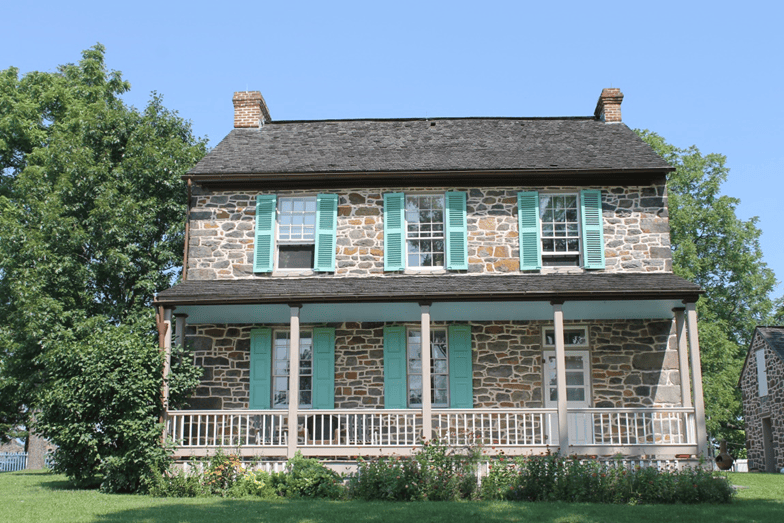
“The Rose Farm,” photograph taken by Jim Flook, Gettysburg NMP, August 23, 2013, “Fields of Conflict II: The Rose Farm 1844-1979, From the Fields of Gettysburg: The Blog of Gettysburg National Military Park, https://npsgnmp.wordpress.com/2013/08/23/fields-of-conflict-ii-the-rose-farm-1844-1979/.
In 1858, when Philadelphia butcher shop owner, George W. Rose bought his Gettysburg farm on the Emmitsburg Road, he likely thought the picturesque stone house and 230 acres of farmland, woods, and orchards, would bring him great profits and provide a peaceful and relaxing summer home. Those aspirations would be violently dashed only five years later when his farm bore brutal witness to some of the most destructive fighting of the Battle of Gettysburg. He weighed his options, wondering how he would recover from such a loss and to whom he could turn for help. Free labor ideology of the time dictated that the common man rose to and maintained prosperity through his own blood, sweat, and tears. George Rose had done everything right to reach his goal of prosperity, but much to his despair, he quickly discovered that his previous hard work would not win him any federal assistance when confronting subsequent financial struggles outside of his control.
Although George Rose owned the Gettysburg farm, he primarily resided in Germantown, a neighborhood within Philadelphia. He was a Pennsylvania native, born in 1808, and his wife, Dorothea (also spelled as Dorothy) Hegy Rose, was born in 1805. He and Dorothea belonged to the Market Square Presbyterian Church. George owned a butcher shop in Philadelphia, and he apparently rented the house to fellow butchers, as he and his wife lived with three of his younger coworkers in 1850. He had an estimated value of $8,000 real estate at the time. By 1860, his real estate value had increased to $10,000, and his personal estate stood at an estimated $500 value. $10,000 in 1860 is equivalent to about $330,000 in 2021. Clearly, he had some money to spare for a summer home, a place to enjoy the fruits of his labor, as he clutched the American Dream of prosperity and economic independence within his grasp.
His brother, John Rose, his wife, Ann, and their seven children primarily lived in the Gettysburg home. George or John Rose also hired four other people in 1860 to help maintain the property, assisting with the farm work and general upkeep of the house—yet another testament to their hard-earned financial stability that enabled them to hire the labor of others in order to guarantee an economically comfortable and physically less demanding day-to-day existence. John worked out a deal in which he and George evenly split the interest on the crops in exchange for John and his family’s residency and maintenance of the house. An additional tenant family, the Ogdens, might have lived in the stone house at one time. It remains somewhat unclear as to whether they actually resided at the farm itself, especially since the Ogdens did not file a claim for private property damages later. Francis Ogden, the father, was a tenant farmer who lived with his wife and four sons and possessed half interest in two of the Roses’ wheatfields. Francis and his sons provided further help with extensive amount of labor required for the 230 acre farm.
Civilians like the Roses and Ogdens reacted with uncertainly to news of the approaching Confederate army in mid-June. They had heard rumors of Confederate invasions before and pondered whether they should stay or flee the area. Francis Ogden did not take any chances. He rounded up his livestock and moved them temporarily to another farm outside Gettysburg before he evacuated. Ogden’s 13 cattle, two mules, and two horses were too integral to his livelihood to lose them to either army (although soldiers did seize nine of his sheep that he had moved a few miles away). John Rose, however, was not as prepared as Ogden, and he hurried his family out of Gettysburg as the battle approached their doorstep. Because he and his family left in a rush, they were only able to collect some food and a few valuables to take with them. John likely had no time to process the full extent of what could happen to the farm, but once he left Gettysburg, his stomach likely churned as he wondered what items might have been spared from the soldiers’ wanton destruction.
The Rose farm was especially hit hard by the fighting on July 2, although both armies traversed on the farm all three days. On July 1, Buford’s cavalry likely stopped for oats and corn for their horses, trampling and removing much of the Roses’ and Ogdens’ harvest–a product of their hard work and a source of future profit. George and John Rose would later claim these crops as part of their losses. On July 2, Confederates in McLaws’s division ofLongstreet’s corps surged past the Emmitsburg Road towards the Rose farm to fight the Union 3rd and 5th Corps, and later reinforcements from the Union 2nd Corps. In particular, General Joseph Kershaw’s South Carolina brigade, as well as Paul Semmes’s and George Anderson’s Georgia brigades, engaged with Union 3rd Corps troops under Régis de Trobriand and 5th Corps soldiers under Jacob Sweitzer and William Tilton. These troops clashed in the Rose family’s infamous Wheatfield, which passed in and out of control of both armies multiple times. Union artillery, under Colonel Freeman McGilvery’s command, further damaged the Rose house and the surrounding area.
Confederates used the house for shelter and quickly transformed the comfortable rural abode and barn into grim makeshift hospitals. They used the beds for the wounded and left the house in bloody shambles. When John Rose returned, he found the ceilings, walls, and floor filled with holes from artillery and musketry fire. The carpet, living room furniture, kitchen table, and dishes suffered damage or utter ruin, and the Confederates had raided their pantry of all food. While George owned the house, these items were almost all John and his family’s possessions. Everything they owned had vanished in a matter of days. Who would John turn to for help? How would he relay the bad news to George? No doubt, George anxiously awaited news from John about Gettysburg, as he read newspapers avidly and wondered with sickening dread about his farm’s fate.
Yet the house would mark only the beginning of their problems. Outside, Confederate soldiers lay in shallow graves, sometimes half-buried or in some cases, left above ground, their bodies decomposing in the muddy fields and woods. One visitor, a Pennsylvania attorney named John B. Linn, described a burial ground by the Rose barn in graphic detail, writing that the dead South Carolina soldiers “were only slightly covered with earth and you could feel the body by pressing the earth with your foot.” He noted with horror how “one man’s left hand…stuck out of the grave looking like an old parched well worn buck-skin glove.” An April 1912 Gettysburg Compiler article claimed that a half-severed, bloodied body rested in the Rose family’s spring, making their water unusable. The Roses later assessed that at least one thousand soldiers lay buried on their property, as they and others attempted to pinpoint the exact number of men scattered across their farm and woods. (Official government estimates place the number at a likely more accurate, but still shocking figure of 400-500 bodies). George also tried to keep a written record of some of these Confederate dead, marking the names, rank, and burial locations of about fifty Confederates, in a small notebook. The graves presented the largest problem to the Roses. Who would want to live in a graveyard of shallow burials, surrounded by the smells of rotting flesh and tainted water? They could not till the land for farming if they had wanted to. This was no place to continue raising their children. Neither George nor John likely wanted to ever live in such conditions on the property, but then, who would want to buy it?
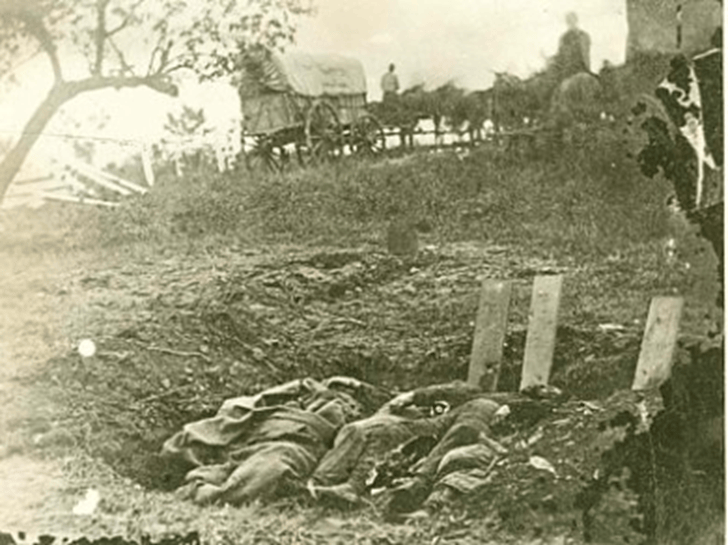
The dead also presented an ethical question as to how to give them a proper burial. Victorian culture dictated that the dead should be given a Christian burial and properly laid to rest with an identifying grave marker– all hallmarks of “the Good Death” of the nineteenth century. Many of these dead were buried without ceremony and often without markers denoting their identities. Alexander Gardner captured the horrific battlefield carnage at the Rose farm in his photographs of the South Carolina dead just days after the armies departed Gettysburg (seen below). This famous photo captures the haphazard rush to bury the bloated bodies in shared trenches, with only a few of the bodies receiving even the simplelest of wooden headboards. The image spotlights the grim realities of warfare and quelled many of the romantic ideas civilians held about battle. Photographs like Gardner’s shocked the public, who had not been accustomed to seeing such stark images of battlefield death. Civilians and soldiers alike struggled to understand and give meaning to the lives of each individual soldier who died in battle, amidst the overwhelming number of casualties and sobering reality of the often anonymous burials.
Dead from the 2nd South Carolina Infantry. Photograph from Library of Congress and “What Happened to Gettysburg’s Confederate Dead?”, From the Fields of Gettysburg: The Blog of Gettysburg National Military Park, posted July 26, 2012, https://npsgnmp.wordpress.com/2012/07/26/what-happened-to-gettysburgs-confederate-dead/.
George tried to sell the house multiple times. In June 1866, he advertised a rosy picture of his farm in the local paper, describing it as “one of the most desirable properties in the county” with plentiful orchards, multiple springs, and good farming ground. This advertisement for public sale did not attract any buyers, who perhaps knew better that the farm was not the picturesque place that George had described. In the meantime, George entangled himself with a number of creditors. He mortgaged the farm multiple times and obtained loans from different individuals. The debt piled up, not only from the farm, but from meat suppliers for his butcher shop as well. When he paid off one person, another creditor appeared, demanding money. He became skilled at fending off multiple creditors, although in late 1871, the Adams County sheriff seized the house and auctioned it off. A man named Charles Hagy, perhaps related to George’s wife, Dorothea Hegy/Hagy, bought the title to the house for a mere $100. If he was a relative of Dorothea, perhaps he was merely trying to take the house off their hands temporarily or divert the attention of money-hungry creditors. In any case, he too, could not handle the house’s finances, so control of the house passed quickly back to the Roses. No doubt George felt both the frustration and anguish of his plight, but also shame over such a public fall from his privileged socio-economic position.
Both George and John filed a claim for damages to the federal government, directing their claim to the Quartermaster General’s Office. George’s real estate claim focused on the damage to the house itself, including compensation for repairs to the ceiling, walls, and flooring. He needed reimbursement for destroyed fencing and some livestock. And more importantly, he sought compensation for the destruction of his grounds. Most of the Confederate dead remained on the property until 1870 or 1871, making it difficult to farm the land, and most importantly, to even continue living at the house. Shouldn’t the government compensate him when the army turned his private property into a public soldiers’ graveyard?
The government thought not, and turned away his claim. He did not have enough evidence that the Union army was responsible for the damages, as he had no documents to support that it was the Union army that took anything from his house; the federal government’s rigid policy only compensated owners for documented Union army-incurred property damage. George’s frustration with the government only multiplied with the absurd futility of his situation. After such a costly war, the government was reluctant to shell out additional war-related funds. However, politicians and civilians warned that some men would take advantage of the government, creating fraud and wasted money. They also feared that individuals would grow too dependent on the government for funds and that society would degenerate into a state of immoral pauperism. Nineteenth-century culture dictated that respectable men were those who worked hard and independently. People who applied to the government for financial assistance were looked upon with harsh scrutiny, as Civil War Americans often associated poverty with vice and poor character, rather than with personal misfortune beyond one’s control.
John also applied for a personal property claim, claiming interior objects like his furniture, beds, mirror, tables, and chairs, as well as small farming equipment that had been destroyed or seized by the Confederates. His claim was also turned down for the same reasons as George. In 1874, he advertised the sale of many of his personal items, producing a long list of furniture, stoves, a wide variety of farming tools, horse saddles and other items for riding, and multiple horses and cows. The advertisement read like a long list of his remaining possessions. Perhaps he, too, was trying to rid himself of debt, but it remains unclear as to the amount of items he actually sold. He listed many of the same items a year later in another advertised sale. Clearly, both brothers struggled to recover from the utter destruction of everything they owned, even as long as ten or fifteen years after the battle. Worse yet, their struggle was on display for everyone in the greater Gettysburg community to witness.
George’s troubles with the house continued, but in 1875, he sold the house to Rosanna and William Wible. However, they soon returned the house to him less than two months later, finding it unfit. The record shows that George ultimately bought the house from the Wibles for $9,000, an amount the Roses clearly could not have paid easily. Maybe the Wibles knew the Roses and had tried to temporarily lift their financial burden with their short ownerships. George closed his butcher shop for several years, instead earning meager wages as a clerk, until 1878 or 1879, when he finally saved enough money to open a small butcher shop from his Philadelphia house. By this time, George and Dorothea were physically and emotionally exhausted, approaching the age of 70. They no longer had the energy to work long hours or confront their struggles with the Gettysburg farm. By 1880, the Roses resumed renting their house to boarders for extra income, as the census shows another couple in their Philadelphia abode.
For unknown reasons, Rosanna Wible took interest in the Rose farm again in 1880, and finally bought the house for $8,000. She offered some long-standing relief to the Roses, who remained weakened by the financial burden. Dorothea Rose died in December 1881, and her husband quickly followed, passing away only one month later on January 2, 1882, of stomach cancer. They no doubt keenly felt the stress of their creditors, and although it must have brought great relief to finally unburden themselves of the house, that relief arrived just a little too late. The house had already inflicted too much damage upon the Roses’ physical and mental well-being, bringing unrelenting anguish over long sought-after, but cruelly denied dreams of prosperity and repose in the south-central Pennsylvania countryside.
Before the war, George and Dorothea Rose had no idea that their home-away-from-home would morph into their worst nightmare. They invested their life savings in the property and looked forward to a relaxing upper-middle-class lifestyle. George’s brother, John, who escaped right at the battle’s beginning, also confronted the loss of all his material possessions and hopes for eventual economic independence. The battle and its destruction had cruelly snatched away all of their dreams and finances, and the repercussions lasted until their deaths. Furthermore, they faced the humiliation of confronting their struggles in public for all of Gettysburg, as well as Philadelphia society, to see. Worst of all, they must have felt cheated by the federal government and the entire concept of free labor ideology–the very thing that hundreds of thousands of their northern comrades were fighting to preserve and in whose name they had sacrificed their own livelihoods—and the refusal to financially compensate them for their sacrifice revealed the harsh realities, risks, and perils that accompanied the promises of free labor society.
By late June of 1863, alarms warning of approaching Confederate forces were nothing new for the 2,400 residents of Gettysburg. Living just ten miles from the Mason-Dixon line, small-scale raids, kidnappings of freed-people, and rumors of an imminent clash between the two great armies had long plagued the borough and its surrounding community. Nevertheless, none of these events could prepare Gettysburgians for the ferocious 3-day fight between 165,000 soldiers in early July of that year that would transform the lives and lands of Gettysburg’s civilians forever. However, these civilians’ experiences were not monolithic; while some were defined by tragedy and blight, others included remarkable episodes of perseverance, successful pragmatism, and creative profiteering. This blog series profiles the lives of diverse Gettysburgians who were forced to confront the war at their very doorsteps, each on their own terms, whose stories speak to the kaleidoscope of experiences of civilians struggling to survive, and thrive, along the Pennsylvania-Maryland border during the Civil War.
For the farmers of Gettysburg, the battle that took place there from July 1-3, 1863 was a devastating event. Their fields were the sites of immense violence and carnage. When the smoke cleared, many farms had been destroyed and the farmers’ livelihoods appeared hopelessly ruined. While some left Gettysburg to try their luck elsewhere, many others stayed, determined to rebuild. Once such farmer was Emanuel Harmon. His story showcases some of the more unique and resourceful practices that farmers relied upon in order to gain back their fortunes in the aftermath of the war’s devastation.
The Harmon farm was located west of Gettysburg along Willoughby’s Run and included a large, two-story colonial mansion known as the McLean House after its former owner. Emanuel Harmon bought the 124-acre property in October of 1857 for $10,000, equivalent to $315,000 today. Harmon must have been an already well-to-do individual to make such a purchase. Born near Gettysburg in 1818, Emanuel applied to the US Military Academy at West Point in 1836, but was rejected. At the time of the battle, Harmon lived in Washington, D.C, where he was something of an inventor, holding several patents, including one (ironically) for a fireproof house. The fact that he did not actually live at the farm himself further highlighted his wealth. He was an absentee landlord who had the luxury of renting out his farm to tenant farmers. The ability to hire tenant farmers to work your land was considered the goal of 19th century farmers, showing a mastery of the free market economy.
The site of the former Harmon farm, taken from the roof of the Gettysburg Springs Hotel.
When the battle began, the only residents of the Harmon farm were the 16-year old Amelia Harmon, whose father, Richard, was a “hydropathic” physician and Amelia’s aunt, Rachel, who was married to one of the tenant farmers named David Finefrock. Another tenant William Comfort, who would later marry Mary Harmon, another one of Amelia’s aunts, was absent from the property when the battle erupted. While census records indicate that Richard, Rachel, and Mary were all siblings, it is unknown how they were related to Emanuel. It is possible that he may have been another sibling, although there are no records to indicate such. The male tenant farmers had fled with their horses to the safety of South Mountain before the armies arrived, leaving Amelia and Rachel alone. While some today may view their actions as cowardice on the men’s part, they had good reason to leave, as it was vital that they protect the livestock that enabled their farm to function. Additionally, as several of Gettysburg’s white male citizens would be captured by the Confederates and taken to Southern prisons, it was wise for many men to flee the town before the army’s arrival. As for why the women stayed, Amelia later wrote that they felt safe behind the house’s 18-inch thick walls.
Amelia left a very detailed account of her experience of the battle. She wrote that on the morning of July 1, she and her aunt heard cannon shots from the west. Overwhelmed with anxious curiosity, both women raced to the window to see what was going on. They saw Union cavalry racing past their home to seek shelter in the woods west of the farm. But before they could reach safety, Confederate shots rang out from the trees and the Union men returned fire from behind the Harmons’ barn and various outbuildings. Amelia and her aunt immediately locked all the doors and went to the second floor. They opened one of the windows for a quick glance that nearly cost Amelia’s aunt her life when a spent Minié ball struck next to her ear. From the window, Amelia saw that the woods were swarming with hundreds of Confederates. A Union officer saw the two women and yelled at them to leave the window in order to not get killed. Amelia and her aunt obeyed, but instead of heading to the cellar where they would be safe, they headed to the house’s cupola. This may have been a case of reckless curiosity on the women’s part, since they were no longer protected by the house’s thick walls. But the possibility of seeing a battle excited them more than it frightened them. Perhaps they believed that if they were up high, they did not need to worry about being accidentally shot. Additionally, they likely were desperate to gain a sense for how the battle was unfolding—who was winning, who was losing, and in whose hands their property might ultimately fall into.
From her high vantage point, Amelia witnessed the Confederates of Archer’s brigade clash with the Union Iron Brigade along Willoughby’s Run. The Union forces were initially successful before being pushed back by Confederate reinforcements, who took up a position next to the house. Around midday, two Union companies took the farm and ordered Amelia and her aunt into the cellar. Above them, the Union sharpshooters were firing out the windows of the house into the Confederates. This period was especially frightful for Amelia. Even though it was more dangerous, she preferred to stay up top, where she could at least know what was going on. But in the dark cellar she knew nothing, only hearing booms and cracks of cannon and muskets and watching a continuous flow of blue and grey legs running past the cellar window.
At some point in the afternoon, Amelia heard the scurrying of feet above her. Through the cellar’s windows she could see grey pants. Amelia and her aunt returned upstairs to find that the Confederates had forced the Union troops out and entered the home. Alarmingly, they saw that the Confederates were preparing to burn the house in order to prevent it from being used by any other sharpshooters. Amelia begged the Confederates to spare the house, but they refused. They piled up furniture, books, and rugs and set them aflame. They also burned the barn. The fire forced Amelia and her aunt to rush out of their home. To their horror, they found that they were between the lines of the clashing armies. They made their way to the rear of the advancing Confederate line, bullets whistling past their ears and bodies falling around them. The actions of the two women surprised and amazed the Confederates. Eventually, they encountered a group of Confederate officers and journalists. After telling them their story, one of the journalists found a place for the women to stay for the rest of the battle along Seminary Ridge, and provided them with a guard and rations. Although doubtless thankful for the shelter and food, the situation must have infuriated Amelia. The Confederates had destroyed her home and now she was forced to rely on them for food and salvation. She was under the protection of the enemy, and there was nothing she could do about it.
On the morning of July 4th, Amelia and her aunt found that their guard had vanished, as the Confederates fled from Gettysburg. They stayed the night in town before venturing back to what was left of their home the following day. Amelia found the Harmon house a blackened ruin, surrounded by scores of bodies from both sides, along with the bloated remains of many horses. In the aftermath of the carnage the town’s residents buried the Confederates on the property. Although most would later be reinterred in Southern cemeteries, some were left behind and in the decades to come local newspapers would frequently mention visitors finding skeletons on the property. After the war, Amelia married a Gettysburg minister and moved across the country with him. She would not record her experiences of the battle until 1915, when she was 70 years old. At the end of her narrative she wrote, “Here I draw the curtain and allow the scene to fade into the shadow of the past.” Amelia did not take joy in recounting her harrowing experience. It is possible that she only did so because she believed that it was a story that needed to be told, and when she was done she wished to forget about it entirely.
Although Amelia Harmon eventually left Gettysburg, Emanuel Harmon began to become more invested in his property there. Despite the destruction of his farm, Harmon’s finances did not appear to suffer significantly from the battle. In 1864, he purchased some neighboring property to increase his Gettysburg land to 190 acres. But he was always looking to make more money. Along Willoughby’s Run, on the Harmon property, there was a spring which, since the 1830’s, had been rumored to possess special medicinal properties. During the battle, Confederates drank from its water and rumors soon spread of its supposed miraculous healing powers. Harmon, ever the entrepreneur, took advantage of these stories.
In 1865, several chemists tested the water and found that it had a unique composition, including lithia, a type of salt with supposed health benefits. Soon afterwards, the story of Harmon’s water became national news as individuals from various states began purchasing it. In 1867, a New York company signed a contract with Harmon to bottle and ship the water across the country. At this time, the springs from which the water originated began to be called the Katalysine Spring from the Greek for laxative, perhaps revealing one of the water’s benefits. The New York company constructed a building next to the springs where the bottling took place. However, many Gettysburg residents were unhappy with the state of the Katalysine Spring business. They felt that with the water being shipped out of Gettysburg, they were missing a huge opportunity for growing profitable local business. Therefore in 1868, they proposed to construct a hotel next to the springs to attract tourists. Harmon sold five acres of land on which the Gettysburg Springs Hotel would be built. He also ended his contract with the New York bottling business, as he saw the hotel as the more profitable venture.
The Gettysburg Springs Hotel, circa 1890.
The Gettysburg Springs Hotel would cost $30,000 dollars to build. It was three stories tall with rooms for 250 guests and included a large ballroom. The showers and baths of the hotel would use the famous Katalysine Spring water. In order for guests to easily access the hotel, Gettysburg’s residents constructed a horse-drawn railway, which included a bridge over Willoughby’s Run (the ruins of which can still be seen today). The Gettysburg Springs Hotel opened on June 28, 1869. Among the first guests to stay there was none other than George G. Meade himself, the victor of the Battle of Gettysburg. The hotel proved to be popular that summer for both tourists and veterans. In the 1870’s, the hotel expanded to include a bowling alley and ice house, as well as an artificial lake that was constructed for swimming and boating. The resort rivaled many of the grand city hotels of New York, Philadelphia, and Boston at night. Harmon, meanwhile, continued to negotiate contracts for the bottling of the Katalysine Spring water until his death in 1876.
The horse-drawn railway crossing Willoughby’s Run. The Springs Hotel can be seen in the background and the Katalysine Spring on the right.
In the years after Harmon’s death, the popularity of the Gettysburg Springs Hotel steadily declined. It remained a favorable spot for veterans, both Union and Confederate. But as these veterans died off, so did business. By 1900 the hotel was only opened for special events, including the fiftieth anniversary of the Battle of Gettysburg in 1913. On December 17, 1917 a fire broke out in the empty hotel. Due to a recent snowstorm, firefighters were unable to arrive in time and soon the three-story building was nothing but a blackened ruin, just like the Harmon house fifty years earlier. In the 1930’s there was an attempt to revitalize the Katalysine Spring business, but this effort proved unsuccessful. In 1947, the land of the former hotel and Harmon farm was sold and the new owners built the Gettysburg Country Club on it. Among the frequent users of the Club’s golf course was President Dwight D. Eisenhower. In 2008, the Gettysburg Country Club declared bankruptcy and in 2011 the former site of the Harmon farm became part of Gettysburg National Military Park.
Emanuel Harmon was a true entrepreneur of local legend. He saw in the Katalysine Spring an opportunity to profit from the destruction of the battle, but the question remains as to why. Did he truly believe that the water of the spring contained healing qualities and wanted to share it with the country? Or did he view the stories of the water’s power as a chance to cajole people into giving him money, essentially creating one of Gettysburg’s first tourist traps? It is impossible to know the truth for sure. But whatever his motivations, Harmon was successfully able to turn his destroyed farm into a profitable enterprise, and transform the site of some of the most vicious bloodshed of the entire battle of Gettysburg into the stuff of lucrative legend.
By late June of 1863, alarms warning of approaching Confederate forces were nothing new for the 2,400 residents of Gettysburg. Living just ten miles from the Mason-Dixon line, small-scale raids, kidnappings of freed-people, and rumors of an imminent clash between the two great armies had long plagued the borough and its surrounding community. Nevertheless, none of these events could prepare Gettysburgians for the ferocious 3-day fight between 165,000 soldiers in early July of that year that would transform the lives and lands of Gettysburg’s civilians forever. However, these civilians’ experiences were not monolithic; while some were defined by tragedy and blight, others included remarkable episodes of perseverance, successful pragmatism, and creative profiteering. This blog series profiles the lives of diverse Gettysburgians who were forced to confront the war at their very doorsteps, each on their own terms, whose stories speak to the kaleidoscope of experiences of civilians struggling to survive, and thrive, along the Pennsylvania-Maryland border during the Civil War.
Pictured here is Elizabeth Salome Meyers, who taught the children of Gettysburg before and after the battle which thrust her into the position of a nurse at the age of 21.
Elizabeth Salome ‘Sallie’ Stewart, born Elizabeth Myers on the 24th of June, 1842 to Peter Appel Myers (1816-1870) and Hanna Margaret Sheads (1818-1881), was a native Gettysburgian and impromptu nurse during the 1863 battle,. She was a teacher who worked in the town’s public school, the High Street ‘Common School.’ After the battle, Sallie acted as a nurse in St. Francis Xavier Church, which had been converted into a hospital to help the many wounded left behind by both the Union and Confederate armies. Thrust into the role of a caretaker, Myers took twelve soldiers in on her first day as a nurse, and every day afterward her home on west High Street would remain filled with wounded until the convalescents finally were able to leave the town. She published an account of her 1863 experiences in San Francisco’s The Sunday Call in 1903, and was also interviewed for the Philadelphia North American newspaper in 1909. She also kept a diary about the events that unfolded in her town in July of 1863, which was published in 1996. After the war, Sallie was elected Treasurer of the National Association of Army Nurses for her service, even though she had not officially been trained as a nurse– something she came to regret. She taught at the Franklin Street ‘Colored’ School for a time, eventually moving off of High Street into the 1st Ward of the Borough of Gettysburg where she lived out her days.
Sallie was twenty-one at the time of the battle, working as the principal’s assistant at the ‘Common School.’ She had been a teacher since the age of sixteen, and had a knack for nurture. She had eight siblings at home, the youngest of whom was around four at the time of the battle. Though she had older siblings, she still lived with her parents, no doubt helping to support the many mouths to feed. Her father, Peter, was a coach-builder who built all kinds of stagecoaches, buggies, and wagons. He volunteered in the 87th Pennsylvania from 1861 to 1862, but was released from service due to varicose veins and rheumatoid arthritis. Her mother, Hanna, was described in the census as a housekeeper.
Living on High Street would have been a benefit to Sallie, being so close to her work; however it also put the family in an interesting social position, as High Street was a part of Gettysburg’s Third Ward, the home to a large segment of the borough’s black community. It is in this area that Frederick Douglass spoke in 1869, that Pennsylvania College janitor Jack Hopkins owned a house, and that famed abolitionist and Congressman, Thaddeus Stevens rented out and sold homes to black folks. Living in the heart of the black community would have set the family apart from and may have raised the eyebrows of many of their white counterparts – It also certainly meant that they were the opposite of wealthy. Though there is no indicator of his salary, at his death, Peter’s estate was worth only about 150 dollars .
Though there are no records of such things happening in Gettysburg, well known race riots occurred in Philadelphia, Pennsylvania around 1830-1842 due to disgruntled Irish Immigrants accusing free African Americans of stealing jobs. In the “free labor” climate of the north, this competition for employment was common, though violence was relatively rare. Gettysburg, with a sizable free African American community, can be seen as a microcosm of the success that African Americans saw in Philadelphia, the largest free black community at the time. Though there were no such incidents of violent racial discord recorded in Gettysburg, it is difficult to decipher the exact nature of the relationship between the Myers family and the African Americans who lived around them. The Third Ward was known for being the only area in downtown Gettysburg where people would rent or sell to people of color – what was the Myers family doing there? Were the family’s finances too strained for them to purchase a home in the white sectors of town? However, the census states that not only Sallie worked as a teacher, but her sisters did as well. How would a poor family have afforded to educate multiple daughters who would later themselves become teachers? Did the Myers family perhaps choose to live in the Third Ward, and might they have had a stronger relationship with Gettysburg’s black community than did most whites?
Coming from such a large family, it is no wonder that Sallie grew to be such a nurturing individual. With so many mouths to feed, as an older sister she probably served as a second mother to many of her siblings. The career of an educator is a natural extension of this nurturing attitude, not to mention one of the few public professions deemed respectable for women during the time. By July of 1863, Sallie was on summer vacation from school, relishing the time away from work to spend more time assisting her family at home–until the fateful day of July 1st. Sallie noted in her diary, “On Wednesday July 1, the storm broke. We were brimming over with patriotic enthusiasm. While our elders prepared food, we girls stood on the corner near our house and gave refreshments of all kinds to ‘our boys’ of the First Corps, who were double-quicking down Washington Street to join the troops already engaged in battle west of the town.” With Federal protectors entering her beloved town, Sallie felt that urge to nurture once more; giving the haggard but heroic marchers refreshments was one way in which she could sate her patriotic fervor. However, as much as she wished to welcome the Federal Army into her beloved town, news of the brutal fighting west of town quickly reached the borough bringing with it the sobering reality of war. A more subdued Sallie later noted that, “After the men had all passed, we sat on our doorsteps or stood around in groups, frightened nearly out of our wits but never dreaming of defeat.” Though Sallie could not fight, it was her duty to believe in and support the cause of democracy and to help uphold the morale of the troops and on the home front. In a way, as much as she was counting on those brave men to protect her, they were in fact counting on her. Her identity as a faithful “daughter of the Union” would swell the hearts and minds of every good man in the Union Army.
However, Sallie’s early and idealistic patriotic fervor was harshly challenged by the sight of the battered retreating men who would pass her hours later. The sight of blood sickened her and made her weary; by the afternoon she was in her cellar, hiding from Confederate shells and minie-balls flying through the air over the heads of the retreating Union soldiers making their way through town. Where once an outpouring of patriotic love reined, terror gripped the small cellar as the bass of booming artillery shells exploded outside the home. Much of the black community had fled, fearing capture by the Confederate Army; many went to nearby Quaker communities or to the Lancaster area. Alone in the neighborhood with no sign of their Federal protectors, the only thing to do was hide. Peter, having been rejected by the Army, was not fit to defend his family. No doubt this was frustrating to him as the male head of the household, but there was safety in numbers. Where once many children laughed and played, silence fell for fear of being discovered by the enemy. By the evening, the bombardment had stopped. Sallie and her family emerged from the cellar as the wounded were brought into town.
After receiving a message from Dr. James Fulton of the 143rd Pennsylvania Volunteers, Sallie came to the aid of wounded men at the Presbyterian and Catholic churches nearby her home. Women all over town began to heed his call. Like many women her age, Sallie was expected to take up the matronly mantle of caregiver at a moment’s notice, even if the graphic nature of such duties was entirely new to her; it was her duty, just as a soldier’s was to fight. Upon arriving at Saint Francis Xavier Catholic Church, she rushed to the nearest man, Sergeant Alexander Stewart of the 149th Pennsylvania Volunteers. He was dying, and they both knew it. The terror of the day’s events fully sank in, and, overwhelmed, she ran outside. Stewart, she wrote in her diary, had been shot through the lung and spine, without the ‘slightest hope’ for survival. She cried on the doorstep of the church before composing herself once more; her compassionate, caring spirit had returned. If she would not care for him, who would? She sat by Alexander, reading to him a selection from the Bible: John chapter Fourteen – “Let not your heart be troubled. You believe in God. Believe also in Me. 2 In My Father’s house are many dwelling places. If it were not so, I would have told you. I am going to prepare a place for you. 3 And if I go and prepare a place for you, I will come again and receive you to Myself, that where I am, you may be also. 4 You know where I am going, and you know the way.” Though he was suffering, she could give him some peace. To hear the word of God just as he would have likely heard it every Sunday, before every meal, and now before his untimely passing might ease his racing heart and give him the Victorian “Good Death” he deserved. Providing such comfort was the least Sallie could do for a man that had sacrificed so much for her beloved nation. However, Sallie no doubt also found comfort in the familiar readings which likely helped to calm her own nerves and steel herself for the grim task ahead. Now with a markedly stronger and more stoic heart with regards to coping with the stresses and sickening scenes of suffering and death around her, Sallie sought to ease Stewart’s his passing further by moving him into her home alongside other wounded men where, despite her care, he would pass away on the 6th of July. To give a dying man the peace he deserved would be all the thanks she would get.
Growing more and more accustomed to the sight of gore all around her, Sallie continued to steel herself before the men she cared for, even while the bullets of battle still flew. She notes in her diary that she moved between her home and the many hospitals around town without any fear; the soldiers commended her, but she would not have it. In her own words, “I had no time to think of the risk I ran, for my heart and hands were full.” Ever busy, she eventually moved to a hospital at Wible’s Woods, in the area called Rose Woods today. This was a triage-type of field hospital where men would go before being taken to the larger hospital at Camp Letterman, on the eastern outskirts of Gettysburg. There, she mostly focused on writing letters for wounded men, as well as those who knew they would not even make it to the camp – a task no less grave than dressing wounds. Providing the casualties of war, both the recuperating and the dying, the ability to send what might be their one last letter home was common practice – it was a final testament that every soldier wished to have. However, the emotional toll on the scribe was enormous. Nevertheless, through her actions, Sallie enabled many men to achieve some semblance of the antebellum ideal of a “Good Death” – the ability to convey final thoughts and wishes to loved ones, contemplate death with comforting Biblical readings, and hear a few words of comfort, albeit from a stranger, before joining God in Heaven above. Such was the opposite of being savagely and unexpectedly cut down on the battlefield, or left to die alone in agony while outside, exposed to the elements.
Sallie’s care for these men would not go unnoticed after the battle. Later in the month, she received a letter from Henry Stewart, the younger brother of Sergeant Alexander. He endeavored to visit the nurse who cared so for his brother, his mother by his side. After a lengthy series of correspondence, Henry finally visited the quant town of Gettysburg with his mother in 1866. To meet the woman who gave his dying brother the peace that he could not was a way to achieve some semblance of closure to the death of such a close loved one. To hear from Sallie directly what happened to his brother, his final words, and just how he was cared for in his final moments was a vital substitute for not being able to witness these moments himself. In an interesting twist of fate, Elizabeth would go on to marry Henry Ferguson Stewart in 1867 . Such romances were not completely uncommon in the postbellum years, as unlikely relationships did form between civilians or caregivers and soldiers who found themselves forging bonds of affection through mutual or interrelated experiences of grief. Additionally, some soldiers felt it their paternalistic duty to provide for the poor, widowed, or simply kind-hearted women who had cared for a relative or comrade, which also resulted in numerous marriages.
Tragically, only a year later, Henry, who suffered from uremia and arteriosclerotic cardiorenal disease, was ultimately struck down by terminal pneumonia. Soon after his death, Sallie moved back into her family’s home with her son, Henry Alexander Stewart. By 1880 she was living on Baltimore Street, a significant upgrade – the more economically successful First Ward. She would continue to teach until 1905, when she became involved with the National Association of Army Nurses until her death in 1922. Her son, Henry, would (quite fittingly) be one of the founders of the Adams County Historical Society, and was an accomplished surgeon. His obituary stated that in 1902 he built one of the first X-Ray machines in Adams County. When Sallie wrote, “Besides caring for the wounded, we did all we could for the comfort of friends who came to look after their loved ones,” it would be remiss not to note that she married one of the very brothers of those loved ones she wrote about so many years ago. Through both literary means and through childbirth, Sallie helped to ensure that the sacrifices of those loved ones would not be lost to time, and that the ideals for which they fought would be preserved and passed on to future generations.