


For the past several weeks, students all across the nation have opened up discussions on race relations on university campuses and in American culture at large. The latest battlefield in the fight for greater inclusion is Princeton University, where protestors from the Black Justice League staged a 32 hour sit-in at the president’s office. Princeton University, traditionally viewed as a bastion of progressivism and liberal ideology, is coming under fire for its reverence for perhaps their most famous graduate, President Woodrow Wilson. Wilson graduated from Princeton University Class of 1879 and served as president of the school from 1902 until 1910, after which he was elected Governor of New Jersey and subsequently the 28th President of the United States.
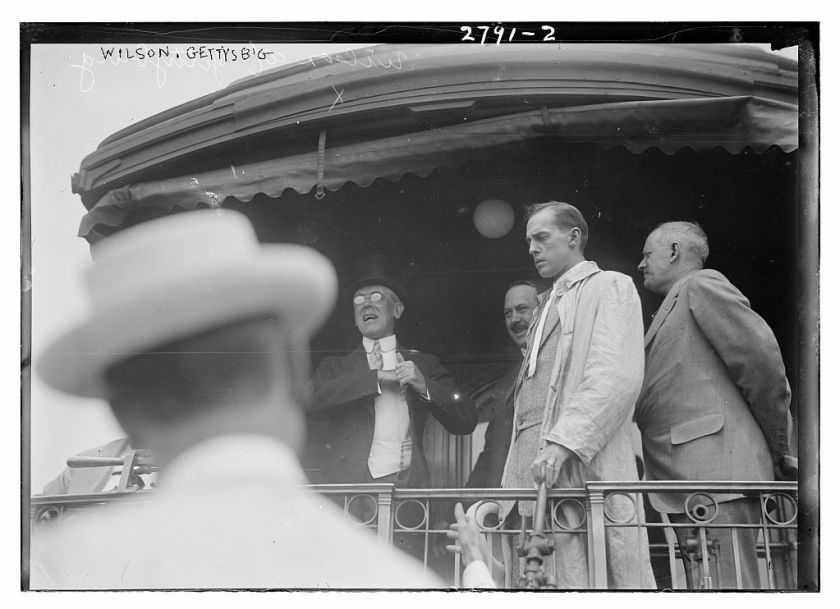
At a superficial level, Princeton seems entirely justified in venerating their well-accomplished graduate. However, as the Black Justice League has pointed out, President Wilson has also left a legacy of racism in his wake. In July 1912, Wilson enlisted the help of African American civil-rights leader William Monroe Trotter to increase his prospects among the black community during his campaign for the presidency. In exchange, Wilson promised to promote fairness for all Americans. During the first year of Wilson’s presidency, Trotter again visited Wilson to follow up on his promise. Trotter brought with him prominent civil-rights leader Ida B. Wells as well as documented proof of a policy of segregation in federal offices. Trotter and Wells were dismissed with “vague assurances” from the president. In a third meeting in the Oval Office in 1914, Trotter escalated his rhetoric, charging that the president himself was promoting Jim Crow policies in the federal government. Wilson responded by arguing that segregation was put in place to benefit blacks and should not be seen as a “humiliation” for the African American community. The conversation quickly took a turn for the worse and Trotter and his delegation were escorted out of the White House, tempers flaring. Continue reading “Lost Cause in the Oval Office: Woodrow Wilson’s Racist Policies and White-Washed Memory of the Civil War”
