By Emily Jumba ’24
War on the Doorstep: Civilians of Gettysburg
By late June of 1863, alarms warning of approaching Confederate forces were nothing new for the 2,400 residents of Gettysburg. Living just ten miles from the Mason-Dixon line, small-scale raids, kidnappings of freed-people, and rumors of an imminent clash between the two great armies had long plagued the borough and its surrounding community. Nevertheless, none of these events could prepare Gettysburgians for the ferocious 3-day fight between 165,000 soldiers in early July of that year that would transform the lives and lands of Gettysburg’s civilians forever. However, these civilians’ experiences were not monolithic; while some were defined by tragedy and blight, others included remarkable episodes of perseverance, successful pragmatism, and creative profiteering. This blog series profiles the lives of diverse Gettysburgians who were forced to confront the war at their very doorsteps, each on their own terms, whose stories speak to the kaleidoscope of experiences of civilians struggling to survive, and thrive, along the Pennsylvania-Maryland border during the Civil War.
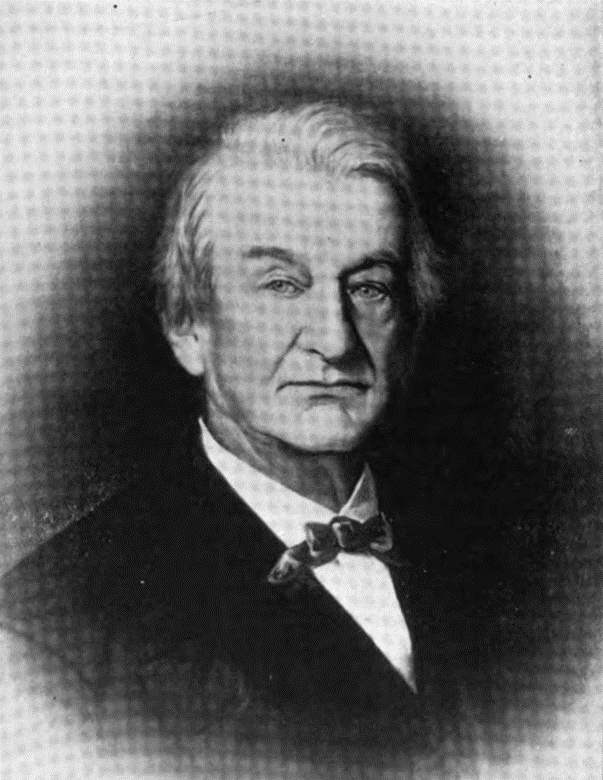
One of the leading Democratic voices and most influential figures in the greater Gettysburg community, John Swope grew up in a wealthy family and received an excellent education, which he used to start his own lucrative medical practice. The privileges afforded to him by his youth, along with sheer luck, helped him to emerge relatively unscathed from the Battle of Gettysburg in comparison to many of his neighbors, allowing him access to several unique opportunities in the following years.
John Swope was born on December 25, 1827 in Gettysburg, Pennsylvania to George and Margaret Swope. John would be their only child. George Swope worked in Gettysburg as a dry goods merchant when John was born, but was elected President of the Gettysburg Bank in 1849, following the retirement of Margaret’s wealthy father, George Smyser, from the position. In 1850, George’s real estate was valued at $5,000; thus, not only did familial connections earn him a leadership position at the bank, but he also had reasonable wealth in his own right to justify such distinction. George embodied the free labor ideology dream, working his way up to the status of a merchant, and eventually accumulating enough wealth to purchase his own house and farm, which tenants maintained. His son would, in many ways, follow in his father’s footsteps, but ultimately come to leave an even larger political footprint upon not only the town, but also the nation.
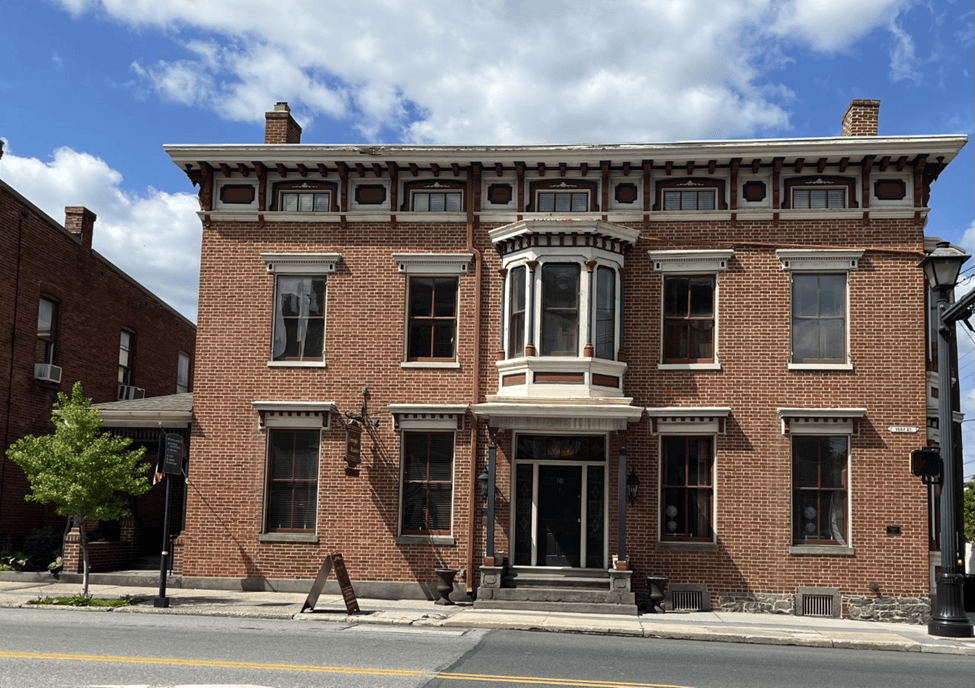
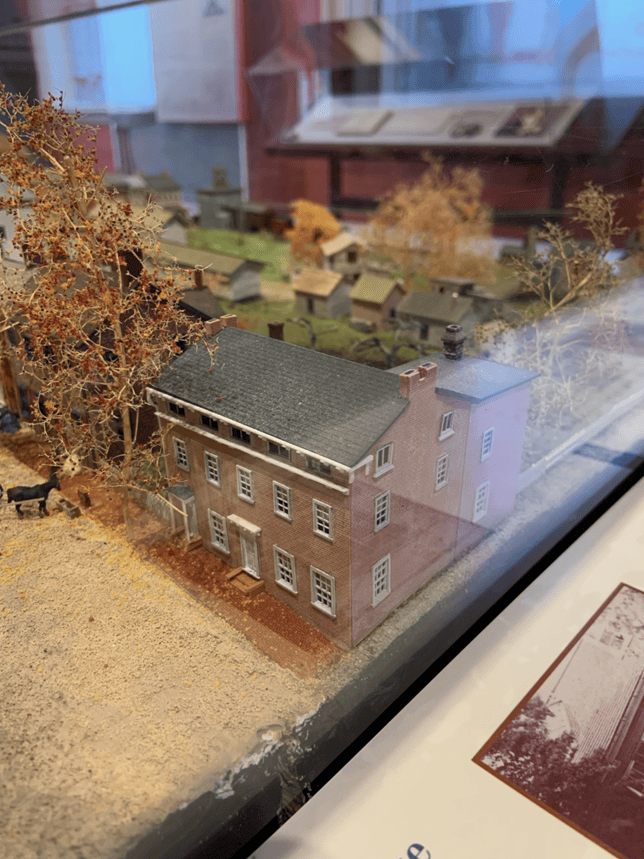
George helped the Gettysburg Bank transition into the highly successful Gettysburg National Bank. He also served as the President and Director of The Gettysburg Railroad Company, Gettysburg Water Company, The Adams County Mutual Fire Insurance Company, and the Gettysburg and Petersburg Turnpike Company—positions which assured the Swope family’s influence over some of the most significant civic organizations in the borough. The small family moved into a newly constructed, two-story brick house at the corner of York and North Stratton Streets in 1836. The property also came with a stable, a well, and a two-acre plot of land outside of town where the Swopes would also have a small farm. This land purchase made George Swope a success in the eyes of free labor ideology proponents who would celebrate him for earning these successes through hard work and the pursuit of moral living (while likely disregarding the connections with George Smyser that helped smooth his path).
John Swope was used to sharing his family’s home with individuals from outside his nuclear family throughout his life. His grandfather, Judge Smyser, sister-in-law, Bessie L. Mile, and niece, Blanche Klinger all lived with him for varying blocks of time. Additionally, many servants also occupied the house, ensuring that the Swopes would always live in comfort. Once the top half-story was added on in 1860, the servants began living on that floor, and even had their own staircase down into the kitchen.
John boasted a highly respectable educational pedigree that set him up well for success, prosperity, and influence later in his life. He initially enrolled in Pennsylvania College in 1842, where he studied until 1844. He then transferred to Princeton University to complete his undergraduate degree, and eventually continued on to earn his M.D. from the University of Pennsylvania. His doctoral program consisted of classes that were held four months a year for two years. His degree certified him to work as both a doctor and a dentist. After graduating, Swope opened a lucrative practice in Hanover, where he worked as a physician. Hanover was the original home of George Swope, so John likely still had connections to that community.
In October of 1849, Swope married Emma Wirt, who was from Hanover. They had four children together (three of whom survived to adulthood) before her death in 1862. They began their marriage living temporarily with George and Margaret in Gettysburg before moving, in 1850, to Frederick Street in Hanover, next to the home of Emma’s father. Despite living in Hanover, John served as the Director of Gettysburg National Bank from 1852 through 1857 (his father’s post undoubtedly contributing to his appointment there).
Tragedy struck the young family in 1860 when their daughter, Emma (named after her mother) passed away at the age of two, just days after John’s thirty-third birthday. With John and his wife undoubtedly still reeling from their grief, George and Margaret persuaded the couple to move to Gettysburg in 1861, shortly after the Civil War broke out. The two generations of Swopes lived side-by-side, as George had turned his home into a duplex in 1860 by adding on a two-story brick house that adjoined the western wall of his own home. He gave the new half of the home to John as a reward for his graduation from medical school. (Interestingly, the duplex abutted the home of another of Gettysburg’s wealthiest families, the Codoris, who owned both a home in town and an ever-sprawling farm along the Emmitsburg Road). Despite living in Gettysburg, John maintained his practice in Hanover for two more years, only moving his office to Gettysburg after the battle.
Despite the death of his young daughter, between his excellent education, the initial success of his medical practice, and his growing family, John had likely felt prepared for a comfortable life of wealth and influence in Gettysburg. However, tragedy struck again in 1862 when John’s wife, passed away, leaving him with three children to raise on his own. While he would have certainly been devastated by this tragedy, John still had his parents living next door and the servants who stayed with him who could provide assistance in rearing the children, helping to ease the loss in at least a small way. A year later however, the war would come literally to his doorstep, and John would again face tragedy, this time through the widespread carnage that destroyed so many of his neighbors’ livelihoods.
A month before the two armies would collide in his home town, John registered for the draft. The newly passed Enrollment Act of 1863 had required him to do so, as he fit the age requirement of being between 20 and 45 years old (he was 35 years old at his registration). Perhaps the grieving Swope comforted himself with the thought that, if he were to be drafted, at least his service on the front lines might serve as both a physical and mental escape from the melancholies and recent tragedies that had befallen his household. Additionally, if drafted, John could provide his medical services to the soldiers in blue. Quite noticeably, however, he did not go so far to enlist, perhaps due to his Democratic political leanings which would have been at odds with the current policies of the Lincoln administration. John also likely hesitated to enlist because it would require him to leave behind his successful medical practice and his young children. If he were killed in battle, he would leave them as orphans, likely dependent on his own aging parents for support. Even if he were not killed, the medical practice he had worked his whole life to proudly bring into fruition would have to be sacrificed, or at least temporarily abandoned, thus removing a key facet of Swope’s professional identity—and leaving needy patients in the community without their reliable caretaker . Thankfully for at least one of the impending battle’s wounded, Swope was able to remain at home.
During the Battle of Gettysburg, John Swope likely hid in his basement with his family. He probably stayed at home to protect the house, as both he and his father had a large investment put into the home. For example, George’s half of the duplex alone was now worth $8,000 in 1860. Even if John could not personally keep the battle away from his home, at least he could watch over the house and try to prevent expensive items from being stolen or destroyed. He also sent a friend, Dr. J.W.C. O’Neal, to check on his parents’ farm outside of town. O’Neal was related by marriage to John, as his wife also hailed from the Wirt family. However, the mission turned out to be much more dangerous than expected, and O’Neal was captured by Brigadier General James Johnson Pettigrew’s Confederate soldiers and reportedly forced to tend to Confederate wounded during the battle. As O’Neal was coerced into providing medical services for the Confederate army, his disappearance likely left John wondering about the fate of both his friend and the farm. While luck kept him out of aiding the Confederates, he probably felt distressed and guilty for O’Neal vanishing. If John had not sent him to check on the farm, he may have been sitting safe in his own basement.
On July 1st, the fighting raged around Swope’s home in town. The Louisiana Tigers, and specifically Brigadier General Harry Hays’s Brigade of Brigadier General Jubal Early’s Division, pushed elements of the Union Eleventh Corps, commanded by Major General Oliver Howard, up North Stratton Street. The street runs parallel alongside the eastern wall of George’s half of the house. The most famous of the men killed during this struggle was likely Sergeant Amos Humiston, whose death prompted a national newspaper search for his family and famously led to the idea for the eventual creation of the National Homestead Orphanage for children of deceased soldiers in 1866. He died clutching a stereograph of his young children—children not much older than John Swope’s. Sgt. Humiston fought in bloody hand-to-hand combat in the streets, an unusual scenario for Civil War soldiers who were accustomed mostly to firing in distant lines across a field. This disorienting and terrifying struggle took place just steps from where John spent his innocent and privileged childhood—the house where he now hid in the basement with his own children for safety.
The Swope home made it through the battle, although John Swope would file a claim with the state for destruction to his property committed by Brigadier General J.E.B. Stuart’s men, which likely occurred on July 3rd when they fought at East Cavalry Field. In the claim, John likely referred to the small farm that he would ultimately inherit from George which was about two miles outside of town. In 1879, he received $133.00 for his losses—a more sizable amount than many claimants. The state of Pennsylvania only rarely compensated the claimants for losses caused by the Confederates. It is possible that John received the $133.00, while many of his neighbors received nothing, because his family enjoyed so much power and influence in both Gettysburg and Adams County. Three generations of the extended Swope family held the position of President of Gettysburg National Bank, with their control spanning more or less from 1824 until 1905. Such influence, combined with their standing as the wealthiest family in the county in 1863, may have helped John’s cause while applying for a claim, despite the family needing that money far less than their middling and poor neighbors who received nothing. Due both to the enormous financial strains that the mere prosecution of the war effort had placed upon the state and federal government, combined with free-labor fears of creating a government-dependent lower class, few families would receive any payout from the state. However, through their various lucrative enterprises in town, John Swope and his predecessors had established themselves as models of moral living and independent financial success, demonstrating both the good character and respectable work ethic of individuals who could be trusted and would likely not to become dependent on government handouts in the future, and whose continued leadership in the community was both needed and valued.
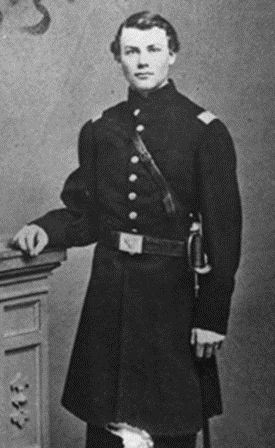
However, more immediately after the battle, Swope’s home became a field hospital. On July 11th, Lieutenant William “Willie” Pohlman of the 59th New York was brought there to recover from wounds he received during the Pickett-Pettigrew assault on July 3rd. Lieutenant Pohlman’s parents had worked as missionaries of the American Board of Foreign Missions to China and he had been born in Borneo during one of their trips. After Pohlman’s mother passed away, his father had sent both him and his sister to Albany, New York to be raised by their aunt and uncle. Pohlman’s father would die while making an ocean voyage. Despite his determination to follow his parents’ path and also become a missionary, Pohlman enlisted in the 1st New Jersey Infantry after completing his freshman year at Rutgers University.
That decision would ultimately link his fortunes fatefully to the Swope family, as in January of 1863, Pohlman was promoted to lieutenant and transferred to the 59th New York in which he would serve as an adjutant during the Battle of Gettysburg. Gettysburg would be Pohlman’s thirteenth battle of the war. During the Pickett-Pettigrew assault, Pohlman received two wounds. First, a shell fragment hit his upper left arm. He refused to go to the rear of the lines and instead told his comrades, “No, never while I have a sword arm left.” He drew his saber with his right hand to continue fighting, only for that wrist to be hit by a bullet. Pohlman again refused assistance from his men, who offered to escort him behind the Union lines to receive medical treatment; true to nineteenth-century sentimentalist views of battle, which held that even a single soldier had the power to change the course of battle if he fought courageously, Pohlman insisted that the men remain on the field, as he believed every man could make a difference in the fight. Pohlman instead found his own way behind the Union lines to the field hospital he would stay at until July 11th, when he would be brought to the Swope house to continue his recovery.
Pohlman’s and John Swope’s fortunes may have collided on July 11th for two key reasons: First, John Swope was a doctor who had been practicing for several years in Hanover by then. He could have provided key medical services to Pohlman, and to countless numbers of other wounded men. (According to Mary Pohlman, (William’s sister), he was also nursed by Eliza W. Farnham, who treated him at the original field hospital and tracked him down after he was moved to the Swope house). Additionally, Pohlman’s family was extremely wealthy, which meant he grew up in a similar socio-economic class as John Swope. Therefore, it is possible that Pohlman (or his initial caretakers) may have heard about the Swope family and thought he would be able to recover more comfortably there. After examining Pohlman, Swope called for an experienced surgeon from Baltimore (Swope usually avoided surgeries). Then, in an effort to communicate Pohlman’s fate to his loved ones and provide comfort in the chaotic weeks following the battle, he began to exchange correspondence with Mary Pohlman.
As sometimes happened with wealthy families of officers, Mary eventually sent a carriage to Pennsylvania with the aim of retrieving her brother so that he could complete his recovery within the comforts of home, under the care of his loving family. However, such was not to be his fate. Lt. Pohlman seemed to be recovering well until July 20th, when his wounds suddenly began to hemorrhage and he became confused. On July 21st, Pohlman passed away in Swope’s house, with the carriage sent by Mary to retrieve him still en route to Gettysburg. Pohlman’s body was embalmed in Gettysburg (which John probably had ordered) before being returned home to Albany for burial. John provided Polhman with the sentimentalist version of the “Good Death” that soldiers often imagined when enlisting. Not only did he provide Pohlman with excellent medical care (even going so far as to call in a surgeon from out of state), but he also made sure Pohlman rested in as much comfort as could be provided in the situation. John helped Pohlman to communicate his last wishes to Mary, which is an opportunity that most soldiers in the Civil War did not have. After Pohlman’s death, John ensured the return of his body home to Albany for a full Christian burial.
Despite John’s attempts to avoid the war (including his reluctance to enlist), the grim realities of war still found their way quite literally into his house alongside Pohlman, even after the battle raged in the streets around the home. John may have seen tending to Pohlman as satisfying his patriotic duty to his country, as he tended one of its fallen heroes. Even though he never enlisted, John could say that he contributed to the war effort, opening his home to a wounded Union officer. While doing so, John certainly thought about the impact that bringing the reality of war into his home would have on his young daughters. Even though he remembered a peaceful, innocent childhood in the Swope home, his daughters would grow up to have memories of hiding in fear for their lives in their own basement during the battle, as soldiers fought in the blood- soaked streets outside their doorstep. They would remember the once pristine, blood-soaked operating table and furniture surrounding Pohlman during his final days; they would have the memory of Pohlman’s desperate cries and struggles for life amidst his hemorrhage imprinted in their young minds forever.
Despite their grim memories of the battle, in the years following the Battle of Gettysburg, the Swope family remained prosperous, unlike many of their neighbors who struggled with significant financial losses after the battle. John’s home had survived the battle relatively unharmed, and he would eventually receive compensation for the damage it did face from his claim. John Swope remarried sometime before 1870 to Blanche Mitchell. They had three more daughters together who survived to adulthood. His post-war fortunes helped him to bounce back from the personal tragedies that had defined his life on the eve of the war. He also benefited from never having to serve on the front lines during the war itself and thus avoiding being torn away from his family to fight, unlike so many others. He may have paid a commutation fee to have someone else serve in his stead after registering for the draft, or perhaps John just benefited once again from luck and was never drafted.
Swope continued to use the post-battle years to become more actively engaged in the Gettysburg community and take advantage of numerous professional opportunities. He moved his medical practice to Gettysburg shortly after the battle, likely helping to treat additional injured. In 1879, he became the President of Gettysburg National Bank, following the death of his father, George, who had previously held the position. Additionally, John donated $5,000.00 to St. James Lutheran Church (which the family were members of) in honor of his father to help fund the construction of the church’s new bell tower. The church sat diagonally opposite the Swope House at the intersection of York and North Stratton Streets. After the church completed the bell tower’s construction, the tolling of the bell could be heard on the Swope property every Sunday morning, reminding John, and everyone else within hearing distance, of George. Having inherited George’s wealth and property, he also made significant renovations to the home to showcase his newfound wealth and thereby expand his own influence within the community. In the last census before George’s death, his combined personal estate was valued at a whopping $157,000, and his real estate at $8,000. To that end, he replaced the original eighteen-pane windows on the front of the house with four-pane windows (the larger sheets of glass were more expensive and a clear sign of “conspicuous consumption.”). He also added bump-outs to the east side of the house where George had lived. John finished his renovations by adding molding to the roofline in the front of the home, which served as a clear statement piece about his socio-economic position.
Gaining momentum from his new-found personal wealth and local prominence, in 1884, Swope ran, and was elected, to replace Democrat William A. Duncan in the United States House of Representatives. Swope moved his family to Washington D.C., where they would remain through his death. After finishing out Duncan’s term, Swope was elected for his own full term, thus solidifying the Swope family name in not only local, but also state and national political influence. However, Swope’s rapid rise within the political arena must have complicated his life within certain sectors of Gettysburg. Many of the other prominent families in the borough were Republicans whose political views would have clashed dramatically with his own (especially during the war years and those immediately preceding and succeeding them). To hold dissenting views as merely fellow voters within a community was one thing; to suddenly represent the community through an official Democratic voice in Congress was another. Nevertheless, it appears Swope’s personality and political savvy somehow enabled him to navigate these challenges remarkably smoothly, as his obituary noted that he had “filled the position with great credit to himself and his constituency.” Indeed, Swope appears to have cultivated a reputation of personal honor similar to that which had gotten his father first elected as President of the Gettysburg Bank almost forty years prior. Never one to forget his home town, no matter how great his political fortunes, while living in Washington D.C., John remained actively involved in the affairs of Gettysburg outside of the operations of the bank. He also gave back to his original college in his hometown. In 1882, he became the Vice President of the Board of Trustees of Pennsylvania College—a position he held until his death.
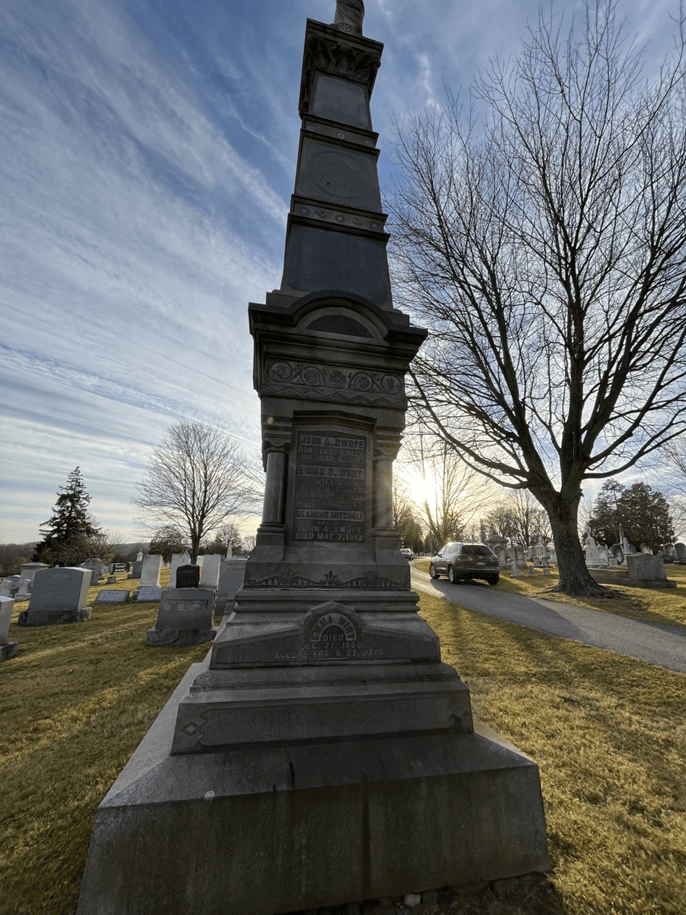
Despite his professional and financial successes, however, Swope suffered from poor health during the last two years of his life. Battling through numerous illnesses, Swope eventually lost most of his eyesight. He passed away in the morning on December 6, 1910, in Washington D.C., just shy of his eighty-third birthday. His former neighbors in Hanover and Gettysburg received the news of his death through telegraph. Swope was buried alongside his first wife, Emma in Evergreen Cemetery in Gettysburg on December 8, 1910.
Thanks to his family’s wealth and influence, John Swope enjoyed a largely privileged life which ultimately helped him launch a political career that extended the Swope family’s influence beyond Gettysburg to the national level. His father, George, had followed the free labor dream, climbing the socio-economic ladder and setting John up for a life of success. However, no amount of familial hard work, top-notch education, and inherited wealth could, keep tragedy from John Swope’s front door, as he struggled through the premature death of loved ones and, despite his best attempts to escape the war, brought the bloody conflict into his own front parlor. Undoubtedly changed forever by his all-too-personal encounters with death and suffering that the battle and his unexpected patient, Lt. Pohlman forced upon him, Swope nevertheless rallied in the wake of war to continue to serve the family, the community, and the nation that had nurtured him and his good fortunes since youth.