Warring With Dedication and Disenchantment: Civil War Newspapers’ Portrayal of the Good Death

By Emily Jumba ’24

Washington D.C.’s Daily National Republican’s “Latest from Gettysburg: The Battlefield Two Days After the Battle” and Richmond, Virginia’s The Daily Dispatch’s “Our Army Correspondence” both describe the deaths of soldiers who received mortal wounds at the battle of Gettysburg and attempt to highlight the positive outcomes of the fight while struggling against disillusionment, though to varying degrees. These articles reached readers residing near the epicenter of the war, as they lived in the capital cities of each warring nation.

The Daily National Republican reprinted its article from the New York Times, as was common due to the interconnections between newspapers. The Daily National Republican was the newer of the two papers, as it was created in 1860 under the name the National Republican.[1] From its establishment, the paper aimed to specifically reach Republicans in the United States’ capital and to specifically support the Lincoln administration. Its narrow focus was perhaps due to it competing with four other daily newspapers in the city. On the other hand, The Daily Dispatch, while also being a daily paper, was founded in 1850 with the goal of remaining nonpartisan and appealing to Richmond’s industrial and commercial elites.[2] However, once the Civil War began, the paper’s editors quickly left behind their original nonpartisan ideals and shifted the newspaper’s focus to be staunchly Democrat and pro-Confederate. The opposing political leanings of the newspapers are evident in both “Latest from Gettysburg: The Battlefield Two Days After the Battle” and “Our Army Correspondence,” despite the two articles focusing in on very similar themes.

On July 9, 1863, “Latest from Gettysburg: The Battlefield Two Days After the Battle,” was published in the Daily National Republican, four days after the article’s original printing in the New York Times. This article provides its readers with a brief overview of the battle and then dives into a detailed description of the Pickett-Pettigrew Assault on July 3rd, which began with a “storm of iron” during the artillery bombardment.[3] The author, L.L. Crounse, shifted his focus relatively early in the piece to describe the cost of the battle in human lives, telling stories ranging from that of individuals to those of whole divisions. Crounse’s graphic descriptions challenge the Victorian era notion of the Good Death. Following the principles of the Good Death, a soldier would, in theory, be injured in battle, but not die instantly, as he would have time to travel home and die, surrounded by his loved ones. In part, these family and friends would be present to provide comfort, but it was also crucially important for them to hear and document his last words so that they would know he died courageously and at peace with God, determining his eternal fate.[4] The soldier’s family and friends would ultimately be able to bury the soldier’s (intact) body in their hometown, rather than in an anonymous plot in some unknown field in a state far from home. During the Civil War, some soldiers attempted to adapt the Good Death to a battle situation, wherein they made agreements with their comrades to write home to each other’s families in the circumstance of their death to provide family members with the details on how they died, their final words, and descriptions of how they performed in battle; such letters were often accompanied by a soldier’s personal effects, intending to help provide the family with as much closure as they possibly could.

However, Crounse’s descriptions often challenged the Good Death, focusing on grisly battlefield deaths where the mangled soldiers who were dying in agony, far from home had no one to record their final words or recite a comforting biblical passage to them. For example, he informs his readers of the death of Lieutenant Bayard Wilkeson, who lingered alone for ten excruciating hours after being mortally wounded on July 1st, stranded on the battlefield, with no one to record his dying words and certainly far from his home and loved ones. Wilkeson did not personally achieve the Good Death, and the closest his family came to remedying that fact was when his father managed to claim his body and effects after the battle so that his family at least had an idea of what happened to him.

Crounse also unabashedly shared the mass-scale carnage of July 3rd with his readers, noting, “Our immortal men, nerved to a degree of desperation never before equaled, poured forth, such a devastating fire, and the artillery joining with its terrible canister, that the two long lines of the foe literally sank into the earth.”[5] Like Wilkeson, those two ranks of Confederate soldiers did not experience the Good Death—they were mowed down while still in their line, removing the cherished Civil War-era notion that individual men possessed actual agency to affect the course of battle. Many of them were helplessly blown apart on the field, with only the “comfort” of fellow dead or dying comrades from their regiment sprawled around them. As his reporting style reveals, while Crounse publicly challenged the notion of the Good Death to Republicans living in Washington D.C., he in turn appears to have struggled with a sense of war-disillusionment. Rather than center his article on how honorably and courageously the men fought, he focuses instead on the wanton death and mass destruction caused by the battle. However, it is clear that, despite the sobering realities of war, he was not completely disillusioned, as he attempts to portray the battle more positively toward the end of the article: “…the noble Army of the Potomac can yet fight, after all the imputations of demoralization and inefficiency which have been heaped upon it.”[6] Thus, it seems, like many writers during the war, Crounse managed to dig within himself to find a higher meaning in the human sacrifice and suffering—a sentimentalism that encouraged him to be stoic and composed in the face of such suffering. It is likely that the editors of the Daily National Republican included his article in the paper because of that somewhat more positive twist at the end, which would prevent the article from crushing its readers’ morale. Their audience was comprised of Republicans from the nation’s capital, their readership likely also included several Republican politicians. These individuals surely would not want to read an account of utter disillusionment with the war they were waging, especially after such a large Union victory which had sent the Army of Northern Virginia retreating South.

In Richmond, “Our Army Correspondence” surprisingly revealed a somewhat less disenchanted tone than its northern counterpart, and focused more on highlighting episodes in which the Good Death was, in fact, achieved—likely to bolster morale in the Confederate capital following General Lee’s enormous loss at Gettysburg.  This article was originally published on July 21, 1863, and was written in Martinsburg, West Virginia ten days after “Latest from Gettysburg: The Battlefield Two Days After the Battle,” was published in the New York Times. Rather than focus on the battle itself, this account centers more on the Confederate retreat, relaying news of some of the casualties back to the homefront, and interestingly enough, the political climate of Martinsburg regarding secession, which is portrayed as still highly sympathetic to the Confederate cause, despite the state’s recent addition to the Union. (Perhaps this emphasis on Martinsburg’s southern sympathies was meant to help buoy Confederate morale by implying that that loyalty to and support for the Southern cause was still more widespread than the recent statehood movement would lend one to believe). The article’s author does maintain some of the tenets of the Good Death in the stories that he chooses to tell. For example, he relates the death of General Paul Semmes to his readers. Semmes’s femoral artery was severed during the battle, and while he did put a tourniquet above the wound and survived beyond the battlefield, he eventually passed away in Martinsburg a week later. Even though they both lingered after receiving mortal wounds during the battle, Semmes’s and Wilkeson’s deaths are described very differently. Semmes had doting nurses tending to his needs in Martinsburg and, embodying the noble and composed manner expected in the Good Death, he “perceived [a change in his condition for the worse], and told his attendants that he would not survive.”[7] He told the nurses to write to his family, got to share a few poignant words with them, and asked that his sword and Bible be given to his wife upon his death. According to the author, “He also expressed his resignation to his fate, and died as he had often expressed a wish to die—in service to his country.”[8]

Semmes fulfilled almost all of the requirements of the Good Death, only deviating from it in two ways—he was not at home with his family as he died, although he experienced the next best thing of being surrounded by doting nurses who conveyed his final words to his family; and he was not buried back at home, although that had been his original plan. His body was supposed to be shipped back to his relatives in Georgia, but it began decomposing too quickly and he had to be buried in Martinsburg. His death was extremely different than Wilkeson’s lonely and painful one in the middle of a battlefield. The author may have included Semmes’s story because it was a rare occasion of the Good Death actually being fulfilled in the wake of battle, and while the death itself was not necessarily a morale booster, the manner in which it occurred would help to smooth away some of the horrors of war that were also printed in the papers, and (in a way), almost justify his death in the name of sentimental sacrifice to a beloved cause.

While not nearly as strong as in “Latest from Gettysburg: The Battlefield Two Days After the Battle,” there is still a slight undercurrent of disillusionment in “Our Army Correspondence.” The author still chose to focus on the cost of the battle in human life, even if he did include an example of the Good Death being fulfilled. Unlike many other post-battle newspaper articles, he did not describe the details of the fighting, portraying his side’s army as gallantly and courageously fighting, but instead focused on the outcome of the battle for the combatants themselves. He does not completely abandon the cherished ideals of the brave and noble soldier—upon describing Semmes’s death, he certainly explores those characteristics—but he also makes it clear that the Confederate army was in retreat and had lost a staggering number of honorable men. To an audience in Richmond, the Confederate capital, this would be a sobering thought, compared to some of the other Southern accounts of the battle of Gettysburg which painted it as a gallant Confederate victory.

While these two articles were published in newspapers based in the warring capitals, they both wrestle with portraying the soldier’s Good Death and balancing threads of disillusionment and war-weariness with necessary morale-boosting patriotism. They both achieved their goals by relying on sentimental tropes and rhetoric with which to frame their narratives. The conflicting feelings of each author reveal that by mid-July of 1863, people on both sides of the war were not only feeling direct challenges to their pre-war cultural ideals (i.e., the Good Death), but also wrestling with how to maintain continuous enthusiasm for the war. Certainly full disillusionment with the war had not set in; the Good Death was not entirely extinct, and there was an important higher meaning to the suffering and sacrifices both sides had endured.  However, there were clear and significant challenges with which they were forced to reckon as the war continued on through the summer of 1863. The staggeringly high number of casualties from Gettysburg only added to these already extant feelings. As authors and editors in both capitals wrestled with their personal feelings about the war, they likewise wrestled with questions as to how to accurately bring the sobering realities of war home to their readers while simultaneously upholding their perceived duties to maintain public morale.

Bibliography

Faust, Drew Gilpin. This Republic of Suffering: Death and the American Civil War. 1st ed. New York: Alfred A. Knopf, 2008.

Library of Congress. “Daily National Republican.” W.J. Murtagh & Co. Accessed April 11, 2023. https://chroniclingamerica.loc.gov/lccn/sn86053570/.

Library of Congress. “Daily National Republican. (Washington, D.C.) 1862-1866, July 09, 1863, Image 1,” July 9, 1863. https://chroniclingamerica.loc.gov/lccn/sn86053570/1863-07-09/ed-1/seq-1/.

Library of Congress. “The Daily Dispatch.” J.A. Cowardin. Accessed April 11, 2023. https://chroniclingamerica.loc.gov/lccn/sn84024738/.

Library of Congress. “The Daily Dispatch. (Richmond, Va.) 1850-1884, July 21, 1863, Image 1,” July 21, 1863. https://chroniclingamerica.loc.gov/lccn/sn84024738/1863-07-21/ed-1/seq-1/.


[1] Library of Congress, “Daily National Republican” (W.J. Murtagh & Co.).

[2] Library of Congress, “The Daily Dispatch” (J.A. Cowardin).

[3] Library of Congress, “Daily National Republican. (Washington, D.C.) 1862-1866, July 09, 1863, Image 1,” July 9, 1863.

[4] Drew Gilpin Faust, This Republic of Suffering: Death and the American Civil War, 1st ed. (New York: Alfred A. Knopf, 2008), 10.

[5] Library of Congress, “Daily National Republican. (Washington, D.C.) 1862-1866, July 09, 1863, Image 1,” July 9, 1863.

[6] Ibid.

[7] Library of Congress, “The Daily Dispatch. (Richmond, Va.) 1850-1884, July 21, 1863, Image 1,” July 21, 1863.

[8] Ibid.

Presses for the People: Civil War Newspapers’ Relationships with Their Reading Publics

By Emily Jumba ’24

Beaufort, South Carolina’s The Free South’s“Victory! Gettysburg; General Lee Defeated; Thirty Thousand Prisoners” and Delaware, Ohio’s The Delaware Gazette’s “The Great Battle in Pennsylvania” both describe some of the aftermath of the battle of Gettysburg, although with extremely different tones. Both newspapers expressed strong pro-Union sentiments and supported the Republican party. Federal treasury agents founded The Free South in January of 1863 in Beaufort, South Carolina, which, by 1863, was mostly home to freedmen and occupying Union soldiers, both of whom were supportive of the Union.[1] Beaufort began experimenting with Reconstruction soon after the battle of Port Royal, in late 1861. The fact that this small pro-Union paper was based in South Carolina, which not only was a slave state, but was also the first to secede from the Union, makes the position of The Free South somewhat unique. The Delaware Gazette, on the other hand, was the product of a northern state and was slightly older, having first been published in 1855 in Delaware, Ohio.[2] This paper initially leaned towards the Whig Party, but after the party’s collapse, it switched its loyalties to the new Republican Party, which likely represented many of its constituents, as Ohio was both a free state and a loyal member of the Union. The varied focus and tone of these staunchly pro-Union papers’ reports on the aftermath of Gettysburg is intriguing to unpack.

“Victory! Gettysburg; General Lee Defeated; Thirty Thousand Prisoners” (The Free South) reports mostly on the Confederate retreat from Gettysburg in a straight-forward “factual” manner, without much flourish or pathos. The article also focuses on tallying the number of prisoners the federal troops managed to take, between the quantity of wounded men the Army of Northern Virginia left behind in Pennsylvania and those that surrendered mid-battle or during the retreat. It is important to note that, while the article focuses on numbers, some of them are just estimates, as the article was written less than two weeks after the battle, and it draws heavily from articles in the New York Herald, which were published even closer to the battle, on July 3rd and 7th.[3] Occasionally these estimates are a bit high; at one point, the Free South article approximates the total number of prisoners taken by the Army of the Potomac at a quarter of General Lee’s forces.[4] In addition to the prisoner counts, the article also briefly mentions which generals on each side were casualties, but gives no further details about the circumstances of their injuries or deaths, staying true to its lean and blunt reporting style.

The Free South’s heavy emphasis on prisoners is a consistent pattern throughout the newspaper’s short time in publication (from January of 1863, to November of 1864).[5] After various battles occurred, the paper often reported on the number of prisoners taken both by federal and Confederate troops. This may be due to the Beaufort population consisting of predominately freedpeople. United States Colored Troops had been fighting in the war since the fall of 1862, opening the potential for African Americans to be taken as prisoners of war during the time frame the paper was in print.[6] This scenario was of particular concern for the consumers of The Free South (whether they could read the news for themselves or had it read to them by Union occupiers), as on numerous occasions, when Confederate soldiers encountered African American soldiers who surrendered, they killed them rather than accept their surrender, and when they did take African Americans prisoners, they often refused to parole them or sent them back into slavery.

Both of these scenarios were featured within the paper in early Fall of 1863, just two months after Gettysburg. On September 19, 1863, an article described the delay in the exchange of prisoners because, “the rebels refused to eat their words,” regarding the USCT troops who had been captured.[7] A month prior, the United States War Department released General Order 252, in which Lincoln demanded the equal treatment of prisoners and threatened to execute a Confederate prisoner for every USCT soldier that the rebels murdered.[8] If there were any freedpeople from Beaufort who had joined the USCTs, such occurrences could potentially involve them and significantly impact the lives of their loved ones back at home, who were trying to establish new lives for themselves. In addition, the white federal soldiers occupying Beaufort were also likely interested in reading these statistics because they would also want to see the reports of USCT prisoners taken, especially as the Confederates committed similar atrocities against the white officers commanding USCT units. On a broader scale, by following statistics of prisoner tallies, the soldiers could track the progress of the war and which side seemed closer to winning while they remained stationed at Beaufort, away from the action of the war.

This article only briefly mentions the possibility of the Union suffering heavy losses to General Lee, but does not dwell on the idea, perhaps, in part, as an attempt to bolster previously sagging Union morale by focusing more squarely on the enemy’s losses than those sustained by the North’s for its reading constituency. Additionally, as there were no USCTs involved in the battle of Gettysburg, concerns about brutal treatment of captured federal troops and officers was not as much of a concern as it would have been in the wake of other battles. This common theme of focusing on prisoners of war as part of a larger emphasis on a battle’s raw numbers likely was a trend that carried over from the paper’s typical battle reporting style.

“The Great Battle in Pennsylvania” (Delaware Gazette)also mentions prisoners taken after the battle of Gettysburg and some numerical counts, although its aftermath-focus is centered on the battle’s cost in human lives. The article builds to the reveal of the horrors of battle by first relaying the events of the Pickett-Pettigrew Assault on July 3rd in a grandiose manner, almost as if relaying the plot of a dramatic novel. The account contains a series of events and surrounding context that are described in sentimental detail, such as: “There was not wanting to the peacefulness of the scene the singing of a bird, which had a nest in a peach tree within the tiny yard of the white-washed cottage.”[9]  The article’s author immediately annihilates this bucolic image by describing cannon shot beginning to tear through the house as the bird is mid-song. The descriptive scenes eventually culminate in a description of men’s violent (but honorable) deaths that awaited on the battlefield: “They rushed in perfect order across the open field, up to the very muzzles of the guns, which tore lances through them as they came.”[10] The author clearly wants his audience to immerse themselves in the full picture of the fighting and the horrors that the soldiers experienced, with tugs at both the imagination and the heartstrings of the reading public, even though he himself was not present at the battle.

Simultaneously, details such as these conveyed to communities back at home that the soldiers’ fight was a courageous, romantic display of sentimental sacrifice in the face of a brutal enemy, and under enormously trying circumstances, that ultimately won the day in the name of Union and patriotism. Courage and sentimental sacrifice were expected, hallmark facets of Civil War soldiers’ conduct, as they tied into essential Victorian ideals, such as martial masculinity, honor, and righteousness, that both soldiers and civilians believed in to help justify the horrors and grief ensuing from war.[11] For example, at the end of the article, the author depicts Jesus standing over the battlefield, welcoming the righteous dead through the gates of Heaven—and what made these dead righteous was that they fought courageously, upholding their honor until their dying moment.[12] Civil War soldiers on both sides often believed that if they were righteous, Providence would at least ensure their souls went to Heaven if it did not protect them from injury in battle. The author likely included such evocative details in part because he was writing for an extremely pro-Union audience in Delaware who likely sought such affirming framing in reading about the details of a large Northern victory. The article in The Free South utterly skips past this sort of description, focusing squarely on numbers and cold calculations of POWs rather than on the human details of, say, how those large numbers of soldiers reached a position in which surrender proved the only option.

Although published within a mere day of each other, both for pro-Union audiences, and both clearly recognizing the Union victory at Gettysburg, the difference in these two articles’ tone and content reveals the important role that not only the expectations, but also the needs of the readership played in shaping how Civil War battles were portrayed in the press.[13] One paper was consumed by a community of newly freed former slaves who were in the process of starting new lives in a state that was still fighting against the Union, as well as by Union occupiers who were expected to continue their tenure at Beaufort until the end of the war; their desire for battle news likely was motivated by practical, pragmatic concerns about numbers and raw facts that could alter the scales for or against an ultimate Union victory and emancipation. The other paper was produced for a well-established town of largely white civilians in central Ohio with pro-Republican leanings who craved a battle narrative that propped up both their cultural and political ideals that justified the sacrifice of so many white soldiers on behalf of Union and democracy. These two articles underscore just how intertwined the press and individual readership communities were in shaping how the war was reported and recorded for future generations.  

Bibliography

“Gettysburg Prisoners of War – Fort McHenry National Monument and Historic Shrine (U.S. National Park Service).” https://www.nps.gov/fomc/learn/historyculture/gettysburg-prisoners-of-war.htm.

“Battle History | Gettysburg PA.” https://www.gettysburgpa.gov/history/slideshows/battle-history.

“Beaufort National Cemetery–Civil War Era National Cemeteries: A Discover Our Shared Heritage Travel Itinerary.” https://www.nps.gov/nr/travel/national_cemeteries/south_carolina/beaufort_national_cemetery.html.

Delaware Gazette. “The Great Battle in Pennsylvania.” July 10, 1863, sec. Image 2. https://chroniclingamerica.loc.gov/lccn/sn83035595/1863-07-10/ed-1/seq-2/#date1=07%2F01%2F1863&index=2&date2=07%2F16%2F1863&searchType=advanced&language=&sequence=0&words=Gettysburg+prisoners&proxdistance=5&state=&rows=20&ortext=&proxtext=Gettysburg+prisoner&phrasetext=&andtext=&dateFilterType=range&page=2.

Library of Congress. “Delaware Gazette (Delaware, Ohio) 1855-1886.” https://www.loc.gov/item/sn83035595/.

Library of Congress. “The Free South (Beaufort, South Carolina) 1863-1864.” Stickney, Latta & Reed. https://chroniclingamerica.loc.gov/lccn/sn84026962/.

Linderman, Gerald. Embattled Courage: The Experience of Combat in the American Civil War. New York: The Free Press, 1987.

The Free South. “Important Order from President Lincoln.” August 15, 1863, sec. Image 2. https://chroniclingamerica.loc.gov/lccn/sn84026962/1863-08-15/ed-1/seq-2/#date1=01%2F01%2F1777&index=4&date2=12%2F31%2F1963&searchType=advanced&language=&sequence=0&lccn=sn84026962&words=prisoner+prisoners&proxdistance=5&rows=20&ortext=prisoner&proxtext=&phrasetext=&andtext=&dateFilterType=range&page=1.

The Free South. “Once Free, Always Free.” April 25, 1863, sec. Image 1. https://chroniclingamerica.loc.gov/lccn/sn84026962/1863-04-25/ed-1/seq-1/#date1=01%2F01%2F1777&index=5&date2=12%2F31%2F1963&searchType=advanced&language=&sequence=0&lccn=sn84026962&words=prison+prisoner&proxdistance=5&rows=20&ortext=prisoner&proxtext=&phrasetext=&andtext=&dateFilterType=range&page=1.

The Free South. “Protection of Colored Troops.” August 15, 1863, sec. Image 2. https://chroniclingamerica.loc.gov/lccn/sn84026962/1863-08-15/ed-1/seq-2/#date1=01%2F01%2F1777&index=4&date2=12%2F31%2F1963&searchType=advanced&language=&sequence=0&lccn=sn84026962&words=prisoner+prisoners&proxdistance=5&rows=20&ortext=prisoner&proxtext=&phrasetext=&andtext=&dateFilterType=range&page=1.

The Free South. “The Exchange of Prisoners—Status of Officers of Negro Regiments.” September 19, 1863, sec. Image 2. https://chroniclingamerica.loc.gov/lccn/sn84026962/1863-09-19/ed-1/seq2/#date1=01%2F01%2F1777&index=9&date2=12%2F31%2F1963&searchType=advanced&language=&sequence=0&lccn=sn84026962&words=prisoner+prisoners&proxdistance=5&rows=20&ortext=prisoner&proxtext=&phrasetext=&andtext=&dateFilterType=range&page=1.

The Free South. “Victory! Gettysburg; General Lee Defeated; Thirty Thousand Prisoners.” July 11, 1863, sec. Image 1. https://chroniclingamerica.loc.gov/lccn/sn84026962/1863-07-11/ed-1/seq-1/#date1=07%2F01%2F1863&index=3&date2=07%2F16%2F1863&searchType=advanced&language=&sequence=0&words=Gettysburg+prisoners&proxdistance=5&state=&rows=20&ortext=&proxtext=Gettysburg+prisoner&phrasetext=&andtext=&dateFilterType=range&page=1


[1] Library of Congress. “The Free South (Beaufort, South Carolina) 1863-1864.”

[2] Library of Congress. “Delaware Gazette (Delaware, Ohio) 1855-1886.”

[3] The Free South. “Victory! Gettysburg; General Lee Defeated; Thirty Thousand Prisoners.” July 11, 1863, sec. Image 1.

[4] Ibid.

[5] Library of Congress. “The Free South (Beaufort, South Carolina) 1863-1864.”

[6] “Beaufort National Cemetery–Civil War Era National Cemeteries: A Discover Our Shared Heritage Travel Itinerary.”

[7] The Free South. “The Exchange of Prisoners—Status of Officers of Negro Regiments.” September 19, 1863, sec. Image 2.

[8] The Free South. “Important Order from President Lincoln.” August 15, 1863, sec. Image 2.

[9] Delaware Gazette. “The Great Battle in Pennsylvania.” July 10, 1863, sec. Image 2.

[10] Ibid.

[11] Gerald Linderman, Embattled Courage: The Experience of Combat in the American Civil War (New York: The Free Press, 1987).

[12] Delaware Gazette. “The Great Battle in Pennsylvania.” July 10, 1863, sec. Image 2.

[13] “The Great Battle in Pennsylvania” was published on July 10, 1863, and the “Victory! Gettysburg; General Lee Defeated; Thirty Thousand Prisoners” was published on July 11, 1863.

Civilians in the Spotlight: Civil War Newspaper Propaganda Beyond the Battlefield

By Emily Jumba ’24

Pairing: The Bedford Gazette, July 10, 1863, Image 2 (“The First Onset—Death of Reynolds”) and The Western Democrat, July 21, 1863, Image 2 (“Another Account”)

In the days, weeks, and months following the Battle of Gettysburg, journalists and newspaper editors feverishly attempted to recapture the full details, implications, and meaning of the massive fight that had transformed one small, formerly obscure, south-central Pennsylvania town into a household name. While some reporters struggled to ascertain the exact facts of the battle amidst the chaotic aftermath, others wrote with clear political agendas intended to sway the hearts and minds of their readership and, in turn, bolster their respective side’s support for the war effort. Still others searched for meaning in the aftermath through the prisms of religion, world history, and other lenses.  In this mini-series, students will explore the myriad ways that 19th-century newspapers, throughout the North and South, “re-fought” the Battle of Gettysburg, its factual components, and its larger significance in print in the immediate aftermath of the fighting.

The Bedford Gazette’s “The First Onset—Death of Reynolds” and The Western Democrat’s “Another Account” both discuss not only the fighting of the battle of Gettysburg, but also the experiences of civilians throughout the battle. Both papers were from small towns, although they supported opposing sides of the war.  The Bedford Gazette operated out of Bedford, Pennsylvania and had a population of 1,328 people in 1860.  Charlotte, North Carolina (the home of The Western Democrat) was closer to the size of Gettysburg, with 2,265 people in 1860.  Although both newspapers came from similarly sized towns, the focus of their descriptions of the battle differed significantly.  Surprisingly, The Bedford Gazette delves into far greater detail on the specifics of the fighting and the people involved in it compared to its southern counterpart, despite the former’s article having been written sooner after the battle, when fewer battle details may have been confirmed.  In addition, the articles portray the experiences and character of the civilians whose homes were caught in the crossfire in vastly different way, perhaps as an additional means of war propaganda.

The Bedford Gazette was based in rural southern Pennsylvania, about ninety miles west of Gettysburg.  Immigrants (particularly Germans) predominately settled the area during the latter half of the eighteenth century.  The article “The First Onset—Death of Reynolds,” was originally published in Baltimore, although, curiously, the name of the Baltimore paper was not cited by The Bedford Gazette.  The article may have been borrowed from the unnamed Baltimore newspaper for two reasons: It has a heavy focus on the struggle of the Eleventh Corps (unlike many other post-battle articles that attempted to describe the first day’s fighting and often focused on the actions of the First Corps), and it painted the Pennsylvanian civilians in an overall positive light.  Residents of Bedford possibly felt ties to the Eleventh Corps because a significant number of immigrants (many of them German) filled its ranks. Many of the original European settlers of the Bedford area were German immigrants; thus, while local regiments did not fight with the Eleventh Corps, an ethnic connection existed between the two.  In the socio-economic hierarchy of the nineteenth century United States, German and Irish immigrants fell towards the bottom, and therefore were not generally portrayed in a very positive light.  This article, to the contrary, does portray people of German ethnicity as courageous soldiers who fought well, which likely appealed to the descendants of German settlers in Bedford. 

In addition, the article may have been chosen for re-printing in Bedford because it also portrays the civilians of Gettysburg in such a positive light, braving the bullets flying through the streets to aid Union soldiers in need: “They appeared elevated by noble impulses above the sentiment of fear,” the article gushed.[1]  As fellow Pennsylvanians living not far from the battlefield, Bedford residents would be eager  to consume news about the brave actions of their fellow civilians caught in the fighting.  Additionally, the paper’s glowing portrayal of Gettysburg’s largely German and Pennsylvania-Dutch community also would have struck a chord with the heavily German community of Bedford, particularly because so many newspaper reports of the time were rife with derogatory commentary about the supposed coarseness, selfishness, rudeness, and unattractiveness of Pennsylvania’s German settlements. The editor of the paper also likely hoped that this segment would serve as propaganda for supporting the war effort because it showcased the deep devotion to the war effort that even non-combatant civilians held in their hearts. This article stands out not only for mentioning the civilians at all, but also for highlighting their contributions to the war that defied typical nineteenth-century gender roles; instead of merely hiding out in their basements or fleeing the town altogether as passive and helpless victims, the women of Gettysburg were lauded for venturing out into the danger of battle to bring refreshments to the soldiers. In addition to praising and showcasing the supposed strength of Union morale among the northern citizenry and their unwavering devotion to the war effort, the paper also seems to imply that if the women of Gettysburg can risk their lives in patriotic service to the Union, then certainly so can their men on future battlefields.

“Another Account” in The Western Democrat is far less unit-specific in its description of the battle and portrays the civilians living in Pennsylvania as timid people who quickly fled town before the battle.  Rather than just focusing on July 1, 1863, this article describes all three days of the battle and describes the general movements of the Confederate troops on each day.  The units discussed are typically the usual names that appear in many newspapers regarding each part of the battle, rather than those in the northern article that focused on many 11th Corps troops.  Similar to its counterpart though, this paper describes its own soldiers’ fighting as valiant and heroic.  For example, when describing General Archer’s surrender, the “Another Account” article notes that his troops held out as long as possible while being greatly outnumbered to lessen the shame of surrendering: “[They were] taken prisoners…while obstinately refusing to yield a point that they were attempting to hold against overpowering numbers.”[2]   This article also takes a dramatically different approach to describing the northern civilians. It claims they fearfully abandoned their homes prior to the battle, which were full of food that the Confederates stole and items that they destroyed. In addition, it claims that the invasion shattered supposed  northern illusions of the southern army, stating, “The people were terrified, and wondered greatly that the poor, starving and weak Confederate army could be of such gigantic proportions.”[3]  Not only does the article show the Pennsylvanians  as cowardly and not being willing to stand up to defend their property, but it also tries to argue that the Confederate troops got the best of the northerners, whose land had thus far avoided most of the ravages of war.  The foodstuffs and other acquisitions that the Confederates made off with was a comparatively small  victory, but the editor was clearly scrambling to use that victory as propaganda to help put a positive spin on the otherwise disastrous Confederate defeat  which, he likely feared, would sink public morale.

Both “The First Onset—Death of Reynolds” and “Another Account” describe the battle of Gettysburg and the way civilians reacted to it, yet they include different details that could be used as propaganda to boost the morale of readers (particularly regarding their portrayals  of civilians).  Both attempted to accurately relay the facts of what happened during the battle; indeed, even the differing portrayals of the civilians contained varying elements of truth.  Each person experienced the battle differently, and while some people did flee the battle, others did attempt to provide refreshments for soldiers or help the wounded.  The large discrepancies between the articles mostly stem from the decision over which stories the editors wanted to tell and in what light, rather than whether specific actions actually happened or not.  In both cases, they chose civilian stories that would appeal to their audience and portray the Gettysburgians in a specific manner that benefitted their respective side, showcasing how even the common citizen could be weaponized as a propaganda tool in both the northern and southern press.

Works Referenced

“Bedford, PA Population.” Accessed December 2, 2022. https://population.us/pa/bedford/.

“Charlotte, NC Population.” Accessed December 2, 2022. https://population.us/nc/charlotte/.

Civil War Institute at Gettysburg College. The XI Corps, German Immigrants, and the Battle of Gettysburg, 2017. https://www.youtube.com/watch?v=umqYkyvMCg8.

“German-Americans and the Eleventh Corps Historical Marker.” Accessed December 2, 2022. https://www.hmdb.org/m.asp?m=70404.

“Gettysburg, PA Population.” Accessed December 2, 2022. https://population.us/pa/gettysburg/.

“History of Bedford.” Accessed December 2, 2022. https://www.pa-roots.com/bedford/history/historyofbedford.html.

The Battle of Gettysburg. “11th Corps Organization at Gettysburg.” Accessed December 2, 2022. https://gettysburg.stonesentinels.com/armies/army-of-the-potomac/11th-corps/.

The Battle of Gettysburg. “Monument to the 11th Corps at Gettysburg, Photograph and Map Location.” Accessed December 2, 2022. https://gettysburg.stonesentinels.com/union-headquarters/11th-corps/.

The Bedford Gazette. “The First Onset—Death of Reynolds.” July 10, 1863, sec. Image 2. https://chroniclingamerica.loc.gov/data/batches/pst_intramural_ver01/data/sn82005159/00296028459/1863071001/0316.pdf

The Western Democrat. “Another Account.” July 21, 1863, sec. Image 2. https://chroniclingamerica.loc.gov/data/batches/ncu_lumber_ver01/data/sn84020712/00295879191/1863072101/0116.pdf


[1] The Bedford Gazette. “The First Onset—Death of Reynolds.” July 10, 1863, sec. Image 2.

[2] The Western Democrat. “Another Account.” July 21, 1863, sec. Image 2.

[3] The Western Democrat. “Another Account.” July 21, 1863, sec. Image 2.

Small Town Civil War Journalism: Factual Reporting and Local Pride

By Emily Jumba ’24

Pairing: Raftsman’s Journal, July 15, 1863, Image 2 (“The Victory at Gettysburg”) AND Union County Star and Lewisburg Chronicle, July 7, 1863, Image 1 (“Union Victory! The Gettysburg Battles”)

In the days, weeks, and months following the Battle of Gettysburg, journalists and newspaper editors feverishly attempted to recapture the full details, implications, and meaning of the massive fight that had transformed one small, formerly obscure, south-central Pennsylvania town into a household name. While some reporters struggled to ascertain the exact facts of the battle amidst the chaotic aftermath, others wrote with clear political agendas intended to sway the hearts and minds of their readership and, in turn, bolster their respective side’s support for the war effort. Still others searched for meaning in the aftermath through the prisms of religion, world history, and other lenses.  In this mini-series, students will explore the myriad ways that 19th-century newspapers, throughout the North and South, “re-fought” the Battle of Gettysburg, its factual components, and its larger significance in print in the immediate aftermath of the fighting.

The Clearfield Raftsman’s Journal and Union County Star and Lewisburg Chronicle both published accounts of the battle of Gettysburg within two weeks of the fight’s conclusion.  Published in two different, small, central-Pennsylvanian towns, Clearfield was comprised of fewer than one thousand people, while Lewisburg boasted just a slightly higher population than Gettysburg (2400) in 1860.[1]  Unlike the larger papers rooted in urban hubs such as New York City, Philadelphia, or Richmond, small-town newspapers such as these likely experienced less pressure to include fanciful political propaganda about the war effort than did the major papers that both served as the political organs of those larger cities and sought to reach a national audience.  Thus, while both articles from these small-town papers focus on celebrating the Union triumph at Gettysburg, they both do so through surprisingly up-front and level-headed reporting, despite varying in their overall area of focus and tone.

The Raftsman’s Journal’s “The Victory at Gettysburg” is the more exuberant of the two articles, with it boasting of the various ways that the Confederate army and citizens would be demoralized after the battle of Gettysburg.  It begins with a broad overview of the battle, accounting for which side led after each day’s fighting, and then quickly shifts to a discussion of the battle’s various disheartening influences upon the Confederates that surely hung heavily upon them as they retreated south.  Influenced not just by a sense of national, but also state-wide pride, the author of the article describes the “unsurpassed in the world” abundance the Confederates found when they invaded Pennsylvania, from the flourishing crops to the plentiful reserves of young men who had not yet enlisted.[2]  The author claims that the Confederates would return South and tell their loved ones of the Northern bounty to the effect of “demoraliz[ing] public opinion in Rebeldom,” shattering the falsehoods that the Confederate government fed to them about the supposedly devastating impacts of the war on the Union.[3] On the contrary, the scenes greeting the rebel army were hardly the picture of a war-weary people, or of a land ravaged by war and on the desperate verge of surrender.  Although the tone of the piece is somewhat boastful, the article is unique for its insightfulness not only on the impact of the battle itself on the now-weakened Confederate army, but also on the accurate depiction of how personal observances of the enemy’s heretofore unblighted landscape and untouched resources did indeed cause Confederate soldiers—as well as the communities to whom they wrote home—to rethink prior notions of whole-hearted northern desperation and physical weakness.

“Union Victory! The Gettysburg Battles,” published in the Union County Star and Lewisburg Chronicle, takes a more no-nonsense approach to reporting on the battle and spends most of the article describing how various generals fared in the fight.  Rather than focusing on a defeated and demoralized Confederate army, the author informs the paper’s readers about the experiences and battle performances of several Union generals and lists those who were wounded or killed.  Out of these generals, the most time is spent on General John Reynolds and the ramifications of his death on July 1st.  It is clear that the author’s main task was merely reporting the news to the people of Lewisburg, a relatively small Pennsylvania town located northeast of Gettysburg, rather than projecting a sensationalized story to a national audience in competition with the political propaganda of other big-name papers. The difference in audience and reach thus likely allowed the author to focus more on a mere reporting of the facts (as they had heard them thus far, only a couple of days removed from the battle) to the paper’s readers.  Like the Raftsman’s Journal article, the article conveys a sense of uniquely local pride as it mentions, in particular, the noble fighting of a few companies from the surrounding area while glorifying the fallen members of those companies for sacrificing themselves on behalf of “the Gigantic struggle of the Age between Liberty and Despotism”.[4]

While these two articles take different approaches to their descriptions of the battle of Gettysburg, their reports are far less sensationalized than many of the articles published in the major newspapers that followed the war.  Free from the pressure of having to win over an audience from competing papers and divested of the responsibility to sway a nation’s heart and mind as to the promise and righteousness of the Union war effort, these rural, small-town papers dwelled more on delivering factual narratives and celebrating their “home-town” heroes.    Of course, the papers still contain some bias (i.e, the claims to the utter demoralization of the Confederate nation, the emphasis on local hometown companies as the best-performing troops of all, and the claims to the state’s boundless war-time prosperity), but they also spend a significant amount of time trying to unpack the facts of battle and what their constituents could reliably take away as the major outcomes of the fight.  Both articles use the term “victory” in their titles, yet they have vastly different tones, with the Clearfield article glowing triumphantly and the Lewisburg paper walking readers through the factual occurrences of the battle narrative. These articles demonstrate some of the more localized perspectives and agendas (or lack thereof!) of small-town Northern newspapers on the battle of Gettysburg and the war effort as a whole that often are overlooked in favor of the large-scale, sensationalized and hyper-politicized reports from the leading urban newspapers on each side. Nevertheless, like their larger counterparts, these papers, with their different angles and reporting tone, still remind us of the myriad of different ways that Civil War newspapers could interpret “victory”.


[1] “Clearfield, PA Population,” accessed November 4, 2022.

“Gettysburg, PA Population,” accessed November 4, 2022.

“Lewisburg, PA Population,” accessed November 4, 2022.

[2] “The Victory at Gettysburg,” Raftsman’s Journal, July 15, 1863, sec. Image 2.

[3] Ibid.

[4] “Union Victory! The Gettysburg Battles”, Union County Star and Lewisburg Chronicle, July 15, 1863, sec. Image 1.

The War for Public Opinion: The Cunning Journalism of Civil War Newspapers

By Emily Jumba ’24

In the days, weeks, and months following the Battle of Gettysburg, journalists and newspaper editors feverishly attempted to recapture the full details, implications, and meaning of the massive fight that had transformed one small, formerly obscure, south-central Pennsylvania town into a household name. While some reporters struggled to ascertain the exact facts of the battle amidst the chaotic aftermath, others wrote with clear political agendas intended to sway the hearts and minds of their readership and, in turn, bolster their respective side’s support for the war effort. Still others searched for meaning in the aftermath through the prisms of religion, world history, and other lenses.  In this mini-series, students will explore the myriad ways that 19th-century newspapers, throughout the North and South, “re-fought” the Battle of Gettysburg, its factual components, and its larger significance in print in the immediate aftermath of the fighting.

The Wilmington Journal published both “The Bane and Antidote” and “Latest from the North,” just a week apart from each other, shortly after the battle of Gettysburg. Both articles are aimed at reassuring the Confederate readers of the paper of a positive outcome for the South, yet they accomplish this goal very differently.  One article presents the battle as a clear-cut Confederate victory, while the other is included in the Wilmington Journal to demonstrate the supposedly desperately low state of home front morale in the North that had manifested in brazenly false publications of war propaganda, as well as the possible dangers of that Union propaganda to the Confederate cause, should it not be called out and condemned before the Southern reading public. 

The first article, “The Bane and Antidote,” which was published July 9, 1863, promotes the battle as a massive Confederate victory, comparing General Robert E. Lee to Napoleon Bonaparte, and repeatedly (though erroneously) stating that 40,000 Union troops surrendered to him.  Unlike many other post-battle articles that dwell on specific details of the fighting and the number of deaths and woundings, this piece focuses on prisoners of war.  Such an emphasis is important as the article goes on to suggest that those 40,000 soldiers surrendered because they were tired of fighting, simultaneously making Northern soldiers seem incapable of continuing much longer, while emphasizing the Confederate determination to keep fighting (as they reportedly did not surrender at all).  The article refers to Lee’s army as “never-defeated veterans,” compared to Meade’s “tired” army.  Such a statement is clearly Confederate propaganda to twenty-first-century eyes, but not so to many of the readers of this paper. Juxtaposed with General Joseph Johnston’s July 4 capitulation at Vicksburg (the title’s “bane”), this article is intended to lift Southern spirits with the positive news of the Gettysburg “antidote,” despite the piece’s authors not actually knowing the battle’s results for sure or even how many days of fighting had just taken place at Gettysburg!

The editors of the newspaper reprinted the “Latest from the North” from the July 6, 1863, evening edition of The Baltimore American in the July 16, 1863, edition of the Wilmington Journal.  This article includes many more specific details from the battle and argues that the battle of Gettysburg was a major Union victory that sent Lee into a disorganized and hasty retreat.  This marked change in reporting was not due to any new knowledge acquired by the Journal’s editors, however. Rather, the editors included the article clipped from The Baltimore American merely to demonstrate to their readers the type of war “propaganda” constantly being disseminated throughout the North, which starkly contrasted with the victorious tone and supposed “facts” in their own articles. Such propaganda was supposedly both illustrative of the North’s sagging support for the war effort, as it demonstrated a desperate need for such a  “fanciful” morale booster, and a pernicious attempt not only to falsely raise the hopes of the Northern public but also strike a blow to Southern morale.  In an introduction that the editors added to the clipped article, they state that they still do not know the specific details of the battle, but DO know about The Baltimore American, which they describe as, “the vilest Lincoln sheet in all the North, and has lied more on behalf of the Lincoln dynasty, than even the New York Times, or Forney’s Philadelphia Press”.  The editors made the concession that they received the article from a generous “friend,” yet still went forth in insulting The Baltimore American because they distrusted it so much.  Even the behind-the-scene connections of supposed “friendship” were not enough to prevent the Wilmington Journal editors from showing their disdain for the enemy paper and its reporting, as they portrayed it as pernicious “propaganda”.

While the two articles approach the battle differently (and were each originally written for newspapers supporting different sides of the war), they were both written to reassure their constituencies that their respective armies were winning the war, and it was only a matter of time before the conflict would end.  However, most interestingly, despite their vastly contrasting arguments, both articles also became key propaganda tools for the South: The Wilmington Journal brought both its own factually unfounded and wildly exaggerated reporting (pitched as truthful journalism) as well as The Baltimore American’s (actually impressively factual) article to the table as “proof positive” that the Confederacy had achieved not only a significant military victory at Gettysburg, but had sent partisan Northern newspapers into a flurry of panic and manipulative false reporting in an attempt to compensate for such a “disastrous defeat.” The Journal’s clever ability to weaponize both its own journalism and that of the enemy into morale-boosting tools to rally the fighting spirit of its Southern readers in the wake of two great battles— the outcome of one of which the editors truly did not even know—showcases the enormous power, influence, and cunning of Civil War-era journalism.

The Wilmington Journal. “Latest from the North.” July 16, 1863, sec. Image 1. https://chroniclingamerica.loc.gov/data/batches/ncu_lumber_ver01/data/sn84026536/00295879117/1863071601/0114.pdf.
The Wilmington Journal. “The Bane and Antidote.” July 9, 1863, sec. Image 2. https://chroniclingamerica.loc.gov/data/batches/ncu_lumber_ver01/data/sn84026536/00295879117/1863070901/0111.pdf.

No Apartments at Willoughby Run!: A Battlefield Preservation Advocacy Plea

By Ziv Carmi ’23, Emily Jumba ’24, and Dr. Ashley Whitehead Luskey

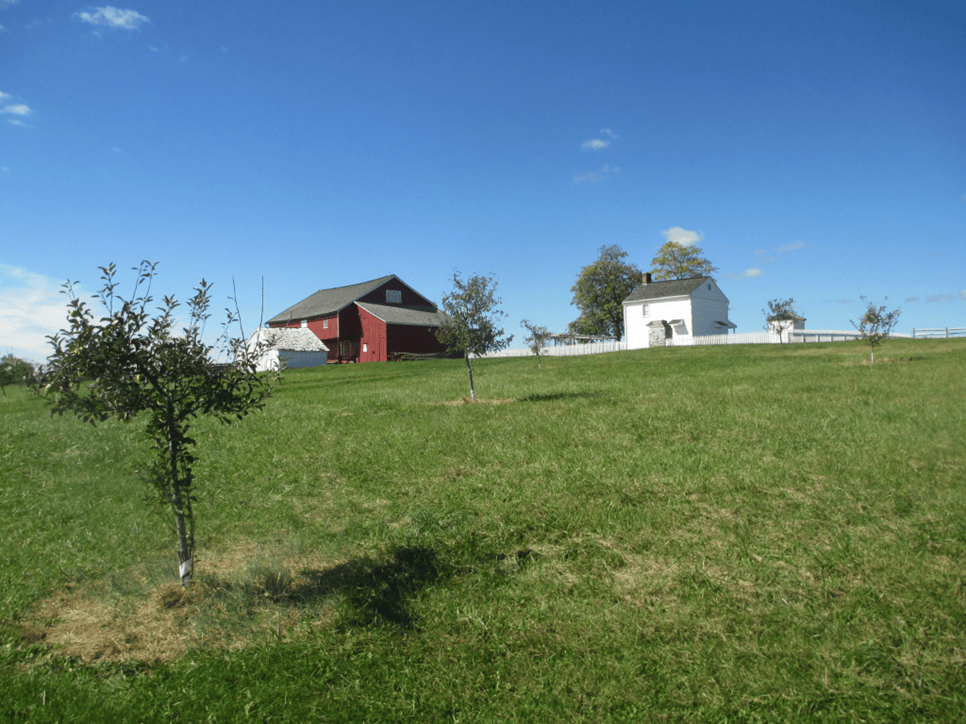
Modern-day viewshed into the historic and pastoral open fields of the former Abraham Spangler farm and former country club, where Trone Rental Company proposes to construct eight 1-3 story buildings containing 112 apartment units (Gettysburg National Military Park)

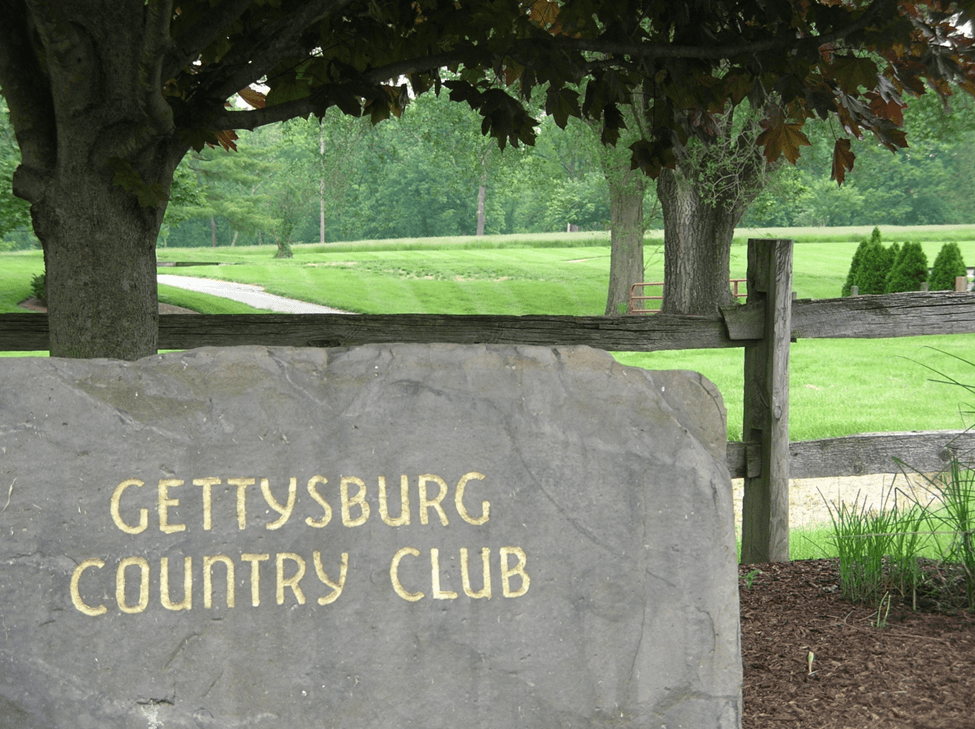
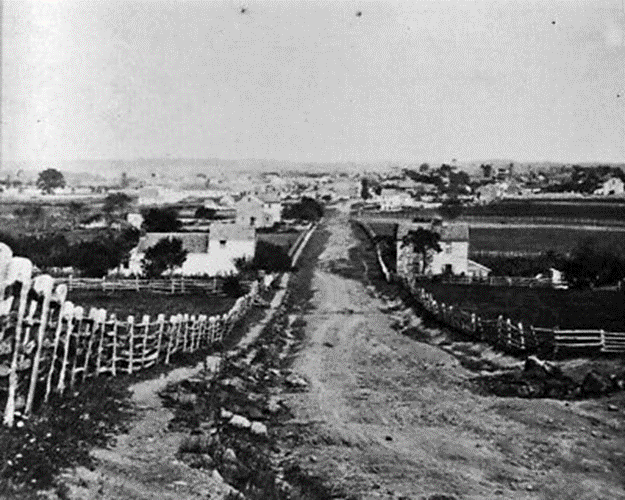
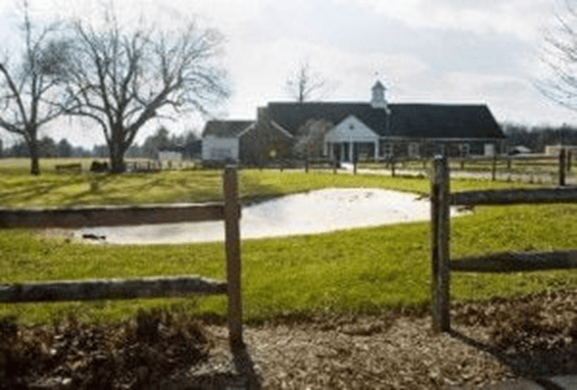
Approaching Gettysburg National Military Park from the west along the historic Chambersburg Pike (Rt. 30) is, in many ways, a journey through time. That journey carries one past the iconic “First Shot Marker” where Illinois cavalryman, Marcellus Jones famously lowered his rifle and delivered the first volley at General A.P. Hill’s advancing Confederate column, thus officially opening the Battle of Gettysburg. The journey continues past rolling farm fields and historic brick structures, including the stately Herr Tavern, which bore witness to the first major standoff between Union cavalry and Confederate infantry—a confrontation which would eventually push Union troops eastward toward the borough in the face of an overwhelming enemy. Continuing along that famed highway will quickly bring you to the site of some of the most brutal fighting of the entire Battle of Gettysburg, along the slopes of Willoughby Run and on up into Herbst Woods.  The beginning of that fighting occurred on the outskirts of what was then the Abraham Spangler farm, now home to two one-story stone structures containing the Gettysburg Day Spa and the pastoral, open fields behind it that once housed the Gettysburg Country Club. While admittedly no longer “pristine” landscape due to the former development of the country club and its two buildings, the land retains an undeniable historic character that both enables the visitor to place oneself back amidst the battle’s melee there on that fateful morning of July 1, 1863, and to prepare oneself for entry into the core boundary of Gettysburg National Military Park—a path traversed by millions of visitors who, ever since the guns fell silent, have begun their impactful sojourns onto the battlefield in that very spot.

         The historic Chambersburg Pike, 1863, leading into Gettysburg, along which the first major fighting of the Battle of Gettysburg unfolded (Library of Congress)

This is unquestionably hallowed ground, but today, it is threatened ground. While the National Park Service managed to acquire over 100 acres of battlefield land just to the south of the property in question in 2011, currently, Trone Rental Company of Hanover is vigorously pushing forward a proposal to build an apartment complex on top of the former Abraham Spangler farm. The plan for the “Residences at Willoughby Run” calls for the construction of eight buildings, containing 112 rental units, atop 14.5 acres of the ground across which numerous brigades of Confederates surged forward and backward in heated contest with Federals during their thrust towards the town.  The significance of this fighting on July 1, 1863 alone merits its worth for preservation and interpretation.  Indeed, this terrain is integral in understanding the experiences of both Union and Confederate soldiers on July 1st and how the battle lines for the ensuing two days would come to be drawn.

In addition to its impact on the historic landscape, this apartment complex would pose an enormous detriment to the tourist experience here in Gettysburg. A series of eight, 1-3 story buildings directly adjacent to the NPS park boundary would obscure the historic viewsheds around the core battlefield which, even with the two currently extant, low-lying stone buildings and parking lot, is still partially preserved. It also would tarnish the ambiance both entering and leaving the park which is essential for quiet reflection and contemplation of the historic landscape and the significant fighting that took place there. With both commercial and residential construction projects such as these continuing to encroach further upon the battlefield, heritage tourism—and, in turn, its monetary payout for the town—will surely suffer. While some commercial progress and municipal improvements must certainly be allowed to move forward for the viability of the town and its current residents, the construction of an additional 112 rental apartment units atop historic ground and directly adjacent to the core of arguably America’s most iconic battlefield hardly merits inclusion on that list of improvements.

Additionally, local students (such as the two co-authors of this piece) who regularly use the Gettysburg battlefield as an outdoor classroom will assuredly feel the negative impact of this project, should it be allowed to move forward. For example, every Fall, the Civil War Institute’s Student Fellows visit the site of the former Emanuel Harmon farm, the NPS-owned battlefield property directly adjoining the land currently in jeopardy, to study both key battle actions between the 26th North Carolina and members of the famed Iron Brigade, as well as the civilian experience of war and how the aftermath of the battle impacted local Gettysburgians’ livelihoods. While on site, CWI faculty utilize the historic viewscape to depict the brutal fighting that enveloped the entire area, establishing the magnitude of the battle of Gettysburg within the context of the destruction of civilian properties which served as either obstacles to the fighting, potential safe places in which to take cover, or even sharpshooter nests during the battle. CWI faculty also use the entirety of both the former Harmon and Spangler farms to interpret the entrepreneurship with which several of Gettysburg’s residents, including Emanuel Harmon, responded to the aftermath of war in an attempt to rebuild their lives: Directly adjacent to the currently endangered property, Harmon helped to establish the Katalysine Springs water bottling company to market the water derived from a supposedly “magical spring” along the banks of nearby Willoughby Run with “healing” powers that were “witnessed by wounded soldiers themselves” in the wake of the battle. The popularity of the springs eventually resulted in the 1869 construction of the sprawling Springs Hotel, a magnificent, 3-story, 250-room resort overlooking the springs which attracted some of the wealthiest socialites, politicians, and war veterans well into the 20th century before falling victim to fire. (We would also be remiss not to mention both the Harmon and Spangler properties’ association with President Dwight D. Eisenhower, who regularly frequented the golf course at the Gettysburg Country Club during his residence in Gettysburg). With apartment buildings looming on the horizon, critical educational and interpretive exercises such as these would become infinitely more difficult and significantly less impactful

Furthermore, the traffic that this project will inevitably create—both by the construction of the complex and by apartment residents themselves—near the intersection of Route 30 and Country Club Lane will only further decrease the quality of visitors’ experiences as they traverse the battlefield.  Additionally, the influx in traffic poses serious concerns about driving and walking hazards along the already highly trafficked Route 30 and the narrow, winding Country Club Lane. Numerous residents of this neighborhood have already registered similar concerns in previous public forums and township meetings, with some also citing that part of the allure of moving to and living in Gettysburg in the first place was to escape the sprawl and hubbub of metro areas such as Washington, D.C. and Baltimore; large-scale construction projects such as these ruin a key part of what makes Gettysburg not only a special and enjoyable place to visit, but a fulfilling place in which to live. The National Park Service has also expressed concerns about environmental damage, pollution, and other associated hazards to natural resources resulting from this project.

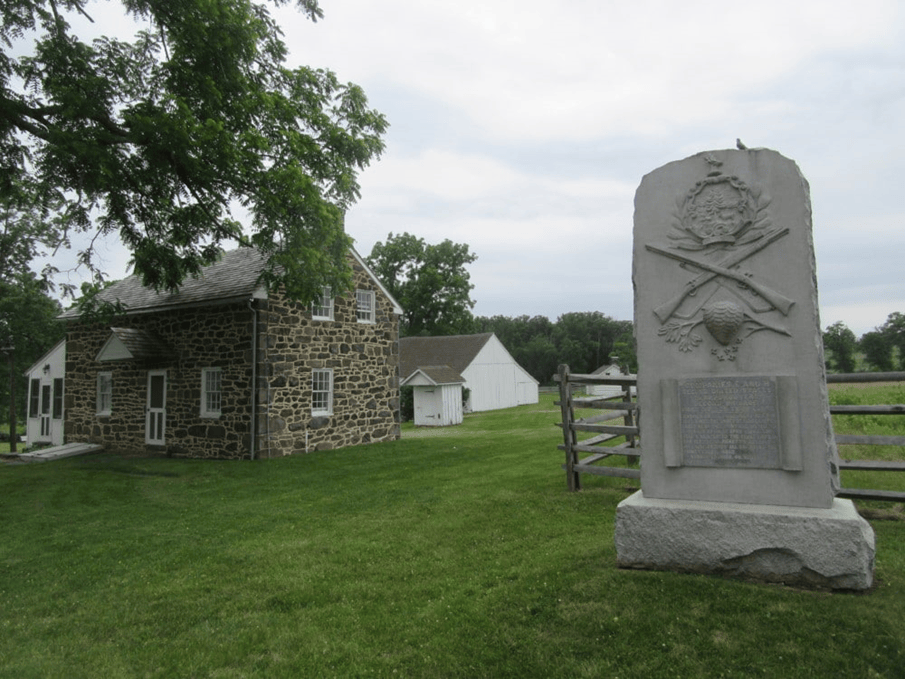
 One of the two extant, low-lying stone structures from the old country club on the former Abraham Spangler farm. Brutal fighting surged across the landscape and the fields and woodline abutting it on July 1, 1863. The proposed new apartment complex would obliterate this landscape. (Civil War Talk)

In addition to the many local residents who have spoken out against the apartment construction, the American Battlefield Trust is currently fighting to block further movement on the proposal with a nationally circulated petition. However, on September 27, the Board of Supervisors will meet for a public hearing at the Cumberland Township Municipal Building to decide whether or not to allow the project to move forward. The time to act and make your voice heard about this highly consequential matter is NOW!  For the sake of locals who call Gettysburg home; for tourists who flock to our town ritualistically to explore, to contemplate, and to understand; and for students who regularly refer to the battlefield as one of the best outdoor classrooms in America, it is clear that this proposed project should be strongly reconsidered so that the entirety of the hallowed ground at Gettysburg remains preserved.

Bibliography

Dalton, Andrew I. Beyond the Run: The Emmanuel Harmon Farm at Gettysburg. Gettysburg: Ten Roads Publishing, 2013.

Dau, Alexander. “From Fiery Ruins to Lucrative Legend: The Harmon Farm.” The Gettysburg Compiler (blog), December 20, 2021. https://gettysburgcompiler.org/2021/12/20/from-fiery-ruins-to-lucrative-legend-the-harmon-farm/.

American Battlefield Trust. “Gettysburg’s Day One Battlefield Threatened,” 2022. https://www.battlefields.org/preserve/speak-out/gettysburgs-day-one-battlefield-threatened.

Stagnor, Charles. “112 Unit Apartment Complex Proposed for Willoughby Run Property.” Gettysburg Connection, June 30, 2022. https://gettysburgconnection.org/112-unit-apartment-complex-proposed-for-willoughy-run-property/.

Daniel Klingel: A Free Labor Triumph Destroyed by its Very Defense

By Emily Jumba ’24

War on the Doorstep: Civilians of Gettysburg

By late June of 1863, alarms warning of approaching Confederate forces were nothing new for the 2,400 residents of Gettysburg. Living just ten miles from the Mason-Dixon line, small-scale raids, kidnappings of freed-people, and rumors of an imminent clash between the two great armies had long plagued the borough and its surrounding community. Nevertheless, none of these events could prepare Gettysburgians for the ferocious 3-day fight between 165,000 soldiers in early July of that year that would transform the lives and lands of Gettysburg’s civilians forever. However, these civilians’ experiences were not monolithic; while some were defined by tragedy and blight, others included remarkable episodes of perseverance, successful pragmatism, and creative profiteering. This blog series profiles the lives of diverse Gettysburgians who were forced to confront the war at their very doorsteps, each on their own terms, whose stories speak to the kaleidoscope of experiences of civilians struggling to survive, and thrive, along the Pennsylvania-Maryland border during the Civil War.

Daniel Klingel (Clingle/Kelingel) was born around 1839 to Daniel and Sarah (Salome) Klingel in Mount Joy, Pennsylvania.  Daniel was the third oldest of their seven children.  His siblings were John, William, Catherine, Alfred, Sarah, and David.  Klingel’s father was a shoe and boot maker.  The family also hosted five additional young boarders in the 1850s: Henry Tellers, David Lohr, David Drowery, James Topper, and Susanna Little.  They ranged in age from 17 to 24 in the 1850 Census.  It is possible that the gentlemen worked as apprentices in Klingel’s shop, and that Susanna helped care for the children of the house. They also could have been boarders whom the family took in for additional rental income.  Daniel Klingel would grow up to achieve the free labor dream of owning land, which he acquired through hard work and moral living.  Tragically and quite ironically, his triumph would be undone in the battle that raged across his land in the name of protecting that same free labor ideology, forever changing both his socio-economic status and personal fortunes.

As a young man, Klingel followed in the footsteps of his father and became a farmer and a shoemaker who produced both boots and shoes.  His hard work paid off, eventually earning him enough money to procure his own residence and establish himself as a proudly independent member of Pennsylvania’s free labor society.  On August 30, 1860, he married Hannah S. Eyler.  Klingel’s younger brother, Albert, was among the first men in Pennsylvania to be drafted to fight for the Union.  He mustered into Company H of the 165th Pennsylvania on November 8, 1862.  Daniel and Hannah purchased their Gettysburg farm in April of 1863 from an attorney, Jacob Benner, never suspecting the tragedy and tumult that would soon present itself on their very doorstep.  They also owned Klingel’s Boot and Shoe Emporium on Baltimore Street in Gettysburg.  When the Battle of Gettysburg began, the young family was still at their farm, where they rode out the first day of fighting.  The 63rd Pennsylvania took up a position south of their farm along the Emmitsburg Road in an attempt to block a Confederate advance.  On July 1st, Daniel helped to nurse fourteen to sixteen wounded Confederate soldiers that had been brought to his home.  They occupied its bottom floor.  Perhaps Klingel was helping them out of a nineteenth-century belief in the common humanity of the “enemy,” feeling the need to ease their suffering, despite their being invaders.  It is also possible that Klingel was forced to nurse the soldiers by their comrades, as had happened with other civilians during the battle.  If such were the case, it may have furthered Klingel’s already growing resentment towards the invaders of his community and front door.

On the morning of July 2nd, he fled with his family (Hannah, and their two young children Samuel and Catherine) across the Trostle Farm to Little Round Top, which Klingel (ironically) believed would be a “safe spot” out of the way of the core fighting.  On their way, the family was stopped by an officer who at first attempted to take Klingel’s hat, but then proceeded to pay for it when Klingel protested.  During the chaos of the battle, soldiers and civilians sometimes crossed paths, and in some instances such as this one, the civilians refused to let the soldier run rough-shod over them.  Klingel refused to hand over his hat just because a soldier demanded it.  He had already given over his new family home to wounded soldiers and knew it was likely that more of his property would be destroyed in the fighting; to hand over one of his prized personal effects without protest or remuneration seemed an unnecessary and embarrassing step too far for Klingel.  Additionally, the ever forward-thinking Klingel may well have already been fretting about what the impending battle would do to his personal finances, and he could not afford to merely give his possessions away for free.

Daniel Klingel left his family at the base of Little Round Top, and then returned homewards to save his and Hannah’s better clothing.  Likely fretting over the future of the family’s cherished finery and again with an eye to the future financial ramifications of the battle, Klingel may have been intent on salvaging their most beloved possessions from sure destruction not only for their own use, but also for possible sale to help recoup their losses after the battle.  If Kingel were to leave such items at home, it was possible that they would be used for bandages in the makeshift hospital that his home had turned into, or perhaps just be destroyed or stolen by the soldiers occupying the house.  However, on his way back to his home, Klingel was stopped in the woods by his neighbor Reverend Joseph Sherfy, who warned him that intense fighting had moved onto the Klingel farm.

Klingel made his way back to his family and found a muddied soldier’s cap along the way, which he took.  This new acquisition had the potential to make him a dangerous target for enemy abuse, as he was wearing part of a military uniform; however, Klingel’s actions once again somewhat reflect his previously demonstrated refusal to just hide in fear during the battle. Back at Little Round Top, he ran into Union soldiers whose reconnaissance of the ground he helped by identifying key features on the landscape and locations at which he had seen Confederate soldiers gathering.  Both before and during battle, both at Gettysburg and in myriad other conflicts, civilians were regularly called upon to perform a variety of ad hoc military roles such as those that Klingel experienced in nursing and scouting.  Civilians were not just passive observers of the battle, as they often became important, active agents in how the battle was to unfold, whether they wanted to or not.

Afterwards, upon realizing that Little Round Top might well soon become enveloped in heated fighting, Klingel continued on with his family to a friend’s home along Rock Creek.  Like many other Gettysburg civilians who fled their homes, but not their town, during the battle, the Klingels found themselves a constantly mobile unit, relying on the kindnesses and generosity of friend networks who would continue to shelter and shuttle along vulnerable families to protection throughout the bloody contest.

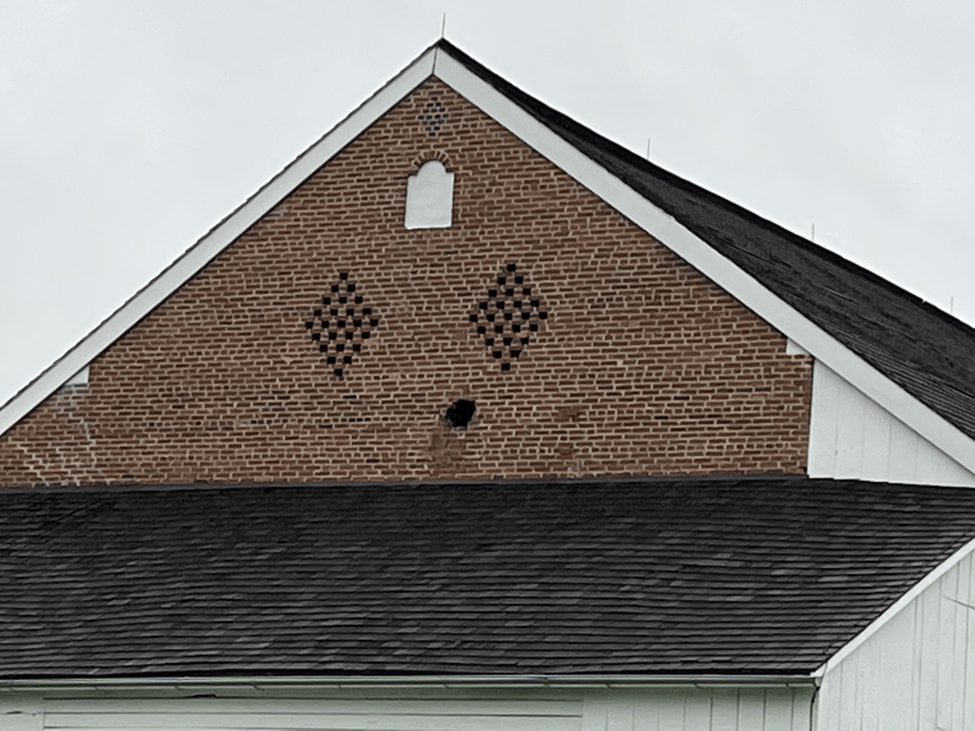
After the Klingel family fled, Major Tremain examined Klingel’s property and reported back to Major General Daniel Sickles.  Sickles proceeded to commence his infamous plan of rejecting Major General George Meade’s orders that sought to keep his men posted on Big and Little Round Top, and instead marched out to the advance position of the Peach Orchard.  Brigadier General Joseph Carr ordered his troops to use the Klingel home for cover as some of them took up sinister sharpshooting positions.  Some of his men from the 16th Massachusetts quickly broke holes in the walls to allow them to shoot out of, turning the once charming domestic abode into a veritable fort for organized killing.  Brigadier General Andrew Atkinson Humphreys joined Carr there.  Eventually, the 11th New Jersey, 72nd New York, 73rd New York, 120th New York, 12th New Hampshire, and 16th Massachusetts would maneuver into Klingel’s apple orchard.  The 11th New Jersey and 120th New York faced devastating losses as they made a stand against the waves of Mississippians and Alabamians.  Late in the day, Brigadier General Cadmus Wilcox, commanding the Alabama Brigade, ultimately led his troops in overrunning the Klingel Farm, routing the Union troops, and forcing Humphreys’s division into a dangerous, pell-mell retreat toward Cemetery Ridge.        

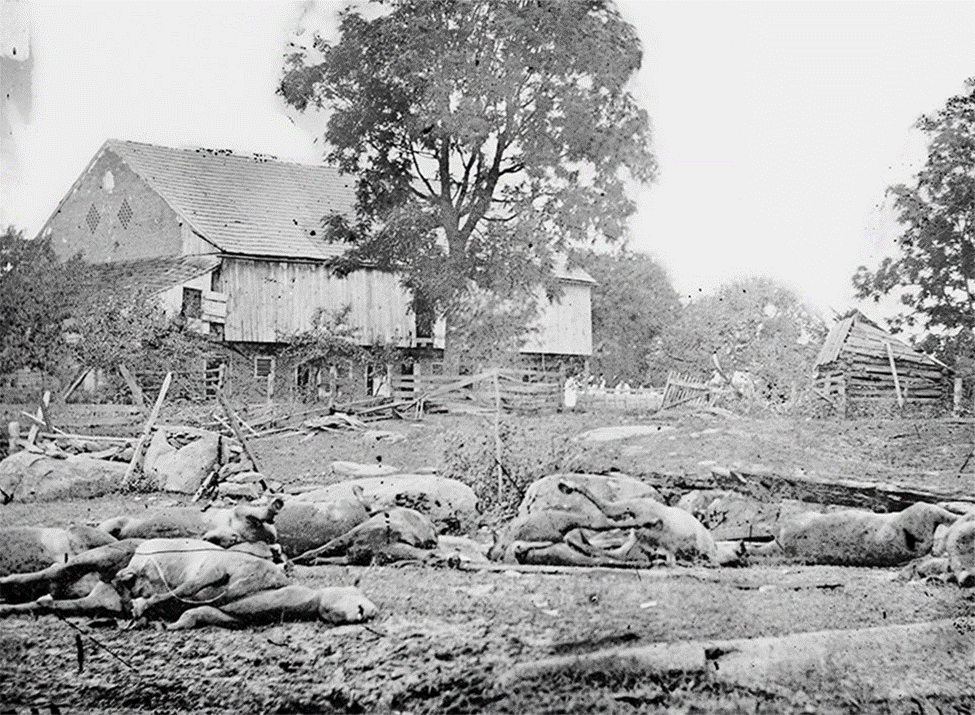
The Confederates continued to hold the farm and use the house for cover until the famed Pickett-Pettigrew assault on July 3rd.  Prior to the assault, Confederates employed Klingel’s southern field as an artillery emplacement with guns menacingly aimed at the Union lines along Cemetery Hill.  For the most part, however, on this day, the farm proved not a protective bastion nor a strategic gun emplacement, but rather a frustrating obstruction in the path of the advancing Confederate columns, who had to break formation to march around the farmhouse.  During the course of a battle, locations could quickly and suddenly shift from holding key strategic significance or shelter to actively impeding one side’s fighting abilities.

When Klingel returned to his farm after the battle on July 4th, he found Union officers sitting around his kitchen table, who had taken most of his supply of flour.  They were likely resting after the fighting and trying to sort through the mountain of tasks to attend to in the aftermath of the fight.  The windows of the house were shattered and the walls were riddled with bullet holes, in addition to the gaping holes they bore that were created by the ramming of Union soldiers who had crudely constructed their sharpshooter nests there.  Klingel also found his crops, shoemaking tools, and fences destroyed, his cattle missing, and dead soldiers scattered across his property.  Klingel would later claim the loss of 3.5 acres of corn, 3.5 acres of oats, 2 acres of timothy grass, damage to his orchard, and a missing cow.  He also claimed that there were “rifle pits” dug across his property.

After the battle, Klingel and Sherfy worked together to make cakes from some flour that they had scrounged up for the soldiers.  Across the battle-scarred borough and its outlying farms, neighbors regularly banded together in those post-battle days in an attempt to help each other survive, begin to rebuild, and try to recoup their losses.  Klingel later recorded that he shared some of the cakes he made with a sick soldier who had not eaten for two days, but not as a free hand-out: the soldier paid Klingel a whopping five dollars for half of a cake.  Here, Klingel once again demonstrated his ingenuity in finding even small ways to make up for some of the damages that his farm had suffered during the battle.  If a soldier was willing to pay five dollars for a piece of cake, Klingel was more than ready to accept the payment.  Such recompense also helped to restore a sense of agency and control to Klingel in the midst of a situation where chaos seemed to run riot.  His wife, Hannah, also began baking bread for the soldiers and even set up a system whereby officers could pay her in advance for a place on a running waiting list to receive the next loaf.  Meanwhile, as it had on July 1st, the house also continued to serve as a field hospital in the days following the battle, with the family helping out by continuing to bake for the soldiers and attend to their wounds.  Some of the dead soldiers that the Klingels had found on the property were also temporarily interred where they lay during this time, turning the once fertile farm into a charnel house. In 1933, human remains were still being discovered on the Klingel property, along with uniform buttons and the remnants of cartridge boxes—a testament to the hard fighting around the property and the macabre scenes across the farm in the battle’s wake.  Excavators from the National Park Service believe that the bodies were those of two men from Wilcox’s Alabama brigade.

For Daniel, one of the greatest tragedies of the aftermath was the hard fact that the family had been living on their farm for only about three months before carnage swept through the property; the self-made Daniel Klingel, who had worked so hard to become an independent free laborer, and had only recently achieved his freeholder dreams, was literally being unmade by a battle and a war fought across his property to secure such free labor dreams for all in perpetuity.  Klingel filed a federal claim for $880 in 1868, but was denied most of the money, only receiving a paltry $2 for some hay that had been taken by an officer.  Klingel’s life had been a prime example of the free labor ideology dream.  He had worked hard, maintained a good moral character, and managed to purchase land of his own to work on, becoming self-sufficient.  He even had his own shoe business to supplement his income.  Klingel’s fortunes were completely undone by the battle, which left all of his hard work in ruins.  Despite the federal government supposedly championing free labor, it was still hesitant to reimburse even those civilians who had previously upheld those ideals for damages incurred by the biggest battle waged in the name of Union, democracy, and free labor unless those civilians could definitively prove that their damages were caused by Union troops themselves.  The United States government was leery of creating a morally degenerate pauper class that was dependent on government handouts, and, true to free labor ideals, expected people to be able to pull themselves out of their financial woes through work hard and self-reliance.  Additionally, with more than two years of astronomic war-related expenses weighing on the federal government, the public coffers were not exactly overflowing with extra funds with which to compensate inconvenienced civilians.

Despite (or perhaps, in light of) his personal misfortunes the previous year, Daniel ultimately enlisted in Company G of the 209th Pennsylvania Infantry on September 6, 1864.  He may have enlisted because he needed the financial boost that a soldier’s bounty would provide to support his family after the devastating losses during the battle.  It is also possible that he enlisted out of a desire to gain revenge for the destruction that the Confederates had caused to his family life that he worked so hard to build up.  However, he soon received a medical discharge on March 19, 1865 after being diagnosed with heart disease.  Upon returning home, Klingel found that, surprisingly, his fences had been completely fixed and his orchards were once again thriving.  Perhaps Hannah and their neighbors had worked together to rebuild, reminiscent of how Sherfy had come to help bake bread for the soldiers in the days after the battle.

However, Klingel’s ongoing personal financial burdens from the war, coupled with his ill health, ultimately forced him to sell the property to Joseph J. Smith on March 29, 1867 and move his family back to Mount Joy (where he was born).  In addition to these financial and health problems which contributed to his sale of the farm, Klingel also had several crushing memories associated with the land, causing him to seek out a new start for his family: first, just three months after purchasing the land, a major battle was fought across it, destroying much of the farm that Klingel had worked to build up.  Then, in September of that same year, as the family was starting to recover, their young daughter, Catherine passed away.  Not even a year later, the Klingels’ infant son John Elmer Ellsworth (named, interestingly, in patriotic honor of the famous first Union officer to die in the Civil War) also passed away, just days before Daniel Klingel mustered into the 209th Pennsylvania.  Soon after Klingel returned home from his military service, he and Hannah had a daughter named Sarah, who passed away later that year.  The Klingel family had faced tragedy after tragedy in that home, starting almost as soon as they moved in, which may well have driven them to move elsewhere.  Klingel had actually attempted to rid himself of the land shortly after being discharged from the army in 1865, but was unable to sell it until 1867 at public auction.

In November of 1867, back in Mount Joy, Hannah gave birth to another son, who was named Harry.  However, the family faced tragedy again a few months later when Hannah passed away on February 18, 1868.  Harry would only outlive her for five more months before also passing away.  Despite this successive wave of unrelenting tragedy, by 1870, Daniel Klingel had remarried, to Mary E. Conover.  Their first son, Allen, who was born in 1870, only lived for five months.  In 1872, they had another son, Daniel, who passed away at nine months of age.  Their later sons, George and Robert did survive to adulthood.  Between his two marriages, Daniel had lost six children and his first wife in a ten year span, with only four of his children surviving to adulthood.  Despite having achieved the free labor dream early in his life, Daniel’s personal fortunes had tanked at every turn continuously almost immediately after becoming a freeholder.

The Klingels resided in Mount Joy through the 1870 Census, which lists Daniel’s personal estate value at $2,575, and his real estate value at $5,000.  He had seemingly recouped his financial losses from the Battle of Gettysburg by then, but at the same time was struggling through significant emotional duress after the deaths of so many loved ones and continued to battle his heart issues.  In addition, his socio-economic status had suffered as a result of his sale of the Gettysburg farm, as he was no longer the self-sufficient landowner of free labor dreams, but merely the owner of a store whose health was in rapid decline. 

Between the 1870 Census and 1885, the Klingel family again moved, this time to Baltimore in another attempt to start anew.  There, he opened a new shop on Madison Avenue.  However, Klingel’s health continued to deteriorate. Adding to his list of troubles, he was forced to reckon with the early death of his second wife, Mary who passed away at a mere 39 years of age, in 1883.  In one of the few success stories of his post-Gettysburg life, on September 10, 1890, he received a military pension for complete medical disability as a result of the heart problem that had caused him to be medically discharged in 1865.  Nevertheless, the pension proved bittersweet; while it provided necessary money to help support the aged and infirm Klingel, it meant that he would spend the rest of his life as a dependent of the federal government—the exact opposite fortune that he had once dearly held as a free laborer and landowner in April of 1863.  This socio-economic retreat would not have been lost on Klingel, who had sacrificed both his home to a battle fought in defense of democracy and free labor ideals, and his health in large part to the stresses and grief that accompanied his successive property and familial losses.  Despite every attempt to plan ahead for financial hardship and fight for self-reliance, before, during, and in the immediate wake of the battle, and despite his numerous attempts to begin anew after successive financial and personal losses, Daniel Klingel realized that hard work and moral living could only take one so far in what Abraham Lincoln famously called “the race of life.”  Successes could be fleeting, and precarious at best.  For Daniel Klingel, fortune simply was not in his favor.  On August 17, 1893, Klingel passed away and was buried in Evergreen Cemetery, back in Gettysburg—the place in which he both enjoyed the first glimmers of free labor’s successes, and saw those glimmers forever snuffed out.

The Klingel farm house in Gettysburg, where the family rode out the first day of the battle.
The rear of the Klingel farm from the perspective of Sickles Avenue.  The Klingels fled this direction, towards the Trostle Farm, on the second day of the battle (photo credit https://www.agedwoods.com/wp-content/uploads/2017/11/IMG_3212.jpg)
The nearby Trostle farm, which the Klingel family fled across, in the direction of Little Round Top on July 2nd.

Works Referenced

“1850 United States Federal Census – AncestryLibrary.Com.” Accessed April 11, 2022. https://www.ancestrylibrary.com/discoveryui-content/view/887649:8054.

“1860 United States Federal Census – AncestryLibrary.Com.” Accessed April 11, 2022. https://www.ancestrylibrary.com/discoveryui-content/view/3055697:7667?tid=&pid=&queryId=c019cbb7645a83a871df7ea7ff44fc5f&_phsrc=TQW205&_phstart=successSource.

“1890 Veterans Schedules of the U.S. Federal Census – AncestryLibrary.Com.” Accessed April 11, 2022. https://search.ancestrylibrary.com/cgi-bin/sse.dll?dbid=8667&h=703537&indiv=try&o_vc=Record:OtherRecord&rhSource=2451.

“Baltimore, Maryland, U.S., Directories, 1890 – AncestryLibrary.Com.” Accessed April 11, 2022. https://www.ancestrylibrary.com/discoveryui-content/view/83498:4630.

Boyd, Kevin. “Barns of the Civil War: Daniel Klingle.” Aged Woods, Inc. (blog), November 21, 2017. https://www.agedwoods.com/barns-civil-war-daniel-klingle/.

“Daniel H. Klingel (1839-1893) – Find a Grave…” Accessed April 11, 2022. https://www.findagrave.com/memorial/19479687/daniel-h-klingel.

Fold3. “Albert Klingle: PERSON, Pictures and Information – Fold3.Com.” Accessed April 11, 2022. https://www-fold3-com.ezpro.cc.gettysburg.edu/memorial/634607708/albert-klingle.

Fold3. “Page 1 Civil War Service Index (CMSR) – Union – Pennsylvania.” Accessed April 11, 2022. http://p9292-www.fold3.com.ezpro.cc.gettysburg.edu:2048/image/294168763?terms=albert,pennsylvania,165th,klingle.

Harte, N B. “The Boot and Shoe Trades in London and Paris in the Long Eighteenth Century,” n.d., 391.

Luskey, Ashley. “Daniel Klingel:A Free Labor Triumph Destroyed in its Very Defense,” 2022.

“National Park Civil War Series: The Battle of Gettysburg.” Accessed April 11, 2022. http://npshistory.com/publications/civil_war_series/16/sec20.htm.

“Pennsylvania and New Jersey, U.S., Church and Town Records, 1669-2013 – AncestryLibrary.Com.” Accessed April 11, 2022. https://www.ancestrylibrary.com/discoveryui-content/view/2021035524:2451?tid=&pid=&queryId=d97fa690b206481b18c5444e9be4a3c0&_phsrc=TQW197&_phstart=successSource.

“Pennsylvania and New Jersey, U.S., Church and Town Records, 1669-2013 – AncestryLibrary.Com.” Accessed April 11, 2022. https://www.ancestrylibrary.com/discoveryui-content/view/5985518:2451.

“Pennsylvania and New Jersey, U.S., Church and Town Records, 1669-2013 – AncestryLibrary.Com.” Accessed April 11, 2022. https://www.ancestrylibrary.com/discoveryui-content/view/5985014:2451.

“Pennsylvania and New Jersey, U.S., Church and Town Records, 1669-2013 – AncestryLibrary.Com.” Accessed April 11, 2022. https://www.ancestrylibrary.com/discoveryui-content/view/5984740:2451.

“Pennsylvania and New Jersey, U.S., Church and Town Records, 1669-2013 – AncestryLibrary.Com.” Accessed April 11, 2022. https://www.ancestrylibrary.com/discoveryui-content/view/6764660:2451?tid=&pid=&queryId=94dd2bd412f73ec980328f67c1c1b611&_phsrc=TQW154&_phstart=successSource.

“Pennsylvania and New Jersey, U.S., Church and Town Records, 1669-2013 – AncestryLibrary.Com.” Accessed April 11, 2022. https://www.ancestrylibrary.com/discoveryui-content/view/6975622:2451?tid=&pid=&queryId=9a3d30bb77d265df8c301ef5b54ccf1a&_phsrc=TQW177&_phstart=successSource.

“Pennsylvania, U.S., Veterans Burial Cards, 1777-2012 – AncestryLibrary.Com.” Accessed April 11, 2022. https://www.ancestrylibrary.com/discoveryui-content/view/1394053:1967.

“Pennsylvania, U.S., Veterans Burial Cards, 1777-2012 – AncestryLibrary.Com.” Accessed April 11, 2022. https://www.ancestrylibrary.com/discoveryui-content/view/1394053:1967?tid=&pid=&queryId=9a3d30bb77d265df8c301ef5b54ccf1a&_phsrc=TQW177&_phstart=successSource.

The Battle of Gettysburg. “Klingel Farm at Gettysburg.” Accessed April 11, 2022. https://gettysburg.stonesentinels.com/battlefield-farms/klingle-farm/.

“U.S., City Directories, 1822-1995 – AncestryLibrary.Com.” Accessed April 11, 2022. https://www.ancestrylibrary.com/discoveryui-content/view/742387283:2469.

“U.S., Civil War Pension Index: General Index to Pension Files, 1861-1934 – AncestryLibrary.Com.” Accessed April 11, 2022. https://www.ancestrylibrary.com/discoveryui-content/view/339076:4654?tid=&pid=&queryId=9a3d30bb77d265df8c301ef5b54ccf1a&_phsrc=TQW178&_phstart=successSource.

Tragedy, Tenaciousness, and Unlikely Triumphs: The Abraham Trostle Family

By Emily Jumba ’24

War on the Doorstep: Civilians of Gettysburg

By late June of 1863, alarms warning of approaching Confederate forces were nothing new for the 2,400 residents of Gettysburg. Living just ten miles from the Mason-Dixon line, small-scale raids, kidnappings of freed-people, and rumors of an imminent clash between the two great armies had long plagued the borough and its surrounding community.  Nevertheless, none of these events could prepare Gettysburgians for the ferocious 3-day fight between 165,000 soldiers in early July of that year that would transform the lives and lands of Gettysburg’s civilians forever. However, these civilians’ experiences were not monolithic; while some were defined by tragedy and blight, others included remarkable episodes of perseverance, successful pragmatism, and creative profiteering.  This blog series profiles the lives of diverse Gettysburgians who were forced to confront the war at their very doorsteps, each on their own terms, whose stories speak to the kaleidoscope of experiences of civilians struggling to survive, and thrive, along the Pennsylvania-Maryland border during the Civil War.

Abraham (Abram) Trostle was born between 1821 and 1822 to Peter and Sussanah Trostle in Straban, Pennsylvania.  His parents belonged to the Christ Evangelical Lutheran Church.  Abraham was the second oldest of their four children.  Like his parents, Abraham eventually became a farmer, although most of the duties in running the farm eventually fell to his wife as he battled mental illness and alcoholism.  Peter Trostle acquired what would later become the Trostle family farm in Gettysburg, Pennsylvania from David Troxell in 1839 through Troxell’s will.  (The property came as payment for debts owed between Troxell and Trostle).  He decided to keep both this new property and his own farm in Straban Township.  Peter would later give the 144-acre Gettysburg farm to Abraham, who had moved there with his family at some point before the 1850 census.  In addition to the land, which encompassed 144 acres just south of the borough, east of the Emmitsburg Road, the farm included a farmhouse, a barn, and a springhouse. The farm would be engulfed by intense combat on the 2nd day of battle, sustaining significant damage, but still standing and operable in the wake of the fight; the farm was a fitting symbol of its unflappable family matriarch, Catharine, who herself bore the heavy burdens and scars of an embattled marriage, and of the war fought on her very doorstep, but whose survival and ultimate success bespoke of a remarkable inner strength.

Abraham Trostle married Catharine Walter at Gettysburg’s St. James Lutheran Church on January 15, 1844.  Later in their marriage, Catharine would feature as the head of the household for decades, defying typical gender roles of the time.  They had eleven children together, of whom the following ten survived to adulthood: George, Lydia, Conrad, Mary, (Abraham) Isaiah, Margaret, Ephraim, Peter, Layton, and Sarah.  According to the 1850 census, Daniel and Christian Sandy, who were respectively 16 and 11 years old, also lived on the farm with the Trostles and their young children.  Both Sandy children reportedly had at least some schooling.  Daniel worked as a laborer and was likely a farmhand.  Christian did not have a listed occupation.  Perhaps she helped Catharine with domestic work and caring for the other children.  It is also possible that the Trostles took the Sandy children in as borders, especially if their family was undergoing financial hardship and could not support them at the time.  Neighbors within the small community of Gettysburg often assisted each other, not just during the battle and its aftermath, but also as a part of daily life.                    

In 1859, Abraham found local infamy in the Adams Sentinel and General Advertiser. According to these two papers, the local court had found Abraham guilty for assaulting Edward Ziegler and ordered him to pay a $5.00 fine, as well as their court fees. While $5.00 was a significant amount of money, it was not necessarily a major financial burden on the Trostle family, whose real estate was valued at a modest but stable $5,200, and his personal estate at $1,500, just a few months later in the 1860 census.  Instead, being brought to court for the assault would have proven far greater of a humiliation, as it negatively reflected on Abraham’s temperament and respectability.  Further tarnishing the family name, he also began building a reputation for public drunkenness.  Abraham was not the only man in town who had a proclivity for drink (others included James Leister and Joshua Thompson, the deceased husbands of the famed Lydia Leister and Mary Thompson).  It is possible that Abraham resorted to drinking due to the stresses and struggles of balancing his farm and family’s financial well-being; however, if he struggled, the family still managed to remain rather well-off by then. 

Later in his life, Abraham was diagnosed as having an (unidentified) mental illness.  Perhaps he used alcohol to try to treat the symptoms of this mental illness that he struggled with.  Regardless of the cause, Abraham’s drinking habits would have negatively reflected on both him and Catharine.  Likely perceived by others as unable to properly care for his family and maintain a respectable and moral lifestyle, Abraham’s growing reputation put more pressure on Catharine to assume the duties of head of house, which in turn further contributed to Abraham’s sense of emasculation.

Interestingly, when Abraham’s father wrote out his original will, Peter Trostle initially left the Gettysburg property to Abraham, but later amended it in 1860.  Instead, he decided that the farm was to be held in trust for Abraham, rather than Abraham actually inheriting it in his name.  This noticeable change was likely due to Abraham’s growing reputation for vice.  In effect, Catharine took control of running the farm as Abraham continued to become less able to do so.  Such official legal responsibilities for the estate would have directly challenged the traditional gender roles that she had previously expected to fulfill in life.  In addition to maintaining their home as a wife and mother, she became more responsible for finances and the overseeing of manual labor, which traditionally fell under the purview of men during the nineteenth century.  While quickly teaching herself how to manage the family’s finances, Catharine also had to endure the deteriorating nature of their public reputation, which was crumbling under the weight of Abraham’s vices and the state of his household affairs; suddenly, it was Abraham who was dependent upon his wife, and not vice versa.  Additionally, owning property was a key tenet of free labor ideology, which championed an individual’s ability to make his way up the rungs of the socio-economic ladder through hard work, moral living, and determination.  By losing his land inheritance and the ability to own and operate property under his personal name, Abraham’s social status would have sunk even further in the community.  Tragically, these developments likely created even more internal strife for Abraham, which certainly did not help his addiction.

During the weeks leading up to the Battle of Gettysburg, the Trostles had heard about the approaching Confederate army from a variety of sources.  They saw posters calling for the local militia to defend their homes.  They also received a warning from Governor Andrew Curtin and heard rumors from other locals about the approaching armies.  On June 28, 1863, word arrived that a significant contingent of Confederates were looming just to the west of Gettysburg, in Chambersburg, Pennsylvania.  According to Mary, one of the Trostle children, Catharine and George (one of Mary’s oldest siblings, who was eighteen years old at the time) made a plan to hide their horses and cows from the Confederates.  They also put some of the family’s valuables in a bag that George buried somewhere in their apple orchard.  Just as they were being inundated with the swirling rumors about the approaching Confederates, the Trostles likely also heard reports of the Confederates stealing or destroying civilians’ property.  By burying their valuables, they hoped to hide them from the marauding enemy.  Mary claimed that Abraham sometimes helped to execute these plans, but overall did not add much, as he was still fighting his mental illness.  Given Abraham’s illness and relative incapacitation, it was even more necessary that the family preserve their valuables in case they needed to use them to support themselves in the wake of a battle.

Before the battle began on July 1, 1863, the Trostle family uneasily went about their chores to try to distract themselves from their worries.  However, as the first sounds of gunfire began reverberating across the once pastoral fields to the north and west of town, Abraham grew restless. He grabbed a pistol and a musket and was just about to leave the farm to go find the Confederates when Catharine stopped him and pleaded with her husband, arguing that it would be better if he remained on their farm to defend both their property and their family.  He may have wanted to fight to try to help re-prove his masculinity and restore his honor that he had lost when he lost his inheritance and property.  Despite not being able to operate his farm, he could at least attempt to defend it and his family, thus somewhat boosting his reputation in the eyes of his peers.  It is also possible that his mental illness may have contributed to his rash decision to fight. By having to step in to calm her husband down and convince him to come back inside, Catharine once more solidified her role as the de facto head of the household, once again reversing traditional gender roles in serving as the rational and cool-minded individual who was responsible for talking her irrational and emotion-driven husband off the ledge of madness.

Throughout the first day of battle, the Trostle family anxiously remained on their farm, which was thus far left unscathed.  However, the sound of fighting and re-deploying soldiers became infinitely closer on the evening of the first as the broken Federal lines retreated to their stronghold atop Cemetery Hill, Confederate forces nipping at their heels all the way through town.  The family must have become increasingly more anxious as the sounds of gun-fire drew closer to their home.  It is also possible that Abraham became even more agitated as the battle closed in on their home, particularly after his earlier determination to defend his home.  During the evening, more troops began amassing on both sides, with lines of gray and blue eventually stretching forth along both sides of the Emmitsburg Road, atop Cemetery Ridge and Seminary Ridge.  It would not be long before their farm would become engulfed by combat.

On July 2, 1863, the Trostle family awoke to find Union soldiers positioned throughout their farm.  Major General Daniel Sickles, commanding the Third Corps, had defied Major General George Meade’s orders to maintain his position along the rear high ground stretching through Little Round Top; instead, he moved part of his Corps from Little Round Top significantly forward to an advance ridgeline encompassing the Trostle, Sherfy, and Klingel farms to counter the possible advance of Confederate forces from Seminary Ridge across the Emmitsburg Road.  As the day began, Catharine attempted to maintain a semblance of normalcy in the home, cooking dinner for her family.  George hid a horse and a cow in the woods near their home.  The family initially planned on hiding in their basement during the battle, but were later instructed to leave by a few Union soldiers that informed them of approaching Confederates.

Catharine and George leapt into action, George readying their wagon with a horse that he had kept on the farm, and Catharine collecting her other children.  In a usual display of perhaps overconfident masculine bravado, Abraham declared that he intended to stay on the farm to help defend it against the enemy.  George ultimately offered to stay with him (perhaps seeking to protect his unwell father as much as his property), so Catharine fled alone with her younger children.  In a postwar account to her grandson, Mary later described her respect for her mother’s immense strength in that instant in which she bravely took sole charge of whisking her children to safety, despite crying upon leaving her home.  As they pulled away in the wagon, en route to a relative’s house in Hanover, Catharine later noted to Mary that she caught sight of Union soldiers who were boldly sitting down to eat the dinner that she had just finished making.  A flurry of emotions likely went through her mind at the sight.  She was certainly upset about the battle coming literally over her doorstep and into the home she had worked so hard to maintain.  She may have also felt a glimmer of pride in the knowledge that she had helped to feed the farm’s defenders who devoured the bread.  As she left with the children, Catharine’s mind likely buzzed with worries and wonder as to what might happen to her husband and son, as well as their home. Would she ever see any of them again? And if so, in what condition?  Once again, the traditional gender roles that Catharine had grown up with were being flipped.  Rather than her husband rushing her and the children to safety, it fell to her to see her children out of the battle’s reach.  Perhaps she had been somewhat prepared for this, after taking on the challenge of managing the farm years earlier while Abraham’s mental illness and alcoholism worsened.  However, running a farm was very different from fleeing the destruction of battle and the devastation it had the potential to wreak on the home she had worked so hard to maintain.

Shortly after Catharine’s departure, the 5th and 9th Massachusetts Batteries moved into position on the Trostle Farm, the air riddled with shells.  Colonel Freeman McGilvery had brought in the 9th Massachusetts, led by Captain John Bigelow, from Taneytown to help reinforce the Union lines.  Bigelow complained about the lack of visibility at their location, as he was stationed within a swale that hid most of the action along the Emmitsburg Road and the Peach Orchard (where Sickles’s new “salient” pivoted) from sight; nevertheless, he was ordered to remain by the farm’s stonewall and await further orders.  The fighting began around 4:00 PM and lasted for approximately three hours, with approximately 15,000 Confederates under James Longstreet’s division swinging out, en echelon, from right to left as they attempted to push the Union troops from the heights along Devil’s Den and Little Round Top, the Peach Orchard, and the Wheatfield—their sights set on the heart of Cemetery Ridge, near Cemetery Hill.  The Confederates plowed through Sickles’s advanced line at the Peach Orchard and began driving the retreating Federals north and east, in the direction of the Trostle Farm and Cemetery Ridge.

Bigelow commanded six cannons, although two of them experienced such violent after-fire recoiling against the stone wall that they were soon damaged beyond use.  Bigelow ordered his men to take those cannons to the rear.  As his subordinates attempted to roll the two cannons through the Trostles’ farm gate, the first cannon overturned, blocking the road and forcing the artillerists to maneuver the second cannon over the wall.  Meanwhile, the 9th Massachusetts was under heavy shell fire from Confederates, who had seized control of the now-abandoned Union guns in the Peach Orchard, and were using them to deadly effect against Bigelow’s gunners.  Bigleow himself was wounded in the fighting and fell from his horse.  The 21st Mississippi, under Colonel D. B. Humphreys, surged forward and the farmyard dissolved into chaos as many men engaged in brutal hand-to-hand fighting, while still others desperately loaded and fired the remaining cannon into the onslaught of Rebels.  Sensing defeat, Bigelow ordered a retreat and was guided to safety by Bugler Charles Reed, while five of his cannons were lost to the Mississippians.  The 9th Massachusetts lost an estimated eighty of their eighty-eight horses at the Trostle farm, the mangled bodies of whom were later captured in post-battle photographs of the area.

Captain A. Judson Clark and New Jersey’s Battery B were also engaged in the fighting around the Trostle farm, posted on the front-left side of the property.  They had arrived at their post early in the morning and held the position for several hours before eventually being shifted forward to try to stem the tide of Confederates advancing across the Emmitsburg Road, diagonally from the Trostle house.

Perhaps most notably, Major General Sickles himself came to observe the fighting at the Trostle farm during the three-hour afternoon onslaught.  Setting up a “field headquarters” in front of the farm house, he commanded his troops from the field next to the Trostle barn.  It was there that he was famously struck in the lower leg by a twelve-pound cannonball while sitting atop his horse.  In an attempt to calm his subordinates who had witnessed the grievous wound, Sickles casually smoked a cigar as he was stretchered off the field; his leg would later be amputated and sent to the Army Medical Museum, and eventually to the Smithsonian for display.

Like most other homes in the area, the Trostle farm became a field hospital after the fighting there ended on July 2nd.  It would remain a hospital for the remainder of the battle and through July 4th, despite the renewal of Confederate advances bordering much of the Trostle property during the July 3rd famed “Pickett-Pettigrew” assault.  Catharine and her children returned to the farm on July 6, 1863 to find complete carnage.  Their yard was full of the dead—both soldiers and horses.  Photographers such as Alexander Gardner were already there, documenting the scene.  Additionally, their home was riddled with bullet holes and the brick barn wall bore a large hole from a cannon shell that had passed through it.  Abraham and George rode out the entire battle in their home as bullets tore through the walls.  They likely hid in the basement during the worst of the fighting.  Despite Abraham’s intentions to protect the farm from the invaders, he was unable to save it, even with George there to help.  The two of them did not stand much of a chance against the sheer destruction that could be caused by the armies.  The battle delivered a devastating blow to the family’s precarious financial situation, especially as Abraham was not able to provide much help in the farm’s restoration.  Aside from the bullet-riddled house and the barn that was hit by a cannonball, most of their crops were destroyed, and they were missing several necessary items like quilts, pillows, and timber.  Approximately one hundred dead horses littered the farm, in addition to the dead and wounded soldiers that lay on the fields.  After the battle, the family began to sort through the devastation and went to work tending to the wounded soldiers with the help of some of their neighbors, particularly the Walter family.  Mary would go on to note that the already mentally ailing Abraham never really recovered from seeing the battle rage across his land in such a devastating manner.

Adding to their miseries on the farm, Peter Trostle passed away on September 11, 1863, and the property was officially listed in Catharine’s name in 1865.  By then, Abraham was living in a sprawling asylum called the Harrisburg State Hospital.  The hospital, which boasted seventy buildings and extensive agricultural fields to allow self-sufficiency in producing food for its inhabitants, was in operation from 1845 until 2006.  Despite humane reforms to asylums in the mid-nineteenth century, they often remained institutions in which people were incarcerated for a variety of reasons without much differentiation as to their individual cases.  People with mental illnesses, alcoholics, and even women whose husbands wished to divorce them, but could not, were collectively housed there.  Abraham’s relocation to the Harrisburg State Hospital likely further diminished his family’s reputation amongst fellow Gettysburgians as asylums and mental illness as nineteenth-century society held a strong stigma against them.  Due to Abraham’s now physical (and long-time mental) absence, most of the responsibilities of raising the Trostle  children and both restoring and running the farm fell upon Catharine, further deepening the gender role-reversals that Catharine had continuously faced throughout her marriage to Abraham.  By 1870, George had moved away from home, but his younger siblings were starting to come of an age where they could better assist Catharine on the farm and with restoring their battle-torn home. (Eventually, George would inherit the property after his parents’ deaths and would sell it to the federal government for $4,500 to help with the creation of Gettysburg National Military Park.  Abraham passed away in 1877, with Catharine outliving him for a decade).  However, in 1870, the Trostle children still at home ranged in age from a mere 10 to 17 years old; no doubt, the misfortunes plaguing their family forced them to grow up fast and abandon any shred of what may have once existed of their youthful innocence.

Years after the war, in 1875, Catharine filed a claim for $3,094.50 with the federal government on Abraham’s behalf for help covering the damages to their farm.  (For perspective, the 1860 census had recorded the combined real estate and personal estate value of Abraham and the farm to be $6,700.  The family lost almost half of their assets in the battle).  She claimed that the damages were caused by Union soldiers, but, as was the common response to many Gettysburgians who filed damage claims, claims agent, Major George Bell replied that the inflictors of the damage could not be proved; thus, Catharine’s claim was denied.  Her claim had included 16 tons of hay, 20 tons of wheat, 10 acres of oats, 10 acres of corn, 12 acres of grasses, garden vegetables, 2 quilts, 2 pillows, 2 pairs of shoes, 7 yards of carpet, 1 featherbed, 1 bridle, 20 posts, 1 saddle, 20 acres of timber, 4 cords per acre, and the use of their buildings for hospitals.  Even worse, the family was never able to recover the bag of valuables that George had buried in the apple orchard.  Perhaps they had somehow been uncovered amidst the shot and shell that ploughed up the land and an unsuspecting soldier happened across them in the midst of battle.  Alternately, George may have simply forgotten where he buried the bag.

With Abraham’s mental health only continuing to decline in the asylum, and her damage claim rejected, the future of the farm and of the Trostle family lay largely in Catharine’s hands, as well as those of her children.  They ultimately decided to leave the cannonball hole in the barn wall; perhaps it proved too difficult to remove without incurring additional damage, or perhaps it was a testament to the historic battle that their farm and family had borne witness to—and had managed to survive.  In many ways, the still extant hole from that cannonball, which has since become an iconic tourist attraction for visitors to the battlefield, speaks to the larger story and spirit of Catharine Trostle and her brood—a silent reminder of the tragedy and unmendable damage inflicted on the family by both Abraham’s mental illness and the battle, but a wound that ultimately was unable to defeat the tenacious and unflappable woman at the head of the house.

The rear of the Trostle house and the stone wall that was defended by Captain Bigelow’s six cannons on July 2nd.
The front of the Trostle farm house and its springhouse.
A side view of the Trostle barn, with the cannonball hole from the battle that Catharine ultimately left in the wall.
A closer view of the cannonball hole in the Trostle barn.
The land between the Trostle barn and farmhouse, littered with dead horses after the battle (courtesy of the NPS)

Works Referenced

“1850 United States Federal Census – AncestryLibrary.Com.” Accessed March 21, 2022. https://www.ancestrylibrary.com/discoveryui-content/view/875803:8054?tid=&pid=&queryId=94daa6d5063cf38afb1c6fc68ca86c15&_phsrc=TQW184&_phstart=successSource.

“1860 United States Federal Census – AncestryLibrary.Com.” Accessed March 21, 2022. https://www.ancestrylibrary.com/discoveryui-content/view/3040004:7667?tid=&pid=&queryId=94daa6d5063cf38afb1c6fc68ca86c15&_phsrc=TQW184&_phstart=successSource.

“1870 United States Federal Census – AncestryLibrary.Com.” Accessed March 21, 2022. https://www.ancestrylibrary.com/discoveryui-content/view/7091258:7163?tid=&pid=&queryId=94daa6d5063cf38afb1c6fc68ca86c15&_phsrc=TQW184&_phstart=successSource.

“Abraham Trostle (1821-1877) – Find a Grave…” Accessed March 21, 2022. https://www.findagrave.com/memorial/14692076/abraham-trostle.

ARIESIN. “Saving Captain Bigelow.” Civil War Tails at the Homestead Diorama Museum – Gettysburg Miniatures (blog), August 4, 2018. https://civilwartails.com/2018/08/04/saving-captain-bigelow/.

“Battle Unit Details – The Civil War (U.S. National Park Service).” Accessed March 23, 2022. https://www.nps.gov/subjects/civilwar/search-battle-units-detail.htm.

Clarke, Tim. “Sickles’ Leg and the Army Medical Museum.” Military Medicine 179, no. 9 (September 2014): 1051–1051. https://doi.org/10.7205/MILMED-D-14-00182.

Gettysburg, Mailing Address: 1195 Baltimore Pike, and PA 17325 Contact Us. “Trostle Farm Then and Now – Gettysburg National Military Park (U.S. National Park Service).” Accessed May 15, 2022. https://www.nps.gov/gett/learn/photosmultimedia/trostle-farm-then-and-now.htm.

Luskey, Ashley. “An Unflappable Spirit: Facing Hardship Both Within and Outside the Trostle Home.” Civilians of Gettysburg, 2022.

“National Park Civil War Series: The Battle of Gettysburg.” Accessed March 21, 2022. http://npshistory.com/publications/civil_war_series/16/sec20.htm.

“National Park Service: Gettysburg Seminar Papers — Unsung Heroes of Gettysburg.” Accessed March 23, 2022. http://npshistory.com/series/symposia/gettysburg_seminars/5/essay4.htm.

“Pennsylvania and New Jersey, U.S., Church and Town Records, 1669-2013 – AncestryLibrary.Com.” Accessed March 21, 2022. https://www.ancestrylibrary.com/discoveryui-content/view/6759217:2451?tid=&pid=&queryId=f4d74af4672629e34229efd39397dd71&_phsrc=TQW187&_phstart=successSource.

“Pennsylvania and New Jersey, U.S., Church and Town Records, 1669-2013 – AncestryLibrary.Com.” Accessed March 21, 2022. https://www.ancestrylibrary.com/discoveryui-content/view/6771245:2451?tid=&pid=&queryId=94daa6d5063cf38afb1c6fc68ca86c15&_phsrc=TQW184&_phstart=successSource.

“Pennsylvania and New Jersey, U.S., Church and Town Records, 1669-2013 – AncestryLibrary.Com.” Accessed March 21, 2022. https://www.ancestrylibrary.com/discoveryui-content/view/6765852:2451?tid=&pid=&queryId=94daa6d5063cf38afb1c6fc68ca86c15&_phsrc=TQW184&_phstart=successSource.

“Peter Trostle Sr. (1788-1863) – Find a Grave…” Accessed March 21, 2022. https://www.findagrave.com/memorial/19617022/peter-trostle.

“Susannah Cashman Trostle (1790-1870) – Find a Grave Memorial.” Accessed March 21, 2022. https://www.findagrave.com/memorial/19617043/susannah-trostle.

Free Labor, Fortune, and Fame: Gettysburg’s John Swope

By Emily Jumba ’24

War on the Doorstep: Civilians of Gettysburg

By late June of 1863, alarms warning of approaching Confederate forces were nothing new for the 2,400 residents of Gettysburg. Living just ten miles from the Mason-Dixon line, small-scale raids, kidnappings of freed-people, and rumors of an imminent clash between the two great armies had long plagued the borough and its surrounding community.  Nevertheless, none of these events could prepare Gettysburgians for the ferocious 3-day fight between 165,000 soldiers in early July of that year that would transform the lives and lands of Gettysburg’s civilians forever. However, these civilians’ experiences were not monolithic; while some were defined by tragedy and blight, others included remarkable episodes of perseverance, successful pragmatism, and creative profiteering.  This blog series profiles the lives of diverse Gettysburgians who were forced to confront the war at their very doorsteps, each on their own terms, whose stories speak to the kaleidoscope of experiences of civilians struggling to survive, and thrive, along the Pennsylvania-Maryland border during the Civil War.

One of the leading Democratic voices and most influential figures in the greater Gettysburg community, John Swope grew up in a wealthy family and received an excellent education, which he used to start his own lucrative medical practice.  The privileges afforded to him by his youth, along with sheer luck, helped him to emerge relatively unscathed from the Battle of Gettysburg in comparison to many of his neighbors, allowing him access to several unique opportunities in the following years.

 John Swope was born on December 25, 1827 in Gettysburg, Pennsylvania to George and Margaret Swope.  John would be their only child.  George Swope worked in Gettysburg as a dry goods merchant when John was born, but was elected President of the Gettysburg Bank in 1849, following the retirement of Margaret’s wealthy father, George Smyser, from the position.  In 1850, George’s real estate was valued at $5,000; thus, not only did familial connections earn him a leadership position at the bank, but he also had reasonable wealth in his own right to justify such distinction.  George embodied the free labor ideology dream, working his way up to the status of a merchant, and eventually accumulating enough wealth to purchase his own house and farm, which tenants maintained. His son would, in many ways, follow in his father’s footsteps, but ultimately come to leave an even larger political footprint upon not only the town, but also the nation.

George helped the Gettysburg Bank transition into the highly successful Gettysburg National Bank.  He also served as the President and Director of The Gettysburg Railroad Company, Gettysburg Water Company, The Adams County Mutual Fire Insurance Company, and the Gettysburg and Petersburg Turnpike Company—positions which assured the Swope family’s influence over some of the most significant civic organizations in the borough.  The small family moved into a newly constructed, two-story brick house at the corner of York and North Stratton Streets in 1836.  The property also came with a stable, a well, and a two-acre plot of land outside of town where the Swopes would also have a small farm.  This land purchase made George Swope a success in the eyes of free labor ideology proponents who would celebrate him for earning these successes through hard work and the pursuit of moral living (while likely disregarding the connections with George Smyser that helped smooth his path).

John Swope was used to sharing his family’s home with individuals from outside his nuclear family throughout his life.   His grandfather, Judge Smyser, sister-in-law, Bessie L. Mile, and niece, Blanche Klinger all lived with him for varying blocks of time. Additionally, many servants also occupied the house, ensuring that the Swopes would always live in comfort.  Once the top half-story was added on in 1860, the servants began living on that floor, and even had their own staircase down into the kitchen.

John boasted a highly respectable educational pedigree that set him up well for success, prosperity, and influence later in his life.  He initially enrolled in Pennsylvania College in 1842, where he studied until 1844.  He then transferred to Princeton University to complete his undergraduate degree, and eventually continued on to earn his M.D. from the University of Pennsylvania.  His doctoral program consisted of classes that were held four months a year for two years.  His degree certified him to work as both a doctor and a dentist.  After graduating, Swope opened a lucrative practice in Hanover, where he worked as a physician.  Hanover was the original home of George Swope, so John likely still had connections to that community.

In October of 1849, Swope married Emma Wirt, who was from Hanover.  They had four children together (three of whom survived to adulthood) before her death in 1862.  They began their marriage living temporarily with George and Margaret in Gettysburg before moving, in 1850, to Frederick Street in Hanover, next to the home of Emma’s father.  Despite living in Hanover, John served as the Director of Gettysburg National Bank from 1852 through 1857 (his father’s post undoubtedly contributing to his appointment there). 

Tragedy struck the young family in 1860 when their daughter, Emma (named after her mother) passed away at the age of two, just days after John’s thirty-third birthday. With John and his wife undoubtedly still reeling from their grief, George and Margaret persuaded the couple to move to Gettysburg in 1861, shortly after the Civil War broke out.  The two generations of Swopes lived side-by-side, as George had turned his home into a duplex in 1860 by adding on a two-story brick house that adjoined the western wall of his own home.  He gave the new half of the home to John as a reward for his graduation from medical school. (Interestingly, the duplex abutted the home of another of Gettysburg’s wealthiest families, the Codoris, who owned both a home in town and an ever-sprawling farm along the Emmitsburg Road).  Despite living in Gettysburg, John maintained his practice in Hanover for two more years, only moving his office to Gettysburg after the battle. 

Despite the death of his young daughter, between his excellent education, the initial success of his medical practice, and his growing family, John had likely felt prepared for a comfortable life of wealth and influence in Gettysburg.  However, tragedy struck again in 1862 when John’s wife, passed away, leaving him with three children to raise on his own.  While he would have certainly been devastated by this tragedy, John still had his parents living next door and the servants who stayed with him who could provide assistance in rearing the children, helping to ease the loss in at least a small way.  A year later however, the war would come literally to his doorstep, and John would again face tragedy, this time through the widespread carnage that destroyed so many of his neighbors’ livelihoods. 

A month before the two armies would collide in his home town, John registered for the draft.  The newly passed Enrollment Act of 1863 had required him to do so, as he fit the age requirement of being between 20 and 45 years old (he was 35 years old at his registration).  Perhaps the grieving Swope comforted himself with the thought that, if he were to be drafted, at least his service on the front lines might serve as both a physical and mental escape from the melancholies and recent tragedies that had befallen his household.  Additionally, if drafted, John could provide his medical services to the soldiers in blue. Quite noticeably, however, he did not go so far to enlist, perhaps due to his Democratic political leanings which would have been at odds with the current policies of the Lincoln administration.  John also likely hesitated to enlist because it would require him to leave behind his successful medical practice and his young children.  If he were killed in battle, he would leave them as orphans, likely dependent on his own aging parents for support. Even if he were not killed, the medical practice he had worked his whole life to proudly bring into fruition would have to be sacrificed, or at least temporarily abandoned, thus removing a key facet of Swope’s professional identity—and leaving needy patients in the community without their reliable caretaker .  Thankfully for at least one of the impending battle’s wounded, Swope was able to remain at home.

During the Battle of Gettysburg, John Swope likely hid in his basement with his family.   He probably stayed at home to protect the house, as both he and his father had a large investment put into the home.  For example, George’s half of the duplex alone was now worth $8,000 in 1860.  Even if John could not personally keep the battle away from his home, at least he could watch over the house and try to prevent expensive items from being stolen or destroyed.  He also sent a friend, Dr. J.W.C. O’Neal, to check on his parents’ farm outside of town.  O’Neal was related by marriage to John, as his wife also hailed from the Wirt family.  However, the mission turned out to be much more dangerous than expected, and O’Neal was captured by Brigadier General James Johnson Pettigrew’s Confederate soldiers and reportedly forced to tend to Confederate wounded during the battle.  As O’Neal was coerced into providing medical services for the Confederate army, his disappearance likely left John wondering about the fate of both his friend and the farm.  While luck kept him out of aiding the Confederates, he probably felt distressed and guilty for O’Neal vanishing.  If John had not sent him to check on the farm, he may have been sitting safe in his own basement.

On July 1st, the fighting raged around Swope’s home in town.  The Louisiana Tigers, and specifically Brigadier General Harry Hays’s Brigade of Brigadier General Jubal Early’s Division, pushed elements of the Union Eleventh Corps, commanded by Major General Oliver Howard, up North Stratton Street.  The street runs parallel alongside the eastern wall of George’s half of the house.  The most famous of the men killed during this struggle was likely Sergeant Amos Humiston, whose death prompted a national newspaper search for his family and famously led to the idea for the eventual creation of the National Homestead Orphanage for children of deceased soldiers in 1866.  He died clutching a stereograph of his young children—children not much older than John Swope’s.  Sgt. Humiston fought in bloody hand-to-hand combat in the streets, an unusual scenario for Civil War soldiers who were accustomed mostly to firing in distant lines across a field.  This disorienting and terrifying struggle took place just steps from where John spent his innocent and privileged childhood—the house where he now hid in the basement with his own children for safety.

The Swope home made it through the battle, although John Swope would file a claim with the state for destruction to his property committed by Brigadier General J.E.B. Stuart’s men, which likely occurred on July 3rd when they fought at East Cavalry Field.  In the claim, John likely referred to the small farm that he would ultimately inherit from George which was about two miles outside of town.  In 1879, he received $133.00 for his losses—a more sizable amount than many claimants.  The state of Pennsylvania only rarely compensated the claimants for losses caused by the Confederates.  It is possible that John received the $133.00, while many of his neighbors received nothing, because his family enjoyed so much power and influence in both Gettysburg and Adams County.  Three generations of the extended Swope family held the position of President of Gettysburg National Bank, with their control spanning more or less from 1824 until 1905.  Such influence, combined with their standing as the wealthiest family in the county in 1863, may have helped John’s cause while applying for a claim, despite the family needing that money far less than their middling and poor neighbors who received nothing. Due both to the enormous financial strains that the mere prosecution of the war effort had placed upon the state and federal government, combined with free-labor fears of creating a government-dependent lower class, few families would receive any payout from the state.  However, through their various lucrative enterprises in town, John Swope and his predecessors had established themselves as models of moral living and independent financial success, demonstrating both the good character and respectable work ethic of individuals who could be trusted and would likely not to become dependent on government handouts in the future, and whose continued leadership in the community was both needed and valued.

However, more immediately after the battle, Swope’s home became a field hospital.  On July 11th, Lieutenant William “Willie” Pohlman of the 59th New York was brought there to recover from wounds he received during the Pickett-Pettigrew assault on July 3rd.  Lieutenant Pohlman’s parents had worked as missionaries of the American Board of Foreign Missions to China and he had been born in Borneo during one of their trips.  After Pohlman’s mother passed away, his father had sent both him and his sister to Albany, New York to be raised by their aunt and uncle.  Pohlman’s father would die while making an ocean voyage.  Despite his determination to follow his parents’ path and also become a missionary, Pohlman enlisted in the 1st New Jersey Infantry after completing his freshman year at Rutgers University.

That decision would ultimately link his fortunes fatefully to the Swope family, as in January of 1863, Pohlman was promoted to lieutenant and transferred to the 59th New York in which he would serve as an adjutant during the Battle of Gettysburg.  Gettysburg would be Pohlman’s thirteenth battle of the war. During the Pickett-Pettigrew assault, Pohlman received two wounds.  First, a shell fragment hit his upper left arm.  He refused to go to the rear of the lines and instead told his comrades, “No, never while I have a sword arm left.”  He drew his saber with his right hand to continue fighting, only for that wrist to be hit by a bullet.  Pohlman again refused assistance from his men, who offered to escort him behind the Union lines to receive medical treatment; true to nineteenth-century sentimentalist views of battle, which held that even a single soldier had the power to change the course of battle if he fought courageously, Pohlman insisted that the men remain on the field, as he believed every man could make a difference in the fight.  Pohlman instead found his own way behind the Union lines to the field hospital he would stay at until July 11th, when he would be brought to the Swope house to continue his recovery.

Pohlman’s and John Swope’s fortunes may have collided on July 11th for two key reasons:  First, John Swope was a doctor who had been practicing for several years in Hanover by then.  He could have provided key medical services to Pohlman, and to countless numbers of other wounded men.  (According to Mary Pohlman,  (William’s sister), he was also nursed by Eliza W. Farnham, who treated him at the original field hospital and tracked him down after he was moved to the Swope house).  Additionally, Pohlman’s family was extremely wealthy, which meant he grew up in a similar socio-economic class as John Swope.  Therefore, it is possible that Pohlman (or his initial caretakers) may have heard about the Swope family and thought he would be able to recover more comfortably there.  After examining Pohlman, Swope called for an experienced surgeon from Baltimore (Swope usually avoided surgeries).  Then, in an effort to communicate Pohlman’s fate to his loved ones and provide comfort in the chaotic weeks following the battle, he began to exchange correspondence with Mary Pohlman.

As sometimes happened with wealthy families of officers, Mary eventually sent a carriage to Pennsylvania with the aim of retrieving her brother so that he could complete his recovery within the comforts of home, under the care of his loving family.  However, such was not to be his fate.  Lt. Pohlman seemed to be recovering well until July 20th, when his wounds suddenly began to hemorrhage and he became confused.  On July 21st, Pohlman passed away in Swope’s house, with the carriage sent by Mary to retrieve him still en route to Gettysburg.  Pohlman’s body was embalmed in Gettysburg (which John probably had ordered) before being returned home to Albany for burial.  John provided Polhman with the sentimentalist version of the “Good Death” that soldiers often imagined when enlisting.  Not only did he provide Pohlman with excellent medical care (even going so far as to call in a surgeon from out of state), but he also made sure Pohlman rested in as much comfort as could be provided in the situation.  John helped Pohlman to communicate his last wishes to Mary, which is an opportunity that most soldiers in the Civil War did not have.  After Pohlman’s death, John ensured the return of his body home to Albany for a full Christian burial. 

Despite John’s attempts to avoid the war (including his reluctance to enlist), the grim realities of war still found their way quite literally into his house alongside Pohlman, even after the battle raged in the streets around the home.  John may have seen tending to Pohlman as satisfying his patriotic duty to his country, as he tended one of its fallen heroes.  Even though he never enlisted, John could say that he contributed to the war effort, opening his home to a wounded Union officer.  While doing so, John certainly thought about the impact that bringing the reality of war into his home would have on his young daughters.  Even though he remembered a peaceful, innocent childhood in the Swope home, his daughters would grow up to have memories of hiding in fear for their lives in their own basement during the battle, as soldiers fought in the blood- soaked streets outside their doorstep. They would remember the once pristine, blood-soaked operating table and furniture surrounding Pohlman during his final days; they would have the memory of Pohlman’s desperate cries and struggles for life amidst his hemorrhage imprinted in their young minds forever.

Despite their grim memories of the battle, in the years following the Battle of Gettysburg, the Swope family remained prosperous, unlike many of their neighbors who struggled with significant financial losses after the battle.  John’s home had survived the battle relatively unharmed, and he would eventually receive compensation for the damage it did face from his claim.  John Swope remarried sometime before 1870 to Blanche Mitchell.  They had three more daughters together who survived to adulthood.  His post-war fortunes helped him to bounce back from the personal tragedies that had defined his life on the eve of the war. He also benefited from never having to serve on the front lines during the war itself and thus avoiding being torn away from his family to fight, unlike so many others.  He may have paid a commutation fee to have someone else serve in his stead after registering for the draft, or perhaps John just benefited once again from luck and was never drafted.

Swope continued to use the post-battle years to become more actively engaged in the Gettysburg community and take advantage of numerous professional opportunities.  He moved his medical practice to Gettysburg shortly after the battle, likely helping to treat additional injured.  In 1879, he became the President of Gettysburg National Bank, following the death of his father, George, who had previously held the position.  Additionally, John donated $5,000.00 to St. James Lutheran Church (which the family were members of) in honor of his father to help fund the construction of the church’s new bell tower.  The church sat diagonally opposite the Swope House at the intersection of York and North Stratton Streets.  After the church completed the bell tower’s construction, the tolling of the bell could be heard on the Swope property every Sunday morning, reminding John, and everyone else within hearing distance, of George.  Having inherited George’s wealth and property, he also made significant renovations to the home to showcase his newfound wealth and thereby expand his own influence within the community.  In the last census before George’s death, his combined personal estate was valued at a whopping $157,000, and his real estate at $8,000.  To that end, he replaced the original eighteen-pane windows on the front of the house with four-pane windows (the larger sheets of glass were more expensive and a clear sign of “conspicuous consumption.”).  He also added bump-outs to the east side of the house where George had lived.  John finished his renovations by adding molding to the roofline in the front of the home, which served as a clear statement piece about his socio-economic position.

Gaining momentum from his new-found personal wealth and local prominence, in 1884, Swope ran, and was elected, to replace Democrat William A. Duncan in the United States House of Representatives.  Swope moved his family to Washington D.C., where they would remain through his death.  After finishing out Duncan’s term, Swope was elected for his own full term, thus solidifying the Swope family name in not only local, but also state and national political influence. However, Swope’s rapid rise within the political arena must have complicated his life within certain sectors of Gettysburg.   Many of the other prominent families in the borough were Republicans whose political views would have clashed dramatically with his own (especially during the war years and those immediately preceding and succeeding them). To hold dissenting views as merely fellow voters within a community was one thing; to suddenly represent the community through an official Democratic voice in Congress was another.  Nevertheless, it appears Swope’s personality and political savvy somehow enabled him to navigate these challenges remarkably smoothly, as his obituary noted that he had “filled the position with great credit to himself and his constituency.”  Indeed, Swope appears to have cultivated a reputation of personal honor similar to that which had gotten his father first elected as President of the Gettysburg Bank almost forty years prior.  Never one to forget his home town, no matter how great his political fortunes, while living in Washington D.C., John remained actively involved in the affairs of Gettysburg outside of the operations of the bank.  He also gave back to his original college in his hometown.  In 1882, he became the Vice President of the Board of Trustees of Pennsylvania College—a position he held until his death.

Despite his professional and financial successes, however, Swope suffered from poor health during the last two years of his life.  Battling through numerous illnesses, Swope eventually lost most of his eyesight.  He passed away in the morning on December 6, 1910, in Washington D.C., just shy of his eighty-third birthday.  His former neighbors in Hanover and Gettysburg received the news of his death through telegraph.  Swope was buried alongside his first wife, Emma in Evergreen Cemetery in Gettysburg on December 8, 1910.

Thanks to his family’s wealth and influence, John Swope enjoyed a largely privileged life which ultimately helped him launch a political career that extended the Swope family’s influence beyond Gettysburg to the national level.  His father, George, had followed the free labor dream, climbing the socio-economic ladder and setting John up for a life of success. However, no amount of familial hard work, top-notch education, and inherited wealth could, keep tragedy from John Swope’s front door, as he struggled through the premature death of loved ones and, despite his best attempts to escape the war, brought the bloody conflict into his own front parlor.  Undoubtedly changed forever by his all-too-personal encounters with death and suffering that the battle and his unexpected patient, Lt. Pohlman forced upon him, Swope nevertheless rallied in the wake of war to continue to serve the family, the community, and the nation that had nurtured him and his good fortunes since youth.

George Swope, John’s father, who established the family in Gettysburg (photo credit: https://play.google.com/books/reader?id=9StWAAAAMAAJ&pg=GBS.PA4.w.2.0.0&hl=en)
Lt. William Pohlman, 59th New York Regiment. Wounded twice in the Pickett-Pettigrew Assault of July 3rd, John Swope welcomed Pohlman into his home while he recovered (photo credit: https://images.findagrave.com/photos250/photos/2000/361/5126437_977900508.jpg)
Obelisk marking the burial plot of the Swope family, with each side of it dedicated to a different generation of the family.  It stands in the Evergreen Cemetery in Gettysburg.
The Swope family crest, featuring the imperial eagle, a golden shield representing their honor, and stars that represent their lofty ambitions.  The family immigrated to Pennsylvania from Germany in 1720. (Photo Credit: https://play.google.com/books/reader?id=9StWAAAAMAAJ&pg=GBS.PA4.w.2.0.0&hl=en)
The Swope House as it stands today.  When John lived there, the bottom left window was the entrance to his half of the duplex.  The original structure that George built in 1836 starts at the front door and continues to the corner of York and North Stratton Streets (to the right).
A model of the Swope house, as it would have looked in 1863, located in the NPS’s diorama of 1863 Gettysburg in the David Wills House (Photo Credit: Ziv Carmi.
css.php