


By Ziv Carmi ’23, Emily Jumba ’24, and Dr. Ashley Whitehead Luskey
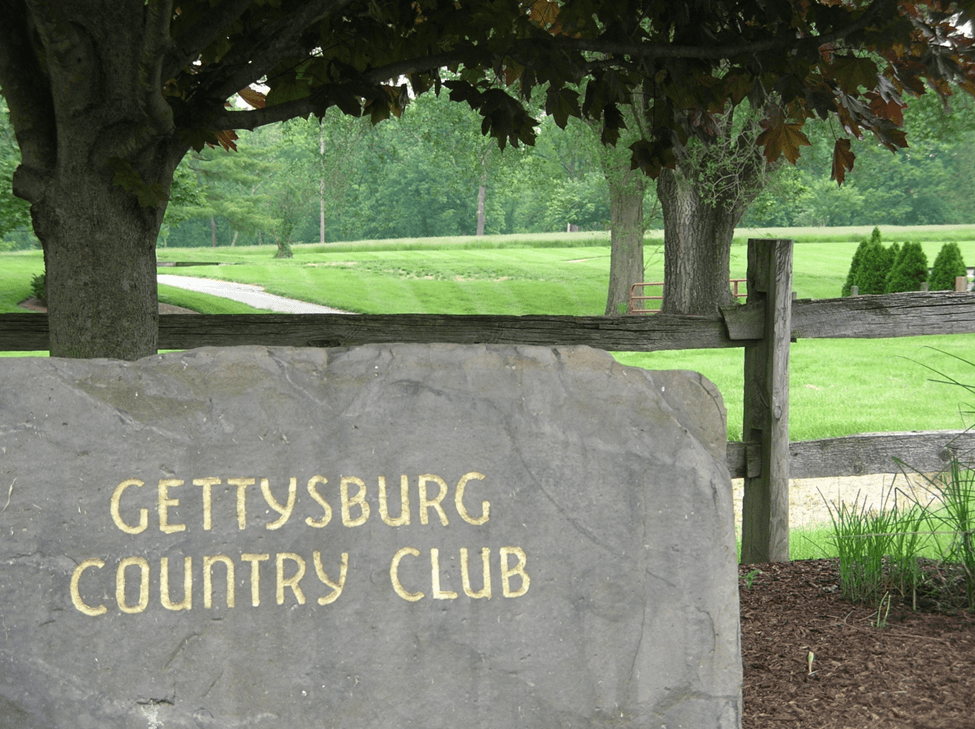
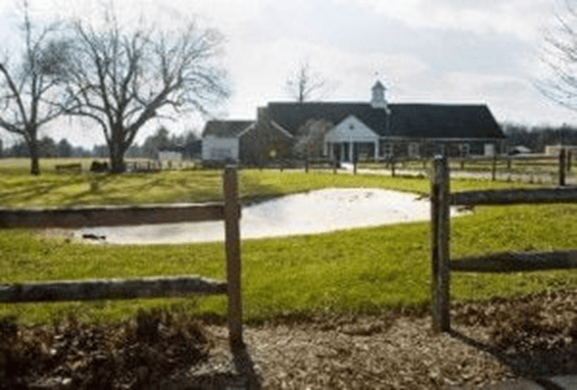
Approaching Gettysburg National Military Park from the west along the historic Chambersburg Pike (Rt. 30) is, in many ways, a journey through time. That journey carries one past the iconic “First Shot Marker” where Illinois cavalryman, Marcellus Jones famously lowered his rifle and delivered the first volley at General A.P. Hill’s advancing Confederate column, thus officially opening the Battle of Gettysburg. The journey continues past rolling farm fields and historic brick structures, including the stately Herr Tavern, which bore witness to the first major standoff between Union cavalry and Confederate infantry—a confrontation which would eventually push Union troops eastward toward the borough in the face of an overwhelming enemy. Continuing along that famed highway will quickly bring you to the site of some of the most brutal fighting of the entire Battle of Gettysburg, along the slopes of Willoughby Run and on up into Herbst Woods. The beginning of that fighting occurred on the outskirts of what was then the Abraham Spangler farm, now home to two one-story stone structures containing the Gettysburg Day Spa and the pastoral, open fields behind it that once housed the Gettysburg Country Club. While admittedly no longer “pristine” landscape due to the former development of the country club and its two buildings, the land retains an undeniable historic character that both enables the visitor to place oneself back amidst the battle’s melee there on that fateful morning of July 1, 1863, and to prepare oneself for entry into the core boundary of Gettysburg National Military Park—a path traversed by millions of visitors who, ever since the guns fell silent, have begun their impactful sojourns onto the battlefield in that very spot.
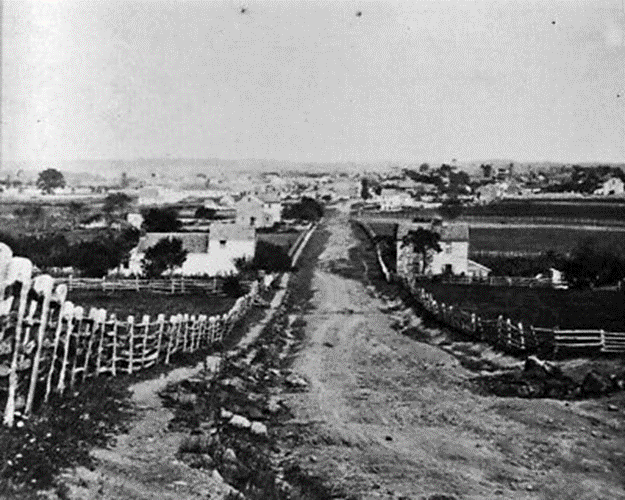
This is unquestionably hallowed ground, but today, it is threatened ground. While the National Park Service managed to acquire over 100 acres of battlefield land just to the south of the property in question in 2011, currently, Trone Rental Company of Hanover is vigorously pushing forward a proposal to build an apartment complex on top of the former Abraham Spangler farm. The plan for the “Residences at Willoughby Run” calls for the construction of eight buildings, containing 112 rental units, atop 14.5 acres of the ground across which numerous brigades of Confederates surged forward and backward in heated contest with Federals during their thrust towards the town. The significance of this fighting on July 1, 1863 alone merits its worth for preservation and interpretation. Indeed, this terrain is integral in understanding the experiences of both Union and Confederate soldiers on July 1st and how the battle lines for the ensuing two days would come to be drawn.
In addition to its impact on the historic landscape, this apartment complex would pose an enormous detriment to the tourist experience here in Gettysburg. A series of eight, 1-3 story buildings directly adjacent to the NPS park boundary would obscure the historic viewsheds around the core battlefield which, even with the two currently extant, low-lying stone buildings and parking lot, is still partially preserved. It also would tarnish the ambiance both entering and leaving the park which is essential for quiet reflection and contemplation of the historic landscape and the significant fighting that took place there. With both commercial and residential construction projects such as these continuing to encroach further upon the battlefield, heritage tourism—and, in turn, its monetary payout for the town—will surely suffer. While some commercial progress and municipal improvements must certainly be allowed to move forward for the viability of the town and its current residents, the construction of an additional 112 rental apartment units atop historic ground and directly adjacent to the core of arguably America’s most iconic battlefield hardly merits inclusion on that list of improvements.
Additionally, local students (such as the two co-authors of this piece) who regularly use the Gettysburg battlefield as an outdoor classroom will assuredly feel the negative impact of this project, should it be allowed to move forward. For example, every Fall, the Civil War Institute’s Student Fellows visit the site of the former Emanuel Harmon farm, the NPS-owned battlefield property directly adjoining the land currently in jeopardy, to study both key battle actions between the 26th North Carolina and members of the famed Iron Brigade, as well as the civilian experience of war and how the aftermath of the battle impacted local Gettysburgians’ livelihoods. While on site, CWI faculty utilize the historic viewscape to depict the brutal fighting that enveloped the entire area, establishing the magnitude of the battle of Gettysburg within the context of the destruction of civilian properties which served as either obstacles to the fighting, potential safe places in which to take cover, or even sharpshooter nests during the battle. CWI faculty also use the entirety of both the former Harmon and Spangler farms to interpret the entrepreneurship with which several of Gettysburg’s residents, including Emanuel Harmon, responded to the aftermath of war in an attempt to rebuild their lives: Directly adjacent to the currently endangered property, Harmon helped to establish the Katalysine Springs water bottling company to market the water derived from a supposedly “magical spring” along the banks of nearby Willoughby Run with “healing” powers that were “witnessed by wounded soldiers themselves” in the wake of the battle. The popularity of the springs eventually resulted in the 1869 construction of the sprawling Springs Hotel, a magnificent, 3-story, 250-room resort overlooking the springs which attracted some of the wealthiest socialites, politicians, and war veterans well into the 20th century before falling victim to fire. (We would also be remiss not to mention both the Harmon and Spangler properties’ association with President Dwight D. Eisenhower, who regularly frequented the golf course at the Gettysburg Country Club during his residence in Gettysburg). With apartment buildings looming on the horizon, critical educational and interpretive exercises such as these would become infinitely more difficult and significantly less impactful
Furthermore, the traffic that this project will inevitably create—both by the construction of the complex and by apartment residents themselves—near the intersection of Route 30 and Country Club Lane will only further decrease the quality of visitors’ experiences as they traverse the battlefield. Additionally, the influx in traffic poses serious concerns about driving and walking hazards along the already highly trafficked Route 30 and the narrow, winding Country Club Lane. Numerous residents of this neighborhood have already registered similar concerns in previous public forums and township meetings, with some also citing that part of the allure of moving to and living in Gettysburg in the first place was to escape the sprawl and hubbub of metro areas such as Washington, D.C. and Baltimore; large-scale construction projects such as these ruin a key part of what makes Gettysburg not only a special and enjoyable place to visit, but a fulfilling place in which to live. The National Park Service has also expressed concerns about environmental damage, pollution, and other associated hazards to natural resources resulting from this project.
In addition to the many local residents who have spoken out against the apartment construction, the American Battlefield Trust is currently fighting to block further movement on the proposal with a nationally circulated petition. However, on September 27, the Board of Supervisors will meet for a public hearing at the Cumberland Township Municipal Building to decide whether or not to allow the project to move forward. The time to act and make your voice heard about this highly consequential matter is NOW! For the sake of locals who call Gettysburg home; for tourists who flock to our town ritualistically to explore, to contemplate, and to understand; and for students who regularly refer to the battlefield as one of the best outdoor classrooms in America, it is clear that this proposed project should be strongly reconsidered so that the entirety of the hallowed ground at Gettysburg remains preserved.
Bibliography
Dalton, Andrew I. Beyond the Run: The Emmanuel Harmon Farm at Gettysburg. Gettysburg: Ten Roads Publishing, 2013.
Dau, Alexander. “From Fiery Ruins to Lucrative Legend: The Harmon Farm.” The Gettysburg Compiler (blog), December 20, 2021. https://gettysburgcompiler.org/2021/12/20/from-fiery-ruins-to-lucrative-legend-the-harmon-farm/.
American Battlefield Trust. “Gettysburg’s Day One Battlefield Threatened,” 2022. https://www.battlefields.org/preserve/speak-out/gettysburgs-day-one-battlefield-threatened.
Stagnor, Charles. “112 Unit Apartment Complex Proposed for Willoughby Run Property.” Gettysburg Connection, June 30, 2022. https://gettysburgconnection.org/112-unit-apartment-complex-proposed-for-willoughy-run-property/.

The historical significance of this area is the most compelling reason to not approve the proposal. I have visited Gettysburg over 2 dozen times in my lifetime, and the battlefield is the only reason for my visits. If there is a need for 112 apartments, there is plenty of open space in the non-battlefield regions around the town. Is the region ready for 250 plus more residents, utilizing the existing water supply and waste management and traffic flow into the town from route 30? Will there be then additional requests to widen the road for easier and faster travel? Are you ready for more requests for a few more gas stations and mini-marts for those tenants who want just a six-pack and a bag of chips for Sunday night, Monday night, and Thursday night football? And you will need another fire station and larger police force to manage that growth. And what will happen to construction when the inevitable discovery of human remains occurs. Will the state stop construction while the remains are carefully removed and preserved? Will historical groups protest when remains are bulldozed away? Is the town ready for protests? You should by now get my point. There will always be demands for infrastructure around housing developments, but it seems foolish to add these to the destruction of battlefield that has made Gettysburg the Mecca of the Civil War.