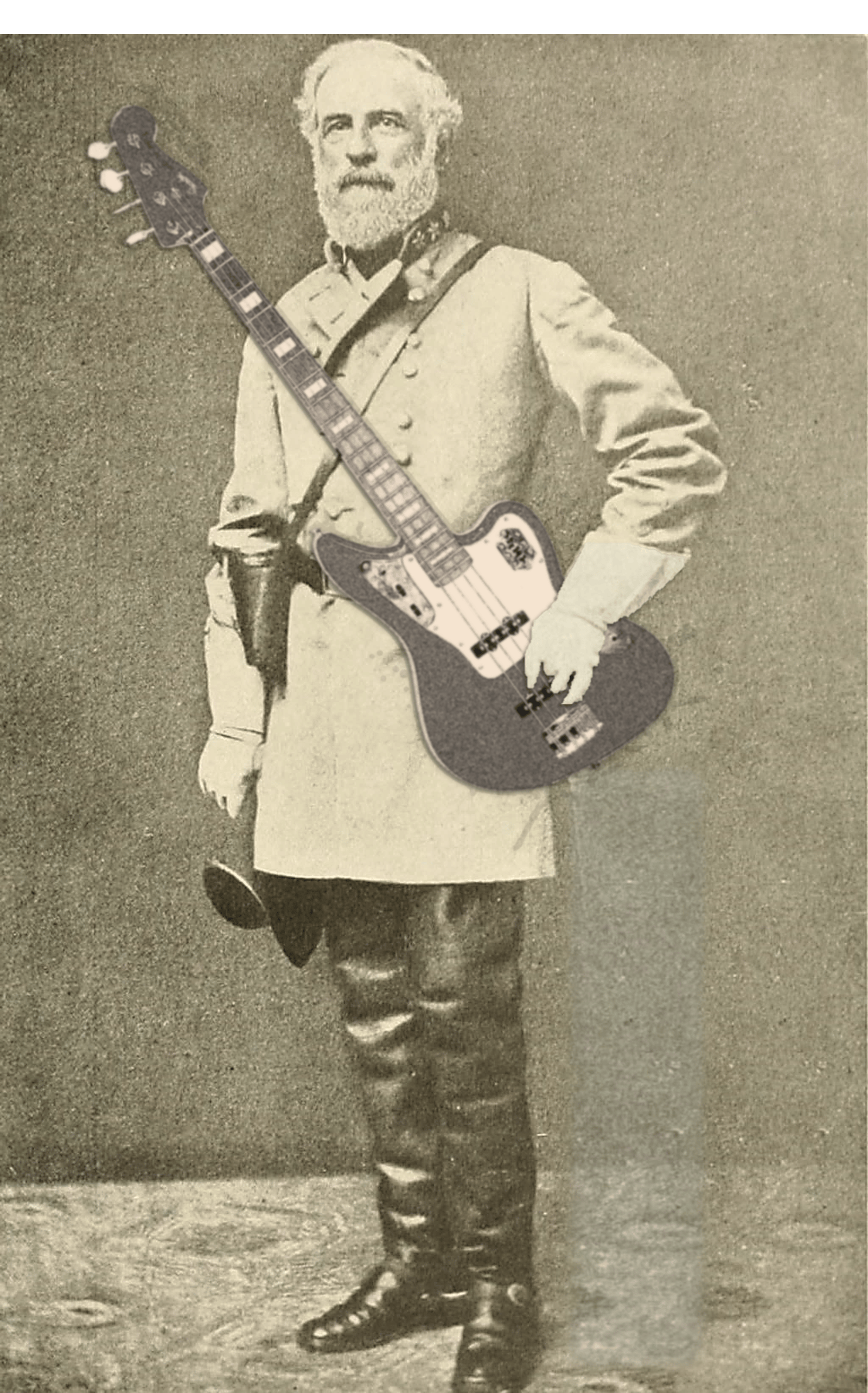
Heavy Metal Gettysburg and the Allure of Emotive History

By Kevin Lavery ’16

REL7

In July 1863
A Nation Torn In Tragedy
A Trick Of Fate, Two Great Armies Merge
Gods Of War At Gettysburg
Devastation Lies Ahead
50,000 Bodies Litter The Land
Hell Rages Three Full Days
The Reaper Sows, There’s The Devil To Pay.

Thus begins the first song in Iced Earth’s three-part ballad inspired by the Battle of Gettysburg. The heavy metal epic is intense, dramatic, brutal, tragic, and romantic. Released in 2004 on their album The Glorious Burden – which, incidentally, also features songs inspired by Attila the Hun, the Red Baron, Waterloo, and Valley Forge – Iced Earth’s “Gettysburg (1863)” trilogy offers listeners a vivid musical interpretation of the memory of Gettysburg popularized by Michael Shaara’s The Killer Angels. Beginning with the “The Devil to Pay” and continuing in “Hold at All Costs” and “High Water Mark,” each song in the trilogy is devoted to the events of a single day of the battle. Encapsulating some of Gettysburg’s best-known moments, the songs each convey a sense of the battle’s epic scale and its powerful legacy. In consequence, however, the ballad reinforces an exclusively emotional interpretation of the Civil War that can obscure a more meaningful understanding of the battle and its larger implications. Continue reading “Heavy Metal Gettysburg and the Allure of Emotive History”

Gettysburg: A Town Built on Tourism

By Kevin Lavery ’16

In my most recent blog posts, I’ve adopted a rather unforgiving stance on the rampant consumerism that pervades the town of Gettysburg. Essentially, I have argued that the borough’s tacky gift shops sell odious little trinkets to gullible tourists and profiteer from the public’s morbid obsession with war and death. But while I firmly believe that this zealous consumerism is a persistent threat to healthy historical engagement, there is another side to the issue that demands to be recognized: Gettysburg kitsch is part of what has made Gettysburg into a town brimming with opportunities to broaden the public’s historical consciousness.

Photo credit to the author.

Gettysburg is among the most prominent sites in Civil War memory, if not the most prominent. No other battlefield has quite the same name-brand power in the public mind. It is no surprise, therefore, that Gettysburg’s reputation perennially yields a large crop of tourists and pilgrims.

Continue reading “Gettysburg: A Town Built on Tourism”

Lost: Sesquicentennial Sanity. If found, please contact Gettysburg Sesquicentennial Committee

By Kevin Lavery ’16

If you were in Gettysburg during the summer of 2013, you surely encountered the ubiquitous 150th Gettysburg logo branded on everything from promotional materials to souvenirs. The latter – tacky at best and irreverent at worst – filled the town to the point of excess, making some of us wonder how many people completely missed the point of the sesquicentennial. Anniversaries exert a powerful force on the American historical psyche, but it is dubious whether Gettysburg’s celebration exerted an appropriate one. The sesquicentennial was a wonderful opportunity to refocus on the events of July 1863, but sadly many businesses in Gettysburg seemed unable to look past their profit margins.

Two summers ago, huge crowds of tourists flocked to Gettysburg in order to experience reenactments, tour the national park, and engage with our sacred past. But the stench of unrestrained consumerism wafted incessantly from the heart of the town, threatening to draw these pilgrims away from hallowed fields and reverent ruminations. Who could concentrate on such abstract ideas like Freedom, Equality, Justice, and Patriotism with shelves of useless merchandise beckoning from just a few miles away?

Courtesy of Gettysburg College Special Collections, Gettysburg, PA.

Continue reading “Lost: Sesquicentennial Sanity. If found, please contact Gettysburg Sesquicentennial Committee”

Gettysburg’s Faustian Bargain

By Kevin Lavery ’16

A question to the reader: have you ever visited Gettysburg? Presumably most of the Gettysburg Compiler’s audience will answer in the affirmative. A follow-up question: have you ever purchased a souvenir from one of the town’s abundant gift shops? Perhaps it was a kepi or a cork gun for your child? Or maybe a bottle of “Rebel Red” wine? Or some tacky trinket or faux antique?

Let’s face it: we live in a consumer society in which there is nothing too sacred to profit from. And, sadly, the Battle of Gettysburg is no exception.

Photo credit to the author.

Continue reading “Gettysburg’s Faustian Bargain”

The Specter of Gettysburg

By Kevin Lavery ’16

This photo serves as an homage to the flimsy inspirations for many Gettysburg ghost tours. Photo credit Kevin Lavery.
This photo serves as an homage to the flimsy inspirations for many Gettysburg ghost tours.
Photo credit to the author.

The story I am about to tell is entirely true. Several weeks ago, as I departed Musselman Library after a long night of intensive research, a sudden presence roused me from my intellectual exhaustion. I was chilled to the bone as they appeared before me:  shadowy figures silhouetted against the dimly lit façade of our beloved administration building. Now, I had, of course, heard of the campus’ hauntings. Tales of the ghostly field hospital in Penn Hall’s basement, the spectral sentry watching from its cupola, and the Blue Boy of Stevens Hall are well known stories throughout our campus community and beyond. But I had never expected that night to encounter one of the most frightening entities known to frequent our campus:  ghost tour groups. As I passed between two separate tours – one sitting audaciously on the steps of Penn Hall – I tensed.

Continue reading “The Specter of Gettysburg”

The Right to be Forgotten . . . from History?

By Kevin Lavery ’16

Underwood & Underwood. Monument where Lincoln's famous address was made - 979 of the great battle's unknown dead, Gettysburg. 1903. Library of Congress, Washington D.C.
Underwood & Underwood. Monument where Lincoln’s famous address was made – 979 of the great battle’s unknown dead, Gettysburg. 1903.
Library of Congress, Washington D.C.

Some people seek to leave a legacy. They want to be remembered by others for doing something great, whether it be good or evil. But not everyone is alike in this respect. Others want nothing more than to go quietly about their business. They do not want friends or strangers prying into their lives. They do not want their inner, personal thoughts to be read and judged by those around them.

But when they die, their personal belongings may pass to their children and perhaps eventually reach a local archive or historical society. There, their most private reflections become tools for professional and amateur historians seeking a greater understanding of these individuals and the past in general.

Continue reading “The Right to be Forgotten . . . from History?”

More than Milton’s Man: Lebbie’s Wisdom

By Kevin Lavery ’16

3D006.4 On the Homestead porch. l-r: Henry Hershey (Milton's father), Harry Lebkicher. ca1900-1903 Courtesy of Hershey Community Archives, Hershey, PA
3D006.4 On the Homestead porch. L-R: Henry Hershey (Milton’s father), William H. Lebkicher. ca1900-1903.

The Conclusion of a Two-Part Series

For such a young man, William Henry “Lebbie” Lebkicher (Company D, 122ndRegiment PA Volunteers) appears in his Civil War Era letters as a keen observer of society. Curiously, he rarely spoke of the larger war or even his friends from the regiment. The few people he alluded to are family members or family friends, mostly in discussion of their well-being. The letters are more a collection of observations on his experiences than a series of back-and-forth conversations with his father. His thoughts are insightful and fairly objective. On one occasion, he noted that the bounty payment was late and some soldiers were getting “a little tired of waiting” for it, though he did not explicitly express his own frustration even though he, too, was awaiting payment. Nor did Lebkicher allow himself to be overexcited by the military’s vibrant rumor mill, dismissing whispers of a march on Richmond in August 1862 on the grounds that there were “so many rumors here that you cannot believe any of them.” His healthy skepticism was a trait that he would later put to good use as a thrifty businessman while working with Milton Hershey in a number of roles, including as the first Vice President of the Hershey Trust Company (established in 1905).

Continue reading “More than Milton’s Man: Lebbie’s Wisdom”

More than Milton’s Man: Meet the Lebkichers

By Kevin Lavery ’16

4D990126.5 William H. Lebkicher, 1900 Courtesy of Hershey Community Archives, Hershey, PA

4D990126.5 William H. Lebkicher, 1900
Courtesy of Hershey Community Archives, Hershey, PA

Even to many residents of Hershey, Pennsylvania, the name William Henry Lebkicher has lost its once great significance. Those who recall “Lebbie” remember him as a key investor, colleague, and mentor to confectionery industrialist Milton S. Hershey from the early 1880s until his death in 1929. But his life before meeting Hershey has faded into obscurity over the years, and Lebkicher’s service during the Civil War has been forgotten by all but a few local history enthusiasts. Thankfully, his experiences have been preserved through a series of letters he sent home between August 1862 and February 1865, part of a collection owned by the Lancaster County Historical Society. These letters exhibit the meditations of an individual whose legacy has been reduced to an aside in the annals of Chocolate Town. Lebkicher, like many other figures forgotten in time, has stories all his own.

Continue reading “More than Milton’s Man: Meet the Lebkichers”

When History Clicks: An Audio Interview with Kevin Levin

By Kevin Lavery ’16

Kevin Levin will be speaking at the 2014 Civil War Institute’s Summer Conference on the War in 1864. He will be conducting a lecture entitled, “The Battle of the Crater in Memory,” a Dine-in Discussion, and a breakout session, “Re-Thinking Confederate Defeat in the Summer of 1864.” Levin is a historian, blogger, and history educator. His book, Remembering the Battle of the Crater: War as Murder, was published in 2012 by the University Press of Kentucky. In anticipation of the Summer Institute, Kevin Levin answered student questions about teaching history and about the legacy of the Civil War.

Levin

Continue reading “When History Clicks: An Audio Interview with Kevin Levin”

Baltimore on the Border: The Occupation

By Kevin Lavery ’16

Why is “Maryland” like a blind bird – because she can’t ‘See-Seed’ (Secede)
-Joke told by Samuel Epes Turner, Jr. to his father

Though Baltimore and Maryland were preserved for the Union, it was a victory won at gunpoint. Historian Harry Ezratty describes one occasion when Governor Dix, Butler’s successor in the Middle Department, demonstrated “a genuine display of gentlemanly tactfulness” and Victorian cunning when he invited overly influential local ladies to discuss matters of the occupation. According to his memoirs, he then pointed to a gun stationed at Fort McHenry and diplomatically asked his guests where it was directed. They observed that it was pointed to Battle Monument Square: a site of local importance commemorating the War of 1812. He promised them that if they stopped sowing the seeds of insurrection, there would be no more trouble. Otherwise, “that gun is the first that I shall fire.”

Tuner 2.1

Continue reading “Baltimore on the Border: The Occupation”

css.php