
Saved by the Land: The Codori Family

By Lauren Letizia

“War on the Doorstep: Civilians of Gettysburg”

By late June of 1863, alarms warning of approaching Confederate forces were nothing new for the 2,400 residents of Gettysburg. Living just ten miles from the Mason-Dixon line, small-scale raids, kidnappings of freed-people, and rumors of an imminent clash between the two great armies had long plagued the borough and its surrounding community.  Nevertheless, none of these events could prepare Gettysburgians for the ferocious 3-day fight between 165,000 soldiers in early July of that year that would transform the lives and lands of Gettysburg’s civilians forever. However, these civilians’ experiences were not monolithic; while some were defined by tragedy and blight, others included remarkable episodes of perseverance, successful pragmatism, and creative profiteering.  This new blog series profiles the lives of diverse Gettysburgians who were forced to confront the war at their very doorsteps, each on their own terms, whose stories speak to the kaleidoscope of experiences of civilians struggling to survive, and thrive, along the Pennsylvania-Maryland border during the Civil War.

When Nicholas and George Codori emigrated to Gettysburg, Pennsylvania from Hottviller, France on 20th June 1828, they could not have foreseen the epic battle that would reshape both the physical and historical landscape of their new hometown.

The Codoris’ sprawling tracts of land and multiple houses would become some of the most significant locales during the Battle of Gettysburg, with one of the family farms playing host to over 500 buried Confederate dead, the most of any farm in the area. Although, like most Gettysburg civilians, the Codoris’ livelihoods were dramatically altered during and after the infamous clash, their story is, in many ways, one of mixed struggle and ironic success as a result of the bloody battle that transformed their town forever.

Like many European immigrants of the 19th and 20th centuries, the Codori brothers viewed American land ownership as the key to personal opportunity and family fortune. Inspired by the promises of a free labor society that championed hard work and the ownership of one’s own labor as the foundation for successful, stable, and moral living, twenty-two-year-old George and nineteen-year-old Nicholas hoped to become successful, independent, and contributing members of their local community. The U.S. Census lists their occupations as butchers. Nicholas became an apprentice with local butcher, Anthony Kuntz and eventually started his own business behind his home on York Street. Interestingly, his was the former house of Gettysburg founder, James Gettys.  During the aftermath of the battle, the York Street house would be used as a temporary church for the displaced congregation of the Catholic church, St. Francis Xavier, which served as a hospital for wounded and dying soldiers. 

Image of Nicholas Codori (Find A Grave)

Ambition defined Nicholas Codori’s life. In 1835, he married Elizabeth Martin, with whom he had two sons, George and Simon. Distrustful of banks, Nicholas continually invested his life savings into new land and farm properties. In 1854, he purchased approximately 273 acres of land along the Emmitsburg Rd., just outside the borough, and proceeded to build a brick house on the property between 1854 and 1863, leasing the farmhouse to tenants. In 1861, he purchased an additional 66 acres across the Emmitsburg Road. During the battle, Nicholas’s niece, Catherine Codori Staub, and her husband, John Staub, were renting the farmhouse. John was serving in the 165th Pennsylvania at the time, so an extremely pregnant Catherine, her children, and her parents were alone in the house. Codori family history states that Catherine hid in the basement; however, there are no records or diaries to indicate this as fact. Other rumors suggest she fled to Carlisle, but this is unlikely given the advanced state of her pregnancy; she gave birth to twin girls on July 8, 1863.  (A more likely explanation states that the Staubs may have owned their own farm behind the Sherfy property, giving Catherine and her family another place to wait out the violence).

However, according to an officer in General George Stanndard’s Vermont Brigade there were occupants in the Codori farmhouse on the eve of the battle. The officer writes that, when his brigade stopped at the farm, an old man ran out of the house, opened the gate, and (rather comically) begged the soldiers to “move around his wheat field and not pass through it.” This man may have been Catherine’s father, Anthony Codori, as there is no record of Nicholas’s and his family’s movements during the three days of fighting.

During the Civil War, George’s family would suffer the worst of the Codoris. In 1829, George had married a fellow French immigrant, Regina Wallenberger. They had made their home on West Middle Street and began a family, raising two daughters, Suzanne and Cecelia, and a son, Nicholas. Apparently eager to go to war to defend his family’s adopted nation and the ideals of Union and free labor that defined the northern war effort, Nicholas enlisted in Company E of the 2nd Pennsylvania on April 20, 1861. Discharged after his 90-day enlistment expired, it is unknown why he chose not to immediately re-enlist.  In 1864, perhaps fearful of the draft or due to community pressures, he finally renewed his enlistment with the 210th PA, but deserted twelve days later. Perhaps the divergence between romantic notions of warfare and the realities of soldier life was simply too much for young Nicholas.
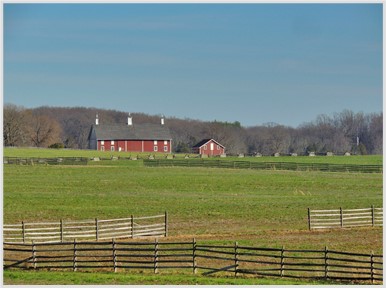
The Codori Farm (George Neat via Flickr)

During the Battle of Gettysburg, while George’s daughter, Suzanne and her husband hid in his brother Nicholas’s basement on York Street, George fell victim to marauding Confederates and was one of eight Gettysburg citizens to be captured and imprisoned by the Confederate Army. There is no definitive record of why 57-year-old George was arrested, but the family claims he was detained by suspicious southern cavalry as he was returning home from a business trip to Baltimore, perhaps wearing his son’s old Union soldier’s jacket. Conversely, Annie McSherry, the great great-granddaughter of George, states that he and part of his family had fled to the Culp Farm on July 1 and had returned home on the 4th to find a wounded Confederate soldier hiding in their home. McSherry claims that George helped the soldier return to the lines and that George may had been detained while doing so. Whatever the circumstances, George was transported to a prison in Richmond, Virginia and then moved to Salisbury Prison in North Carolina. The Codoris anxiously awaited his return, baffled by how Confederates could justify his continued incarceration following the Gettysburg Campaign. Sadly, George did not return home until March 1865 and severely weakened by his time in southern prisons, he died of pneumonia just days later. Regina soon followed, passing away a few months after. The George Codori family story speaks to the myriad unexpected tragedies that upended the lives of numerous families living along the Pennsylvania-Maryland border during the Gettysburg Campaign. 

Luckily for Nicholas Codori, fortune once again favored ambition and boldness. In 1865, Nicholas purchased a large tract of land across the Emmitsburg Road from Nicholas’s farmhouse which had belonged to William Bliss. Capitalizing on the damages the Bliss land and burned-out house and barn sustained during the battle, Codori purchased the property from a despondent and financially desperate Bliss. Three years later, in 1868, Codori decided to further profit from the prime location of the farmland east of the Emmitsburg Road, where hundreds of Confederate soldiers had been buried in shallow graves. When this was discovered, he sold the land to Southern organizations that were commissioned to repatriate Confederate remains. He bought this portion back in 1872 after the soldiers’ bodies were removed and sent back to the South. Nicholas continued to prosper from his rampant purchase and sale of local farmlands until 1878, when he sustained mortal injuries from a mowing accident on one of his farms. While driving a horse-drawn mower, Codori fell into the sharp blades of the mower after his horse became spooked and suddenly jerked its body. Nicholas lay alone amidst the mowing with a partially severed leg for approximately 30 minutes, until help finally arrived. He survived for a few days afterwards before succumbing to his wound on July 11, 1878. In one of the great ironies of his life, the cherished land that had long sustained his family’s fortunes, and which had enabled his family to endure and thrive in the wake of the cataclysmic battle fought around them, had fatally failed him.

Despite Nicholas’s tragic death, the Codori family fortunes continued to prosper. By 1880, the Grand Army of the Republic (GAR) had purchased significant ownership of the Gettysburg Battlefield Memorial Association. The combined GAR-GBMA began to encourage widespread erection of monuments and memorials on pivotal pieces of the battlefield. Well-aware of the enormous historical value of the family’s sprawling farm and sensing a financial boon for the Codori family, Nicholas’s son, Simon started selling large portions of his family’s land to veterans’ groups, stating that wished to memorialize their soldiers’ sacrifices. Codori land now claims monuments to the 106th and 26th PA, the death sites of Colonel Willard of the 126th NY and Colonel Ward of the 15th MA, as well as the site of General Winfield Scott Hancock’s famed wounding. Due to Simon’s foresight, Codori land was no longer solely of monetary value, but of pivotal commemorative value. The Codori family’s wartime experiences were defined by a kaleidoscope of emotions and fortunes—confusion, fear, chaos, tragedy, grief, and loss—but also opportunity, ironic success, and growth. However, in the end, it was Nicholas Codori’s antebellum foresight about the importance of land ownership, his unwavering belief in the power of free labor ideals and practices to secure upward mobility and financial security, and his family’s opportunism that enabled the Codoris to ride out the storm of civil war on the Pennsylvania border—and to emerge, largely, better for it. His land and various properties became battlefields, hideouts, havens, churches, burial grounds, and memorial landscapes. Throughout this constant repurposing and shifts in meaning, the Codori properties played an integral role not only in the family’s fortunes, but also in the history and memory of the Gettysburg landscape as we know it.

Preserving Prosperity: The Sherfy Family

By Lauren Letizia

War on the Doorstep: Civilians of Gettysburg

By late June of 1863, alarms warning of approaching Confederate forces were nothing new for the 2,400 residents of Gettysburg. Living just ten miles from the Mason-Dixon line, small-scale raids, kidnappings of freed-people, and rumors of an imminent clash between the two great armies had long plagued the borough and its surrounding community.  Nevertheless, none of these events could prepare Gettysburgians for the ferocious 3-day fight between 165,000 soldiers in early July of that year that would transform the lives and lands of Gettysburg’s civilians forever. However, these civilians’ experiences were not monolithic; while some were defined by tragedy and blight, others included remarkable episodes of perseverance, successful pragmatism, and creative profiteering.  This new blog series profiles the lives of diverse Gettysburgians who were forced to confront the war at their very doorsteps, each on their own terms, whose stories speak to the kaleidoscope of experiences of civilians struggling to survive, and thrive, along the Pennsylvania-Maryland border during the Civil War.

The surname Sherfy has been a pillar of the Gettysburg community for generations. It conjures up images of small, neat orchards, perfect peaches, and a devastating battle that forever altered the land. However, the story of the Sherfy family and their farm is also one of steadfastness, strength under pressure, and American ingenuity.

“The Sherfys of Gettysburg, Pennsylvania” was an established line well before their peaches became famous. They were descended from Kaspar Scherffig, a German immigrant farmer who came to Uniontown, Maryland in 1751 at the age of 16. His son, Jacob, was born in 1769, moved to southern Gettysburg, married a woman named Catherine, and raised eleven children. Their first home was built slightly farther south and to the east of the Emmitsburg Road than the red building now associated with their family. That first home is now called the Rose Farm. Sadly, Jacob and Catherine faced personal tragedy and death years before the Battle of Gettysburg. Their eldest son, Daniel, was thrown from a frightened horse and dragged through a tree thicket. Jacob was unable to stop the horse before Daniel died. In 1842, Jacob Sherfy passed away at the age of 73, passing the plot of land north of the Rose Farm to his son, Joseph. Joseph constructed the now iconic red brick house, and turned it into a homestead for himself and his wife Mary. They planted a four-acre peach orchard about 200 yards south of the home and expanded the orchard northward around 1862. Their farm also included a cherry tree grove and fields filled with oats, corn, and wheat, as well as hogs and other farm animals. In addition to tending his land, Joseph was a Dunker preacher. The Dunker faith was established in Germany during the early 18th Century. They espoused pietism, which means religion of the heart, and was closely aligned with Anabaptists, a religion that was against secularization of society and the conducting of warfare. As a core value of the Dunker religion, Joseph most likely subscribed to the belief in non-violent living and was likely greatly disturbed by the oncoming conflict. He and Mary had six children born between 1843 and 1860. Mary’s mother, known as Grandma Haegen, was also living with the Sherfy family at the time of the battle.

The Sherfy’s famed Peach Orchard

As the Union and Confederate armies thundered into Gettysburg, Joseph and Mary decided to send their children to safety south to the John Trostle Farm, located behind Big and Little Round Tops. However, either due to fears of unchecked destruction to the farm in their absence or a sense of stubborn pride, Grandma Haegen refused their pleas to leave the home, so Joseph and Mary elected to stay with her. On the morning of July 2, the sharpshooters of Colonel Hiram Berdan, under the command of General Daniel Sickles, found General Richard H. Anderson’s Confederate soldiers positioned in the woods behind the Sherfy Farm. A brief skirmish commenced, causing a bullet to burrow through a fence post, rip through the folds of Grandma Haegen’s dress, and land on the ground nearby. Haegen allegedly picked up the bullet and said, “It’s time to go to Taneytown!”

With the old woman’s approval, the Sherfys finally fled their farm, which would prove to be fortuitous. General Sickles, convinced that (at worst) General Robert E. Lee would push southward around the Federal flank toward Washington D.C, or that the Union defensive line would be far better suited along a forward salient anchored in the Sherfy’s peach orchard than it would be behind that critical high ground), ordered over 6,000 troops from his III Corps to advance from their original position along Cemetery Ridge and protect the Emmitsburg Road. There, Sickles established numerous batteries of southward-facing artillery to reinforce his one- and-a-quarter mile long line of infantry. Dangerously exposed along the open high ground and separated from the main Union lines, Sickles’s men were besieged by heavy Confederate artillery fire for approximately two and a half hours. Some of the shells and shrapnel collapsed portions of the Sherfys’ roof. Later in the evening, around 6:30pm, the advancing tide of William Barksdale’s Confederates finally broke through the Union lines along the Emmitsburg Road and, in tragic irony, the land of the peaceful Dunkards witnessed a bloodbath. The buildings were poked with bullet holes and the home began to fill with wounded and dying soldiers who were seeking protection. After the battle, survivors dug trenches around the farm to bury the dead and about 30 dead horses littered the torn land. Infamously, the Sherfy’s red barn caught fire during the fighting with scores of Union soldiers inside. It is not known how the barn ignited, but the fire could have been set deliberately by the 18th Mississippi to rout out possible Union sharpshooters, or simply could have fallen victim to a fiery shell. Most of the soldiers trapped in the barn were wounded men from the 73rd New York and the 57th and 68th Pennsylvania regiments. Due to the severity of their injuries sustained in battle, they were too weak to escape the inferno and ultimately perished.

After the gruesome battle, Joseph and his son Raphael returned to Gettysburg on July 6. They were forced to confront the barren and charred state of their family’s property. Not only were their buildings peppered with bullet holes and their barn completely destroyed, but the burnt bodies of the victim soldiers were gruesomely intermingled with the charred debris. It is estimated that 150 soldiers who were killed on or around the Sherfy farm were ultimately buried on the land. On July 7, Mary and the other children returned to witness the devastation. Joseph submitted three claims to the federal government after 1881 for compensation. The claims amounted to $2,500; they were mostly denied due to the government’s statement that much of the damage was not caused by the Union Army. The Sherfys, determined to reclaim their lives, started to rebuild all they lost. Remarkably, they were able to harvest peaches from the 114 surviving trees and canned them for sale. Joseph and Mary planned to use the earnings to pay for the reconstruction of the family homestead. They were baffled when their peach products began to fly off the shelves. Realizing a unique marketing strategy, the Sherfys branded their peaches as those grown on the iconic battlefield. The family continued to live on the property until Joseph’s death from typhoid at the age of 70.

Various Images (https://www.womenhistoryblog.com/2016/03/sherfy-farm.html)

The history of the Sherfy property is bloody, morbid, and macabre. The now deceptively picturesque landscape and red house, the tidy peach orchard, and quaint barn had once been transformed into a singed, ravaged, desolate tableau. The fate of the Sherfy property is one that many families’ homesteads around Gettysburg faced when the violence subsided. However, like some of their neighbors such as Lydia Leister and Nicholas Codori, the Sherfys did not let the bleak landscape and destruction discourage them from reaping future fortune. They immediately searched for innovative—and indeed, unlikely–ways to better their predicament and become self-sustaining once again. Their story exemplifies the power of determination, the benefits of flexibility, and the ingenuity of familial innovation. They made sweet (and financially fruitful) peach preserves out of war’s scorched orchards.

Above the Call of Duty: Josephine Rogers (Josephine Miller)

By: Lauren Letizia

War on the Doorstep: Civilians of Gettysburg

By late June of 1863, alarms warning of approaching Confederate forces were nothing new for the 2,400 residents of Gettysburg. Living just ten miles from the Mason-Dixon line, small-scale raids, kidnappings of freed-people, and rumors of an imminent clash between the two great armies had long plagued the borough and its surrounding community.  Nevertheless, none of these events could prepare Gettysburgians for the ferocious 3-day fight between 165,000 soldiers in early July of that year that would transform the lives and lands of Gettysburg’s civilians forever. However, these civilians’ experiences were not monolithic; while some were defined by tragedy and blight, others included remarkable episodes of perseverance, successful pragmatism, and creative profiteering.  This new blog series profiles the lives of diverse Gettysburgians who were forced to confront the war at their very doorsteps, each on their own terms, whose stories speak to the kaleidoscope of experiences of civilians struggling to survive, and thrive, along the Pennsylvania-Maryland border during the Civil War.

It is often said that in hard times we discover the true characters of our neighbors. While some become distant and aloof during times of terrible hardship or fear, others demonstrate courage, kindness, and selflessness. The latter phenomenon is exemplified in the story of Gettysburg civilian, Josephine Rogers, also known as Josephine Miller. A young woman at the time of the great battle, she risked her own life to help young soldiers in need of sustenance and shelter.  Interestingly, as she did so, she simultaneously defied traditional gender norms and fulfilled them in ways that proved not only celebratory, but were also memorialized by those who witnessed her selfless actions.

Josephine Rogers’s small farmhouse was located on the edge of the Emmitsburg Road, south of Gettysburg. It was owned by her relatives, Peter and Susan Rogers. There is some dispute as to Josephine’s familial relationship with Peter and Susan. Some accounts list her as a niece, while others state she was a granddaughter or adopted daughter. Josephine would eventually marry her neighbor, William J. Slyder on October 25, 1863, with whom she soon moved to Ohio.  But on the second day of fighting, the entire Rogers family was still occupying their small farmhouse. As the violence began to intensify in the vicinity of the Rogers home, Union General J.B. Carr, commanding a brigade of New Yorkers stationed closest to the home, requested that Josephine and the Rogers leave immediately. However, 18-year-old Josephine refused to flee, telling the general she had a batch of bread baking in the oven. She reassured him she would leave after the bread was finished. This decision is lyrically described Harvard University graduate, Edgar Foster Davis’s poem published in 1912:

The war cloud is gath’ring o’er Gettysburg vale,

Portending hoarse thundering and death-dealing hail;

The solid earth trembles, and the rent is the air,

With the rushing of squadrons, —the loud trumpets blare.

The clanking of arms, and the shouting of men,

And the neighing of steeds from each echoing glen;

But unheeding the din and unhindered by dread

Josephine Miller is baking her bread.

Around 1:00 pm on July 2, General Daniel Sickles ordered the 3rd Army Corps to leave its position on Cemetery Ridge and move into the valley along the Emmitsburg Road, seeking to thwart a supposed Confederate march to Washington D.C. and move his troops to what Sickles considered to be a less vulnerable position along the high ground immediately above the Emmitsburg Road. The men of the 1st Massachusetts began to move into the Rogers’s fields and towards the farmhouse. At approximately 2:00, the men started to smell the scent of fresh bread, and as they arrived in position, they saw Josephine removing the loaves from the oven. Noting the soldiers’ desperate hunger, Josephine quickly sliced the loaves and distributed them to the Union soldiers. Three hours later, the Confederates open fired on the newly stationed 3rd Corps, bombarding the 1st Massachusetts, and Josephine Rogers, with shells. Despite the increasingly perilous situation, Rogers kneaded, baked, and sliced more loaves of bread for the troops. The officers offered her compensation, but she vehemently refused. To show their thanks, as Josephine’s flour supply dwindled, some soldiers volunteered to steal more from General Sickles’s commissary stores. They also returned with a supply of raisins, currants, and a sheep. Josephine Rogers stayed in her home for two days, not only feeding the soldiers, but also caring for the dying and wounded.

On July 3, the infamous artillery duel between the two armies shook the foundations of Josephine’s farmhouse. The Confederate infantry began to advance against the Union line, with some southerners marching directly through the Rogers’s fields. Just as General Carr had found Josephine hard at work by her stove, the Confederates incredulously noted Josephine Rogers once again baking bread amidst the hailstorm of lead flying about her.

Over the course of the now iconic Pickett-Pettigrew charge, many Confederate soldiers died near Josephine’s home. When the smoke had cleared, the home still stood but was marked with bullets and scarred by artillery shells. Seventeen bodies were removed from the farmhouse and the cellar. Additionally, many wounded soldiers, both Union and Confederate, had crawled into Josephine’s home to seek a haven from the bloody storm. Josephine cared for and comforted them as best she could, no matter what color uniform they wore.

Josephine Rogers, with her iron stove and loaf of bread, in front of the 1st MA monument (1886)

Josephine Rogers’s actions at Gettysburg symbolize both the breaking and fulfilling of traditional 19th-century gender roles. By obstinately refusing the orders and protective offers of powerful men and remaining in her home in the midst of battle, she directly contradicted the image of the meek and passive housewife who depended on masculine aid in the face of danger, and did not hesitate to attend to the mangled bodies of strange men. However, in other critical ways, she also fulfilled the roles expected of a 19th-century woman: She remained in her home to carry out her domestic responsibilities of baking, nursing the men under her roof, and (in true “Republican motherhood” style) literally propping up men to perform their “proper” civic and martial duties. Though she did all of this in spite of the horror and bullets swirling around her, Josephine represented the pinnacle of 19th-century feminine duty to home and to country. For both her defiance of and dedication to such gender norms, she earned a permanent place in the hearts of the men she interacted with on those two famous July days.

As the Civil War drew to a gruesome finale in 1865 and the nation struggled to heal, many people never knew about the heroic and altruistic actions of Josephine Rogers. However, the surviving troops of the 1st Massachusetts could not forget her. After the war, she was named an honorary member of the 3rd Corps, the only woman to receive such an honor. On July 2, 1886, when General Carr’s brigade reunited in Gettysburg, they invited Josephine Rogers to attend. They sought out her current whereabouts and mailed an invitation to her new home in Dayton, Ohio. Josephine agreed to travel back to her old home to once more to see the men she had aided. During the reunion, the Massachusetts men dedicated a monument to their unit’s actions at Gettysburg across the road from the Rogers’s house. Josephine was granted a privileged seat on the official ceremonial stand at the dedication. During the ceremony, some of the veterans moved the legendary black stove that Josephine had so famously used to bake bread for the soldiers under fire from the farmhouse and set it in front of the new monument. Josephine posed for a photo next to the stove with a loaf of bread in her hand. Josephine’s beloved stove has been lost to history, and the Rogers house no longer stands, having been torn down in the 1880s. Now, only a small plaque bearing the family name and a square-shaped picket fence remain to mark the homestead. Few people know the name or story of Josephine Rogers, but her heroic deeds speak to us over the generations from the memoirs and histories of the soldiers whose lives she touched, whose bodies she healed, and whose hunger she unflinchingly risked her life to quell; the import of her actions to those soldiers is forever enshrined in the rolls and records of the 1st Massachusetts, in the dedication speeches for the monument that still stands across the road from her homestead, and in the photos of her proudly posing by her stove with the veteran Bay Staters who made sure she would not be forgotten by history. Blending traditional 19th-century gender roles with the pragmatism necessitated by war, Josephine’s unlikely actions speak to her patriotism, but also her humanity, which she refused to sacrifice to the horrors and affronts of war. 

Private James B. Minturn, Co. B, 127th New York

By: Lauren Letizia

During the Fall of 2019, a handful of first-year Gettysburg College students traveled down to the National Archives and Records Administration in Washington, D.C. to conduct primary source research into a group of Civil War soldiers whose “dog tags” now reside in the collections of the Texas Civil War Museum in Fort Worth, Texas. This post is the second in a short series highlighting the stories of the men who wore these unique identification tags into battle.  For a short history of military identification tags, or “dog tags,” check out Savannah Labbe’s (’18)  2016 article on the evolution of the dog tag.

   Many thanks to Ray Richie, President of the Texas Civil War Museum, for his generosity in sharing these fascinating items from the museum’s collection with our students!

DogTag
Minturn’s gold identification pin on display a the Texas Civil War Museum

James B. Minturn was born in 1833 in New York City, New York. When the Civil War broke out, he decided to leave his work as a merchant to enlist in the Union Army on August 12, 1862. Minturn was mustered into Company B. of the 127th New York Infantry on September 8, 1862, when he was 29 years old. He was promoted to Corporal on January 10th, 1863 and then to 1st Sergeant on August 1, 1863. However, was later Minturn demoted on March 11, 1864 for reasons unknown. On August 11, 1864, he asked for a furlough to attend the Free Military School in Philadelphia, Pennsylvania. The Free Military School of Philadelphia was established in 1863 by both abolitionists and Union officers as an institution for the training of white Union soldiers to become officers of the United States Colored Troops (USCT). The school recruited their students from deeply Republican units and trained both soldiers and non-commissioned officers. Private Minturn, however, never became an officer of a USCT unit. Minturn ultimately was dishonorably discharged by the 127th New York on September 24, 1864, but proceeded to accept a commission in the 38th New Jersey Volunteers. James Minturn survived the war and was mustered out in Charleston, South Carolina on January 30th 1865.

The 127th New York Infantry Regiment, also known as the “Monitors,” was under the command of Colonel William Gurney, who organized the regiment in Staten Island, New York. After leaving New York state on September 8, 1862, the 127th served in the defenses of Washington, D.C., eventually joining John J. Abercrombie’s Division, of the 12th Corps, until February of 1863 before transferring to the 22nd Corps (Department of Washington), commanded by General Samuel P. Heintzelman, until April of 1863. The 127th participated in the April Siege of Suffolk as well as Dix’s Peninsula Campaign (June 24-July 7). After short stints in the 7th and 11th corps, the regiment served out the rest of the war, from August, 1863 through June of 1865, in the 12th corps, Department of the South, along the coast of South Carolina, where it participated in the sieges of Forts Wagner, Gregg, and Sumter in August, and in the on-going operations against Charleston. The regiment lost 35 enlisted men killed or fatally wounded and one officer and 94 soldiers to disease during its service in the Civil War.


“Battle Unit Details.” National Parks Service. U.S. Department of the Interior. Accessed February 9, 2020. https://www.nps.gov/civilwar/search-battle-units-detail.htm?battleUnitCode=UNY0127RI.

Fry, Zachery A. “Philadelphia’s Free Military School and the Radicalization of Wartime Officer Education, 1863–64.” The Pennsylvania Magazine of History and Biography 141, no. 3 (2017): 275. https://doi.org/10.5215/pennmaghistbio.141.3.0275.

css.php